To preserve peaches

I’ve been working on a salad* recipe to share here, but this summer has not felt like a good time to test salads. On this rainy August morning, I realized I had some very very ripe peaches and decided to make something with them instead. (*Gervase Markham’s “Compound Sallet” to be precise. Learn more about it here.)
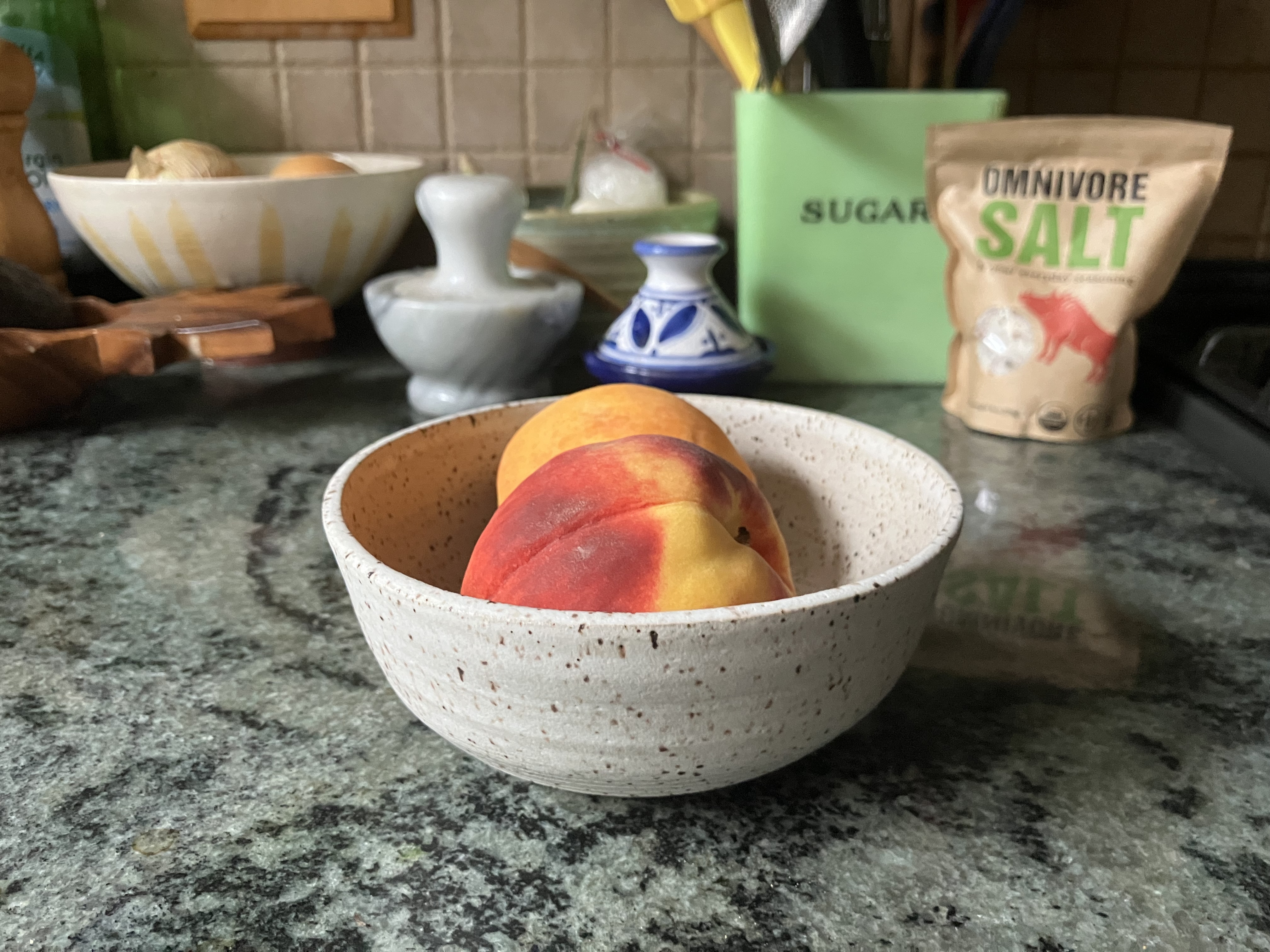
two peaches in a white bowl on a kitchen counter

As I searched my recipe notes, I came across a recipe “To preserve peaches” in Bodleian Libraries, MS Rawl. C.81. I transcribed it during a research appointment back in July 2022 because it sounded delicious and it still sounded excellent this morning. MS Rawl. C.81 has a few sections including a “Recipe collection bearing the ownership note of Dorothy Hudson (1629)”
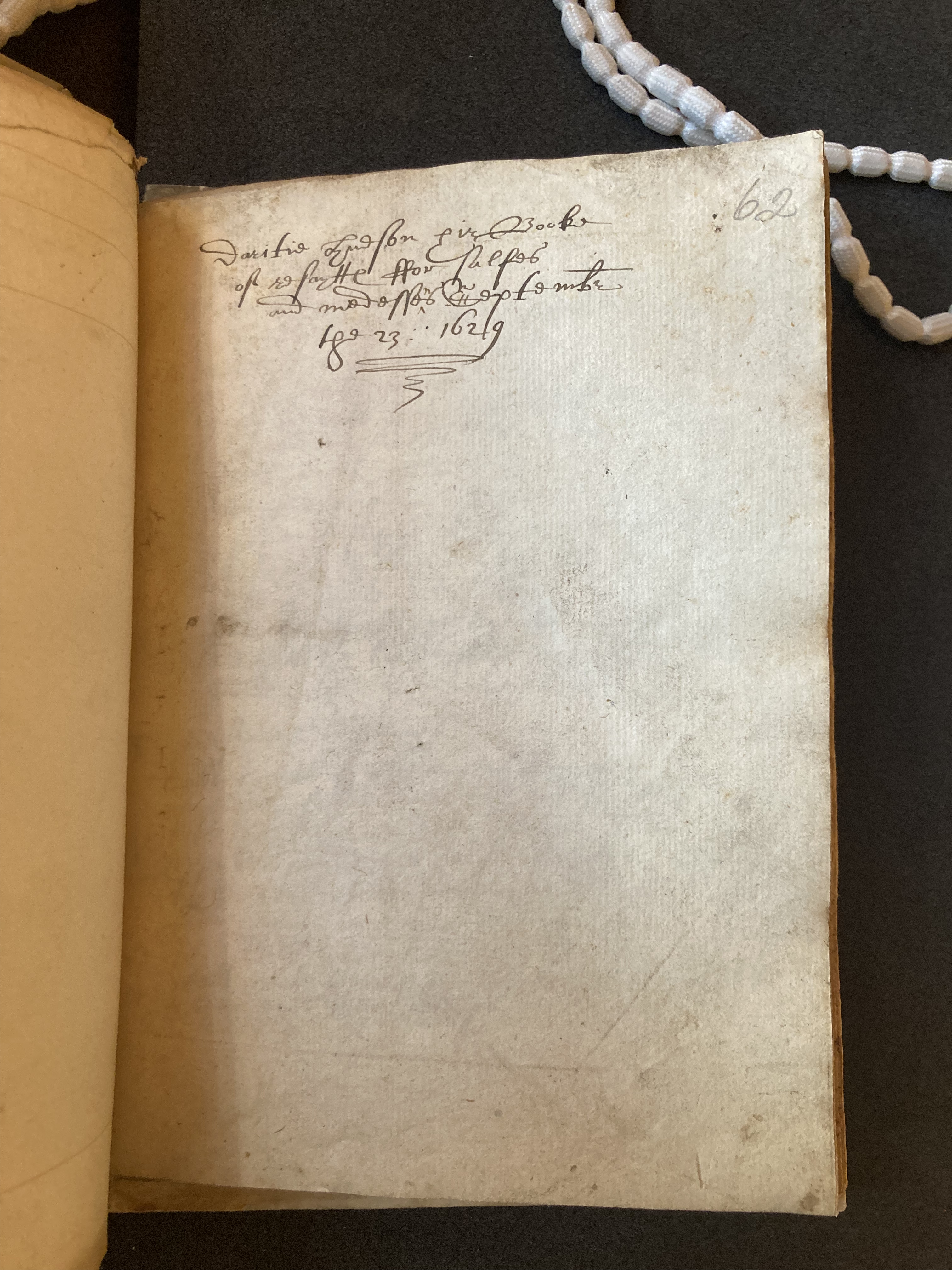
Doritie hudson hir Booke
of resartte ffor salfes
and medessenes September
the 23: 1629 (62r)

Even though Dorothy Hudson calls her recipe book medicinal in this initial inscription (medessenes), receipts for preserved peaches, pomegranates, and rose petals fill the opening pages. Preserved fruits and flowers can preserve health as well as delight the palate with the flavors of spring and summer all year long.

Original Recipe
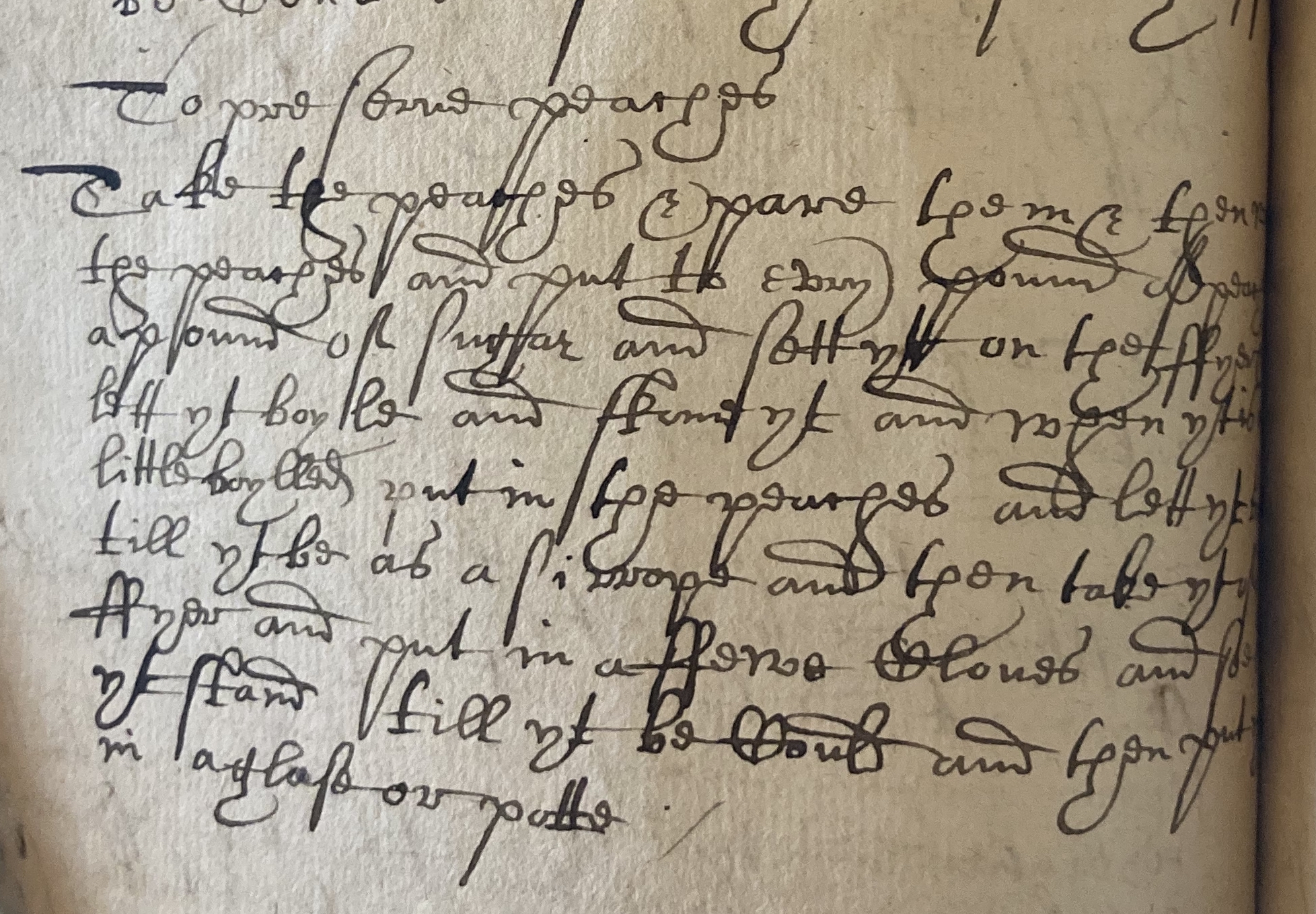
handwritten recipe for peach preserves

To preserve peaches
Take the peaches & pare them & then wa[y]
the peaches and put to every pound of peache[s]
a pound of sugar and sett yt on the ffyer &
lett yt boyle and skume yt and when yt is a
little boylled put in the peaches and lett yt boyle
till yt be as a sirrope and then take yt of th[e]
ffyer and put in a ffewe cloues and soe le[t]
yt stand till yt be could and then put yt
in a glase or potte. (64v)

This is a classic fruit preserve recipe that uses equal parts fruit and sugar (as well as water). First you prepare a sugar syrup and then you add your peeled and cut fruit to cook. The addition of cloves at the very end is especially curious as whole spices are often added earlier in the cooking process.

Updated Recipe

This recipe makes about a cup of jam. It should be easy to make a larger batch as long as you adjust the amount of sugar and water depending on the weight of your peaches and increase the number of cloves.

1 cup (175 grams) peaches
3/4 cup + 2 Tablespoons (scant 1 cup, 175 grams) sugar
1 cup water
3 cloves

Put a small plate in your freezer. Prepare a storage jar. If it is not fresh from the dishwasher, rinse it with boiling water.

Peel your peaches, remove their pits, and cut them into slices or chunks. (You can weigh your peaches and adjust the proportions of peaches, sugar, and water at this stage.)

Put the sugar and water in a heavy-bottomed sauce pan. If you’re using a candy thermometer, affix it to the side of the pot. Cook this simple syrup until the mixture is bubbling and the temperature reaches 210°F/100°C.

Add the peaches and stir intermittently so that they cook and break down, but do not burn. Cook the peaches until the preserve reaches 240°F/115°C and/or when you run a spoon along the bottom of the pan the fruit does not immediately flood the space again. (My total cooking time was 10 minutes, but this will vary.) As your preserve nears temperature or the spoon parts it more effectively, put 1 teaspoon on the freezer plate and let sit for 30 seconds. If the preserve holds its shape when you tilt the plate, it has set. If the preserve is browning quickly or looks set before the temperature reaches 240°F/115°C, try the plate test earlier.

Remove the preserve from the stovetop. Add the cloves to the pot and stir well. Let the jam sit and cool. Stir it occasionally so that the cloves circulate through the sugary fruit. (My preserves cooled in 25 minutes.)

Transfer the jam in to your prepared jar. Store this small-batch preserve in the refrigerator and consume within two weeks. You can extend the life of your jam by properly canning it or by freezing it

The Results

Cloves and peaches are a brilliant combination. The warming spice holds up against the sharp sweetness of the stone fruit and sugar. The preserve is delicious right off the spoon and even better paired with a slice of toast. I enjoyed it on a hearty, dense rye bread.

Next time I make this, I might cut the peaches into smaller chunks before cooking them and I might also cook them for 8 minutes instead of 10. I think this batch went a bit to amber while I was doing the plate test. All of that said, I’m glad I’ve captured this tiny bit of August sunshine in a jar.


John Locke’s recipe for Pancakes

cooked pancake on a plate

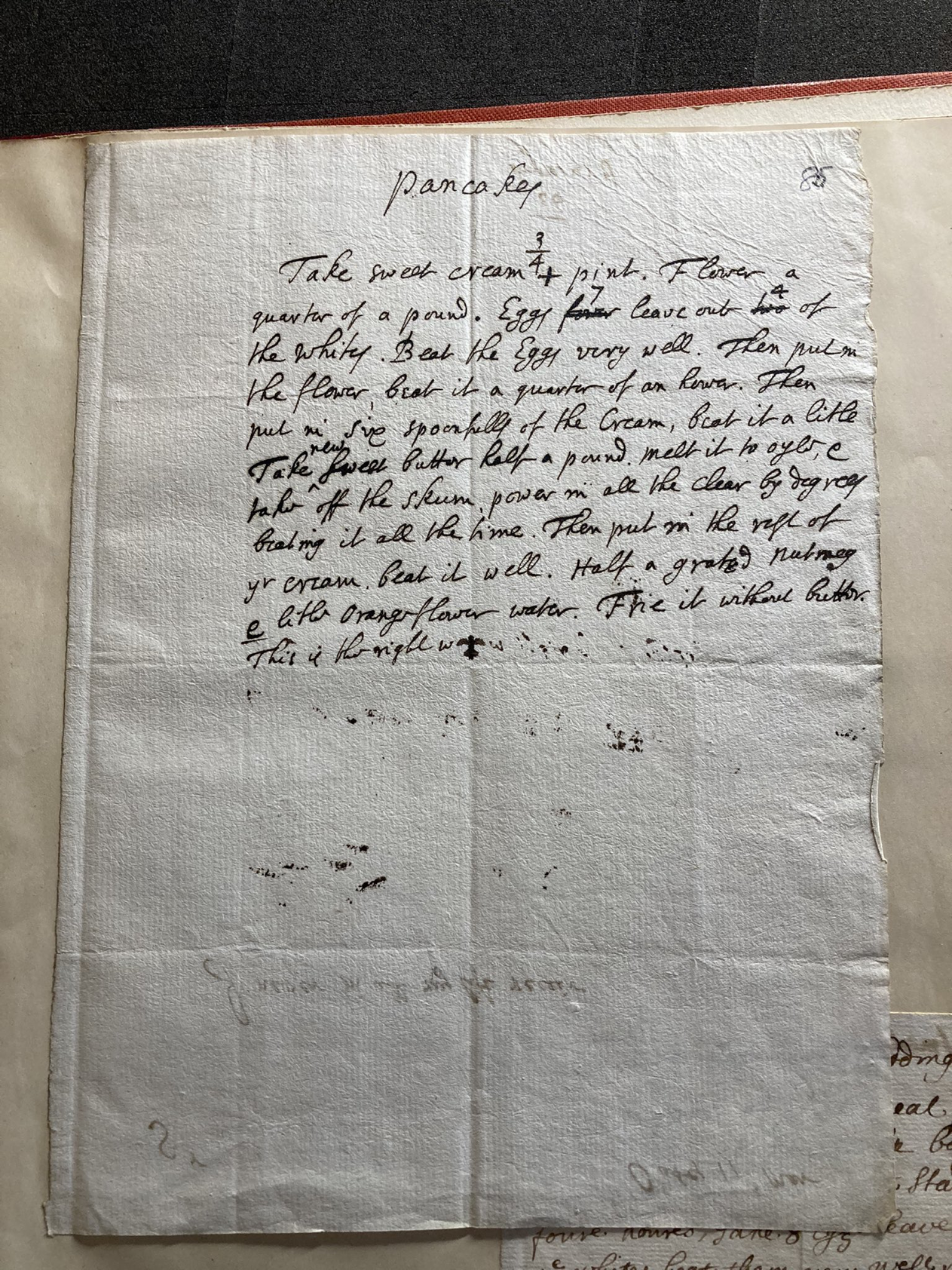
A collection of philosopher John Locke‘s papers at the Bodleian Library includes letters, accounts, poetry, notes on medicine and books, and recipes. When David Armitage posted this recipe for pancakes in the Bodleian collection on Twitter, I knew that I wanted to try it. These rich, nutmeg-scented pancakes are absolutely delicious. (Many thanks to Rhae Lynn Barnes and the other readers who immediately sent this recipe my way.)


In Philip Long’s catalog of the collection at the Bodleian, he notes that this recipe, and a few others, were written by Locke: “A collection of twelve recipes dated 1675-94, of which three (fols. 85, 89, 91) are in Locke’s hand” (2). The next time I visit Oxford for research, I will be excited to see this recipe as well as the eleven others in this set of miscellaneous papers.

coffee in cup, pancake on plate

Original Recipe

Oxford, Bodleian Libraries MSS. Locke c. 25, fol. 85. (Photo from David Armitage)

pancakes
Take sweet cream 3/4 + pint. Flower a
quarter of a pound. Eggs four 7 leave out two 4 of
the whites. Beat the Eggs very well. Then put in
the flower, beat it a quarter of an hower. Then
put in six spoonfulls of the Cream, beat it a litle
Take new sweet butter half a pound. Melt it to oyle, &
take off the skum, power in all the clear by degrees
beating it all the time. Then put in the rest of
your cream. beat it well. Half a grated nutmeg
& litle orangeflower water. Frie it without butter.
This is the right way

From the start, I was intrigued by the cross-outs and other notes in the recipe. It appears that it was first drafted (or prepared) using significantly fewer eggs. The modifier “new” was added before “sweet butter” at some point. Locke may have written the final note “This is the right way” as part of the initial draft or after the recipe was prepared. Locke was attentive to the details of separating and whisking eggs as well as adding just the right amount of orange blossom water (“litle”) and nutmeg (“Half a grated nutmeg”) – an exceptional, expensive amount.

Like the other seventeenth- and eighteenth-century pancakes that I’ve tried, these fall somewhere between crêpes and American pancakes: They’re a bit fluffier and fattier than a classic French crêpe and have far less rise than my favorite American breakfast version. My spouse, Joseph, described Locke’s pancakes as somewhere between a classic English pancake and a Scotch pancake (or Scottish pancake).

Many of the commenters on Twitter balked at the instruction to beat the eggs and flour for a “quarter of an hower.” These extended mixing times, however, are common in early modern recipes. While I did prepare my version using a hand-held mixer to ensure thorough beating, I did reduce the mixing time to avoid over-mixing which can lead to a chewy pancake. From what I know about historical and contemporary flour milling, this would not have been a concern for Locke or his cook.

Updated Recipe

Makes approximately 10 8-inch pancakes

1 cup butter (2 sticks, 1/2 lb, 226g)
3 whole eggs plus 4 additional egg yolks
1 cup flour (1/4 lb, 113g)
1 1/2 cups heavy cream
1 Tablespoon orange blossom water
half a nutmeg, grated

First, melt the butter. Set it aside.

Put the whole eggs and egg yolks in a large bowl. Beat with a whisk or hand-held mixer until well combined.

Add the flour and beat until smooth and completely combined. Add 6 Tablespoons of the cream to the egg flour mixture and mix until combined. While stirring or beating, pour in the melted butter. Add the remaining cream and orange blossom water and stir to combine. Grate 1/2 a nutmeg and stir into batter.

Heat a frying pan or skillet on a high heat until a drop of water skitters across the surface. Lower the heat to medium.

Pour approximately half a cup of batter into the center of the pan and spread by swirling the pan to create an 8-inch pancake. Cook for 1 minute or until the edges of the pancake lift and appear lacy and the middle looks mostly set. Flip the pancake and cook for an additional 30 seconds.

Repeat until your batter is gone. Serve the pancakes immediately.

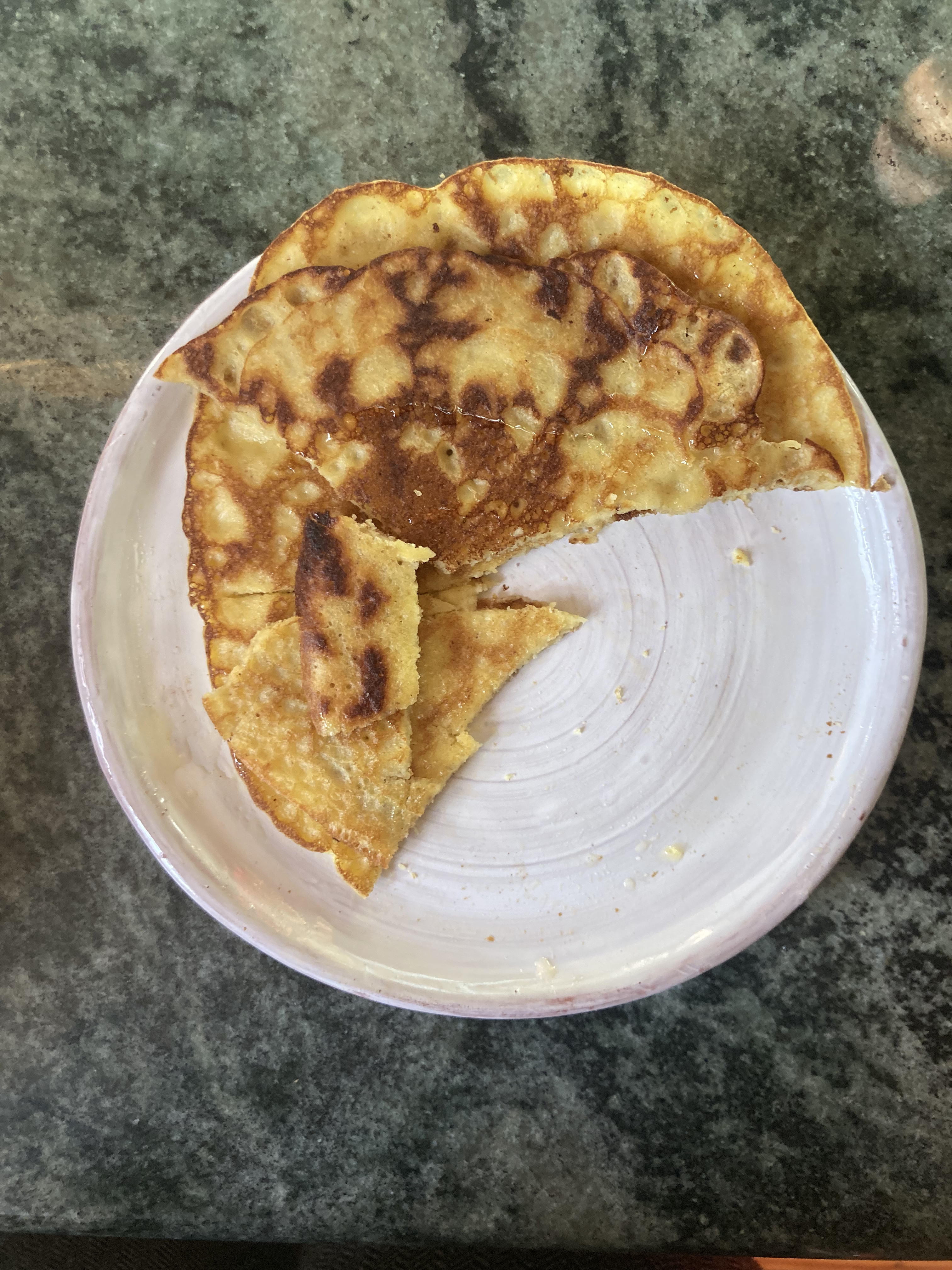
1/3 eaten pancake

The Results

Between the rich dairy and the fragrant nutmeg, these pancakes made for a decadent breakfast. When Locke wrote down, and perhaps prepared this recipe, the eggs, cream, butter, and flour would all have been ingredients ready to hand in many households. The addition of so much nutmeg and a dash of orange blossom water elevates this specific pancake recipe to a special treat.

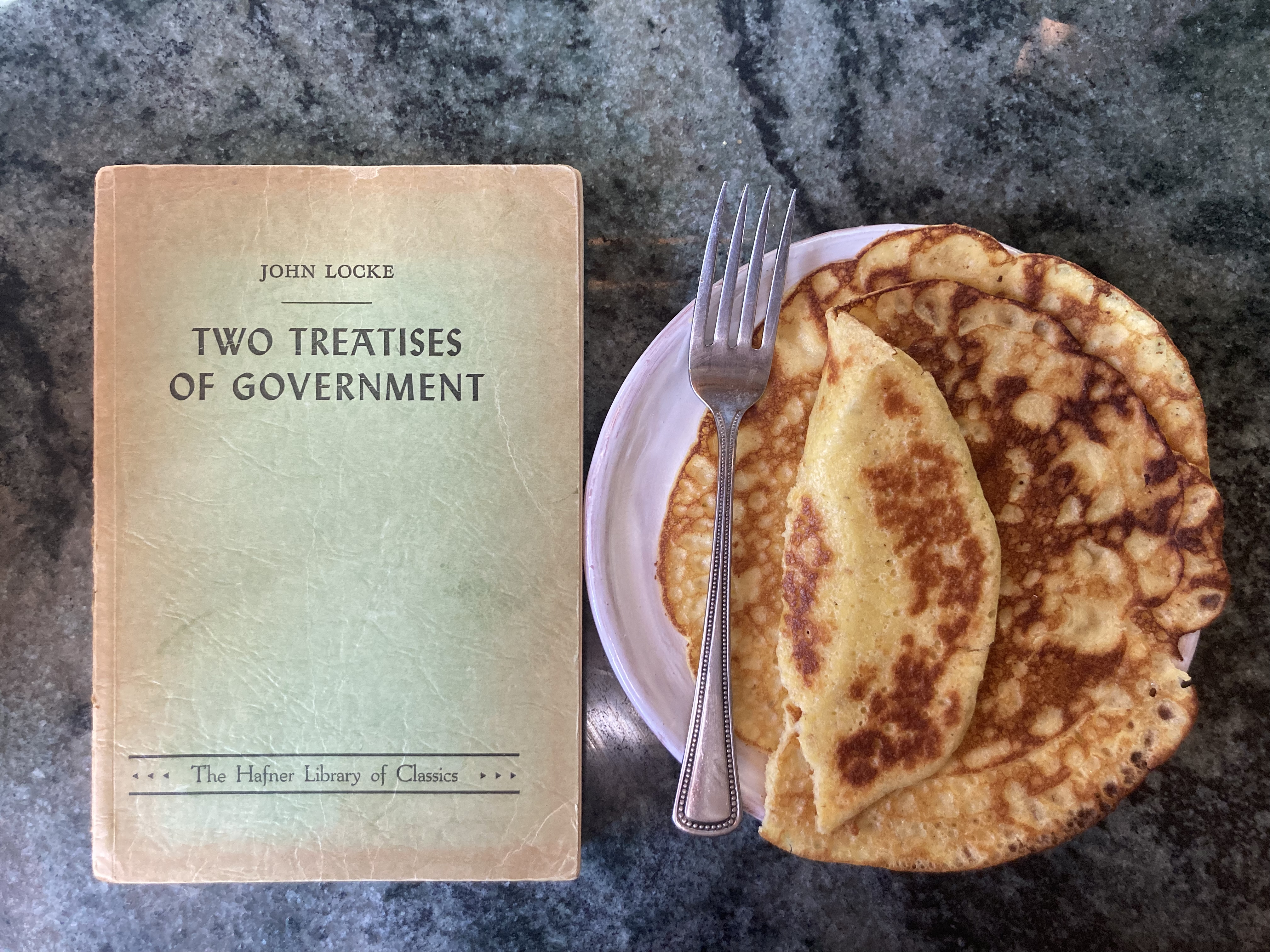
I certainly enjoyed sitting down with a plate of pancakes drizzled with a little bit of honey, a cup of coffee, and an old, heavily annotated copy of Locke that I read for a class that I took more than a decade ago. If you make these pancakes on a future winter morning or as part of your holiday vacation, be sure to let me know.

book Locke's two treatises, and plate with pancakes and fork