It was a hot August day when my students read a recipe “To Make Pistacho Cream” from Lady Elizabeth Craven’s receipt book out loud, letter by letter, on their first day of class. This household manuscript was created and used in the first years of the eighteenth century (1702-1704) and it is now held at Penn State Libraries Eberly Family Special Collections. Thanks to the hard work of the digitization, conservation, and digital collections teams, my students at the Abington College campus are slowly reading and transcribing this book this semester. Eventually, their work will be vetted and published in the historical recipe books collection online. Of all the recipes that we read and transcribed that first day, they were most excited about this pistachio cream.
Honestly, this recipe had already piqued my interest when I read it in preparation for class. But spurred on by my students’ enthusiasm, I moved it to the top of my list. This is also not the first cream I’ve prepared from Lady Craven’s receipt book: The first was a luscious chocolate cream that spoke to me when I saw the manuscript years ago before it had been digitized.
Original Recipe
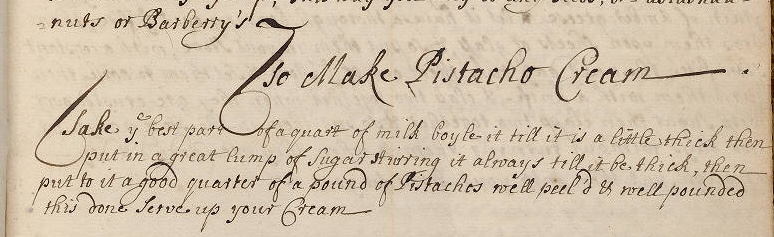
To Make Pistacho Cream
Take the best part of a quart of milk boyle it till it is a little thick then
put in a great lump of sugar stirring it always till it be thick, then
put to it a good quarter of a pound of Pistaches well peel’d & well pounded
this done, serve up your Cream
Three ingredients — milk, sugar, and ground pistachios — combine into a sweet, nutty, and luxurious cream. The simplicity of the recipe hides a few sticky points for twenty-first-century cooks. Figuring out how much a “great lump” of sugar might be is always an act of guesswork. In addition, our homogenized and standardized milk does not always behave the same way as fresh eighteenth-century milk. I believe the opening instruction “Take the best part of a quart of milk” means to both 1) take most of a quart of milk and also 2) take the best part of that quart of milk for making a flavored cream, ie., the good cream floating on the top. To this end, I found I needed to use both whole milk and heavy cream in my recipe recreation and I needed to cook the cream much longer than I had anticipated.


Updated Recipe
Quartered from the original.
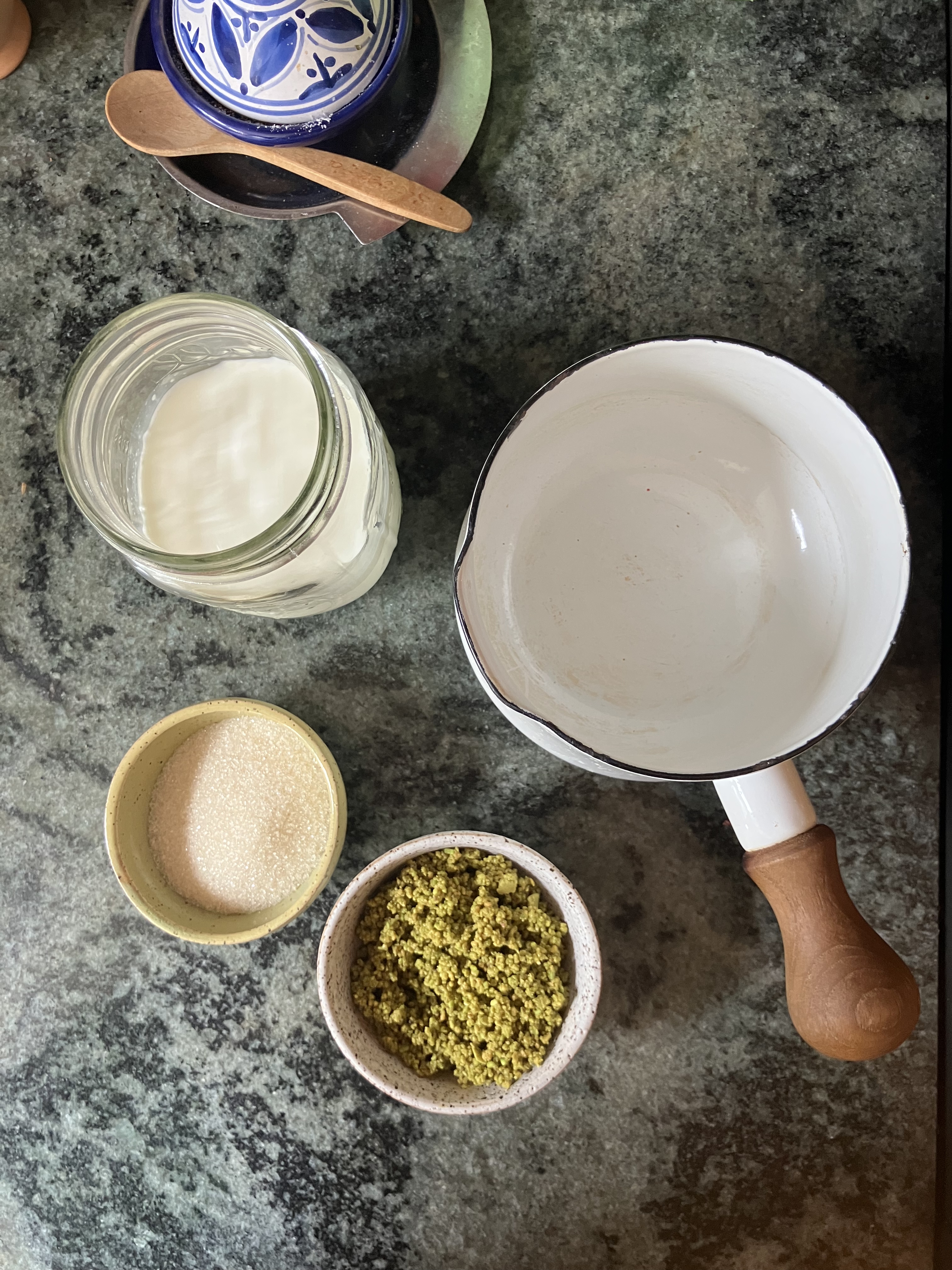
3/4 cup whole milk
3/4 cup heavy cream
2 Tablespoons sugar
1/4 cup ground pistachios
First prepare the pistachios. Shell them and remove as much of the papery skin as you can. Grind the pistachios until they are completely pulverized and a little oily, but not so much that they turn into nut butter. I used a food processor for this, but you could also grind them in a mortar and pestle. Set them aside. (This step will vary depending on the state of the pistachios you have, but make sure to not start with salted nuts.)
Put the milk and cream into a small saucepan and set them on the burner where you have the most control. Prepare to be at the stove for 30-40 minutes. Bring the milk and cream mixture to a boil and whisk constantly. Keep the mixture as hot as you can without it boiling over.
Add the sugar after about 15 minutes when the milky mixture is a little reduced. Add the pistachios once the sugar has dissolved. All in all, it took me about 35 minutes of constant stirring until the cream was luscious and thick enough to coat a spoon or a piece of fruit.
The cream can be served immediately or refrigerated to serve later (the consistency will change).


The Results
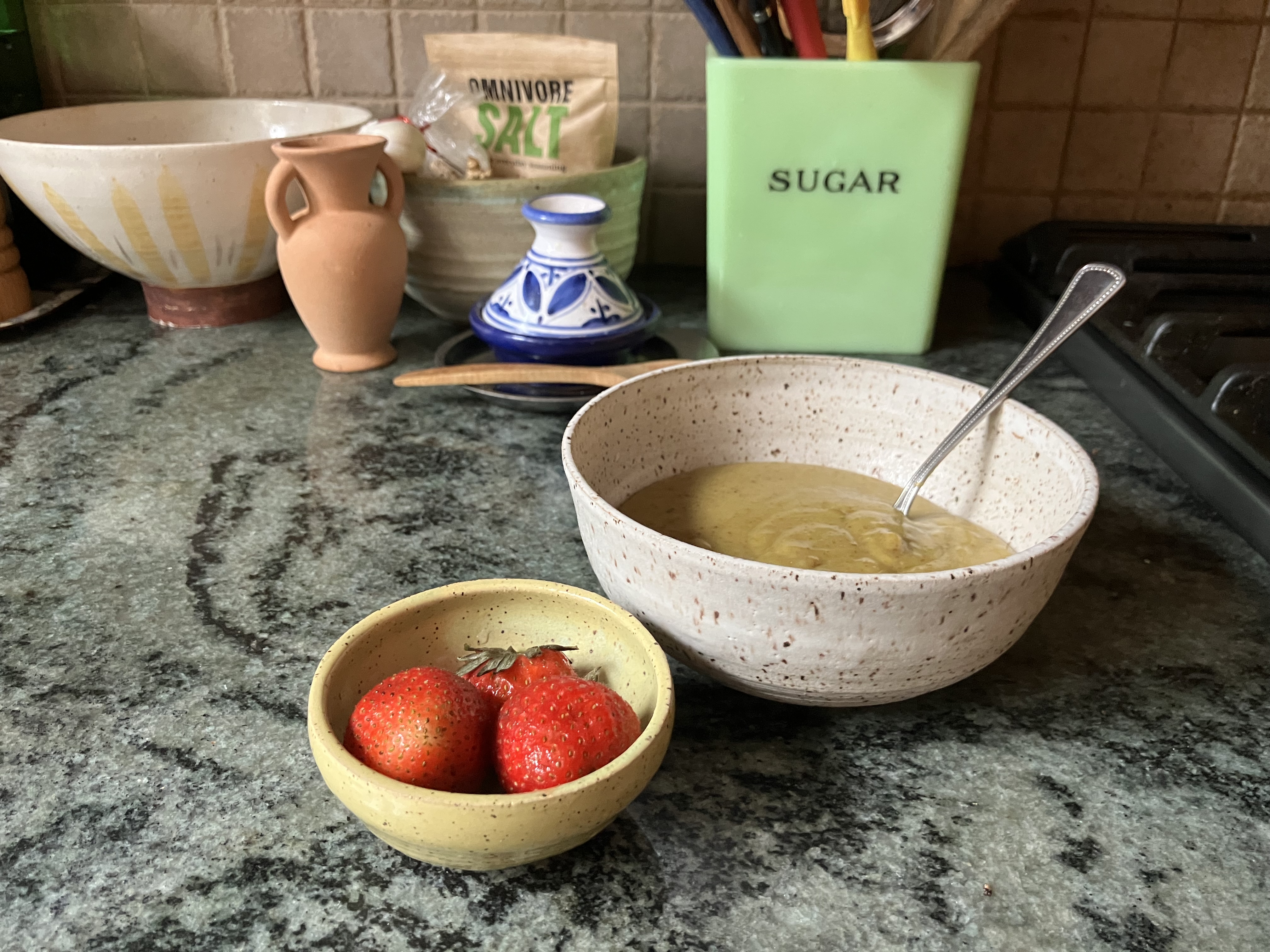
Warm from the stove, this cream is a celebration of pistachios. Their flavor dominated my first tastes both from a spoon and coating a ripe strawberry.
As the cream chilled in my refrigerator and traveled with me to campus, it changed a bit in consistency and flavor. It became much thicker and the sweetness of the sugar and the dairy developed into a more potent counterpoint to the nutty pistachios. Perhaps if this cream is intended to be served cold it should not be cooked as long or to as thick a consistency. That said, the original instructions suggest serving it warm.
My students were not only delighted to taste a recipe from our first day of transcription, but also struck by the sweetness and texture of the dish. One student thought it would be a great icing or filling for a cake. Sampled on its own or with strawberries, Lady Craven’s “Pistacho Cream” was both familiar and unfamiliar, incredibly old and surprisingly new.


You must be logged in to post a comment.