“To Make Jaculat (Chocolate) Milk”

It’s always a thrill when I find a new chocolate recipe to test. A few weeks ago, a student brought a recipe “To Make Jaculat Milk” to my attention.

Over the course of this academic year, I’ve been teaching paleography, material texts studies, and the history of food and medicine using the collection of digitized historical recipe manuscripts collection at Penn State Libraries Eberly Family Special Collections. A good deal of our attention has been focused on “Mistress Anna Campbell her Paistrie Booke, 1707” a Scottish manuscript cookbook (that was also the source of some very tasty French toasts I tried out a little while back).
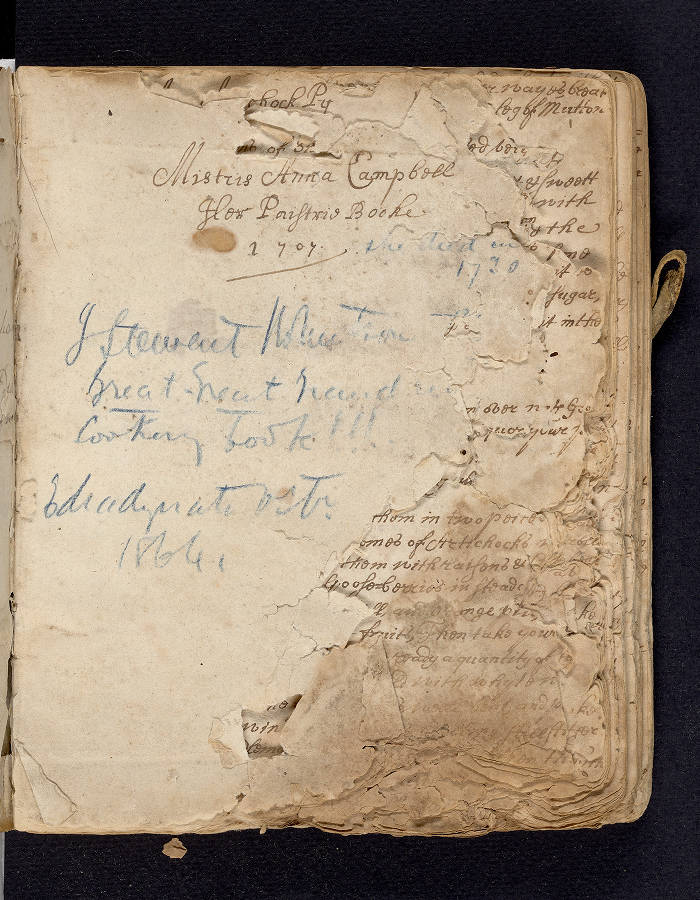
title page Mistris Anna Campbell Her Pastrie Booke 1707

We begin each class meeting with transcription queries and a student raised their hand and asked what in the world JACULAT could be?! At first, I was also puzzled so I pulled up the Dictionary of the Scots Language. A quick search indicated that “Jacolate, Jaculat, Jecolat, n.” were all spellings of “chocolate” used in seventeenth and eighteenth-century Scotland. (Working with the Campbell manuscript, I find that we are searching the DSL as much as we are searching the Oxford English Dictionary!) In the recipe at hand “jaculat” could be added to a sugary coating for flavored almonds. But this was not the only use of chocolate in Anna Campbell’s pastry book! Another student’s transcription pointed me to a recipe “To Make Jaculat Milk” that I decided we should try out as a class.

The Original Recipe
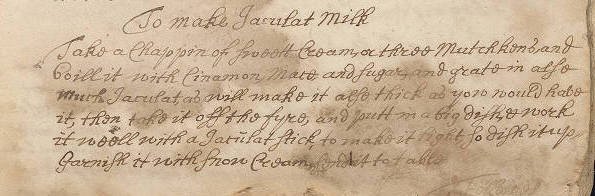
original handwritten recipe

“To Make Jaculat Milk” Mistress Anna Campbell her paistrie booke, 1707: manuscript, Eberly Family Special Collections, Penn State University Libraries (Image 103)

To Make Jaculat Milk
Take a chappin of sweett cream, or three mutchkens, and
boill it with cinamon, mace, and sugar, and grate in also
much jaculat, as will make it also thick as yow would have
it, then take it off the fyre, and putt in a big dish, & work
it weell with a jaculat stick, to make it light, so dish it up
Garnish it with snow cream, send it to table

I have flavored hot chocolate with quite a few spices over the years, but never with mace, so I was especially excited to try this one. The method is also different from other recipes that I’ve prepared. First, you measure out milk or cream (using the Scots measurements of chappins or mutchkins) which I approximate at about 4.5 cups (US) using various metrics and bring it to a boil with cinnamon, mace, and sugar. Then you grate in the jaculat, which may be cocoa beans or a prepared cake of ground cocoa beans (perhaps with flavorings added like in this favorite chacolet recipe). The flavored milk is then frothed with a jaculat stick: a molinillo or hot chocolate whisk. This specialized tool, and the knowledge of how to use it, traveled with the flavorful cocoa bean from the Americas to Spain and then to England and Scotland. Finally, the “snow cream” garnish is a  whipped cream flavored with sugar and rosewater as in this recipe I made many years ago.

Updated Recipe

1 quart whole milk (or your preferred milk)
2 Tablespoons ground cinnamon
1 Tablespoon ground mace
1 cup sugar
½ cup ground cocoa nibs
½ cup cocoa powder
optional, but recommended: whipped cream for serving (1 cup of heavy cream flavored with 1 Tablespoon rosewater and 1 Tablespoon sugar)

If you want to top your hot chocolate with flavored whipped cream, make that first! Using a large bowl and a hand mixer or a whisk, combine the heavy cream, sugar, and rosewater and beat until you have fluffy whipped cream.

Before you start heating the milk, grind the cocoa nibs in a spice grinder or food processor as finely as you can. They may begin to clump together and form an oily paste.

Pour the milk into a heavy pot. Add cinnamon, mace, and sugar. Bring to a boil to infuse and then lower the temperature. Stir in the cocoa nibs and cocoa powder and let the mixture return to a simmer.

Remove from the heat and whisk until the hot chocolate is nice and frothy. This should work with a regular whisk or a traditional hot chocolate whisk (molinillo).

Pour into a cup to serve. Dollop whipped cream on top if using. Sip and enjoy immediately.

*Notes*

You can prepare this recipe with whole cinnamon sticks and whole blade mace. You will want to let the whole spices and sugar simmer in the milk for longer. I tried this for about 5 minutes and the flavor did not match that of the ground spices so I would suggest trying 10 minutes. Remove the whole spices before frothing.

You can also prepare a large batch of the hot chocolate mix in advance by combining the cinnamon, mace, sugar, ground cocoa nibs, and cocoa powder. You can prepare one cup of hot chocolate at a time by adding approximately 3 Tablespoons of the mix for each cup of milk.

The Results

This hot chocolate is absolutely delicious! The rosewater-scented whipped cream is a divine addition, but the drink was still substantial and well-flavored without it. Combining mace with chocolate creates a unique spicy taste that to me felt very festive and reminded me of the spice flavors in Christmas cakes and cookies. When my students and I prepared this hot chocolate in class, they remarked that the mace, cinnamon, and chocolate combination made the drink taste like a chai drink crossed with a chocolate drink.

In the coming months, I’m looking forward to cooking more from Anna Campbell’s manuscript as my students and I prepare the transcription for publication in Penn State Libraries Digital Collections. I’m also so excited to share my forthcoming book, Shakespeare in the Kitchen, with you in April!

French Tosts

Bake this recipe October 5-13, 2024 to participate in the fifth annual Great Rare Books Bakeoff! (More information at the end of the post.)


It is always a thrill to take a look at a receipt book that I have never seen before. About a year ago, I sat down with Mistress Anna Campbell’s early eighteenth-century Scottish recipe book in the reading room at Penn State Libraries Eberly Family Special Collections. On the title page, Campbell provides her manuscript with a title — “Her Paistrie Booke” — and date — 1707. In my notes from my first encounter with the manuscript I wrote that, as promised, Campbell’s book is a deep exploration into pastry and baking.

As the library catalog notes, Campbell’s manuscript contains around 400 recipes and almost all of them are written in her lovely handwriting. She loosely organized her recipe book and gathered recipes for pies, pastries, cakes, tarts, custards, meat and various sauces, sweet and savory puddings, dairy, biscuits, and fruit preparations. After that brief encounter, the manuscript made its way to the conservation and digitization teams so it could be safely and completely imaged for our growing Historical Recipe Books Collection and I turned my attention to other recipe books (like Christian Barclay’s manuscript that I wrote about here and this one at the British Library). You can access the catalog description and the complete digitized manuscript here.

When it came time to gather new recipes for this year’s Bake Off, I was delighted when Christina Riehman-Murphy pointed out that Campbell’s recipe book contained a recipe for “French Tosts.”

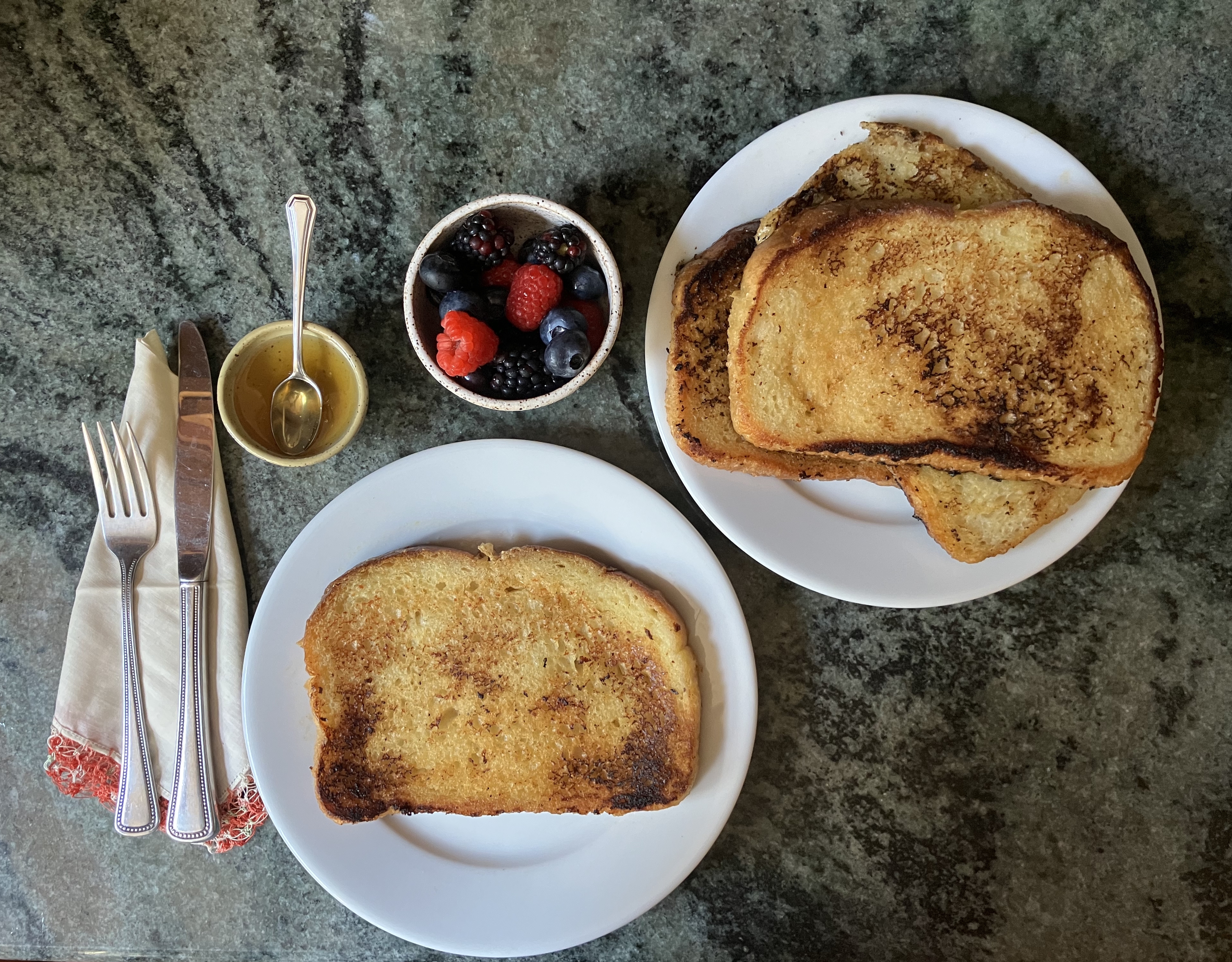
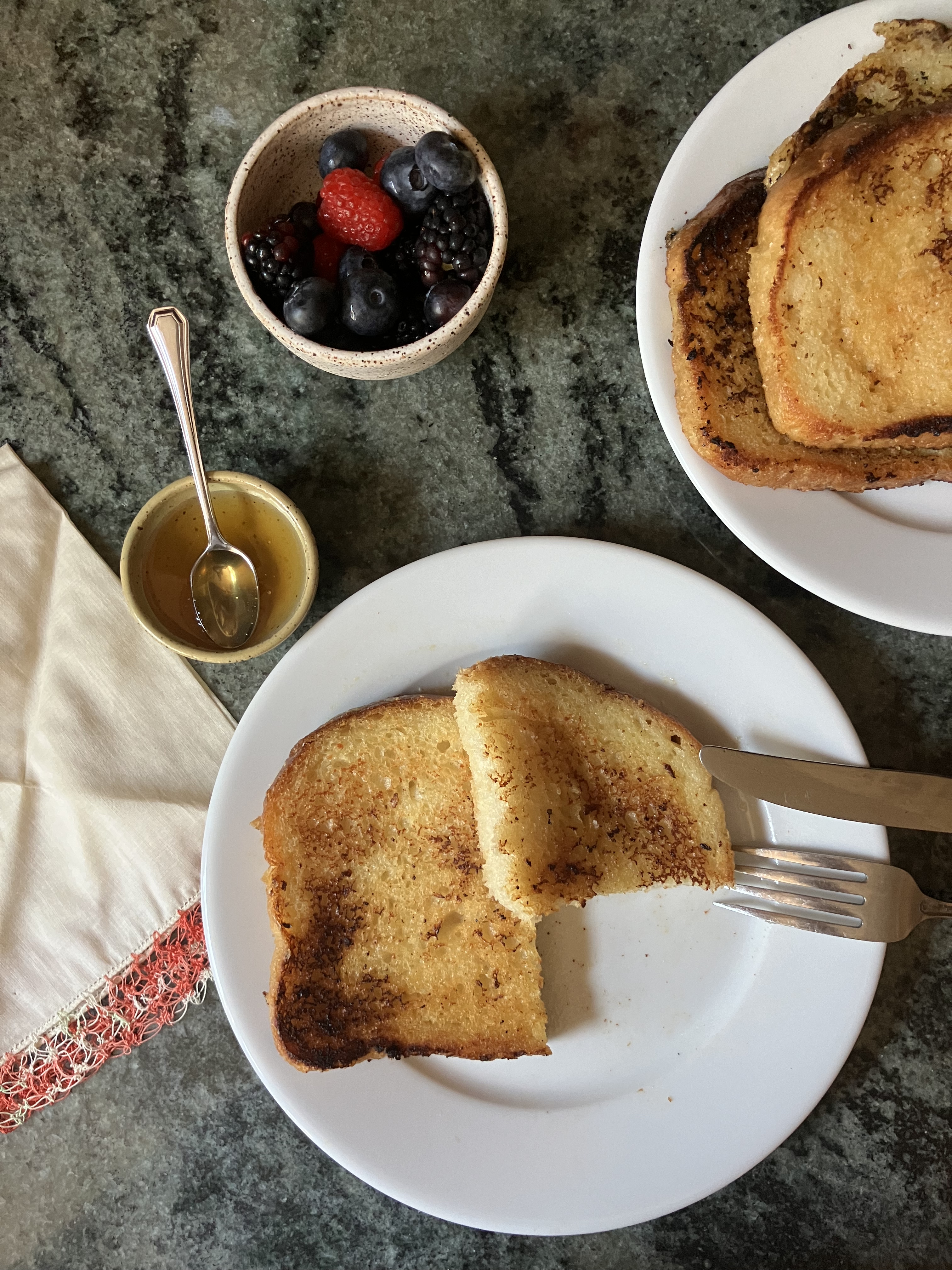
finished French toast on plates, utensils, bowls with honey and berries

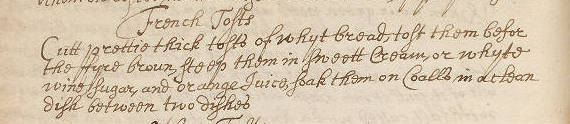
The Recipe

French Tosts
Cutt prettie thick tosts of whyt bread, tost them befor
the fyre broun, steep them in sweett Cream, or whyte
wine, sugar, and orange Juice, soak them on Coalls in a clean
dish between two dishes

The original recipe is both easy and confusing. It asks you to toast bread, soak it in cream, sugar, and orange juice, and cook the soaked toast in a lidded cooking vessel over a brazier filled with hot coals from the hearth. As I have learned from my research and from hands-on cooking at Pottsgrove Manor last year, this  cooking method was commonly used for pancakes, fritters, and fragile fruit preserves. If you find yourself camping or grilling over charcoal, you, too, could toast your bread over a fire or grill and set your soaked toast to steam in a covered cast iron pan.

The simple bread and dairy ingredients in this recipe (and the recipe for eggy “Other Tosts” that Campbell includes below it in her manuscript) brought me back to the last time I made a historical French toast. Taken together, these three toast recipes start with abundant (likely day-old) bread, eggs, and cream, and are enhanced with flavors from imported sugar, spices, wine, and oranges.  As Campbell’s original “French Tosts” recipe states, you can also swap out the cream for white wine. I should also acknowledge the ambiguity of the punctuation here. An alternate, and valid, reading of the two versions of Campbell’s recipe could be — one version with cream only and a second version with white wine, sugar, and orange juice. I can say, however, that the cream, sugar, and orange in the version that I prepared created a distinctly delicious caramel flavor.

I used pre-sliced “White Sourdough Bread” from the bakery section of my local chain grocery store to test this recipe. The bread does not have sugar or sweetener in it. I believe that this recipe will work wonderfully with a range of store-bought or homemade breads. I think it would also work well with a gluten-free bread. If you try any bread that turns out especially well, leave a comment!

Updated Recipe

Serves 2 (easy to scale up!)

4 slices white bread
1 cup (250ml) cream
¼ cup (50g) sugar
¼ cup (62.5ml) orange juice
Butter or oil for greasing your cooking pan

Equipment: toaster, skillet or frying pan with a lid

Slice the bread into pieces that will fit in your toaster or select 4 slices from a pre-sliced loaf. Toast the bread until lightly browned. Adjust the settings of your toaster or toaster oven, or the placement of your toast, to ensure even, light browning. Arrange the toast in a large, shallow baking dish for seasoning.

Stir together the cream and sugar until the sugar mostly dissolves. Stir in the orange juice.

Pour the cream mix over the prepared toast. Use a spatula to spread the mixture. Make sure that  the top of each slice is coated with a layer of the cream mix. Set aside to rest for 5 minutes.

Flip the slices of toast. Use a spatula to spread the cream mixture over the second side of each toast. Set aside to rest for 5 minutes.

While the toast is absorbing the cream mixture, set a large frying pan or skillet over a medium heat. Add butter or oil as necessary to grease the cooking surface.

Place two slices of toast in your cooking pan, cover with the lid, and cook for approximately 3 minutes. Remove the lid, flip the toast with a spatula, cover again, and cook the second side for 3 minutes. Repeat these instructions to cook the second batch. You may need to adjust the heat levels and cooking times depending on your pan, your stove, and your bread. If your cooking pan fits more than two slices at a time, feel free to cook more slices simultaneously. My lid allowed some steam to escape so you may want to set your lid askew if slices are not crisping up.

Serve the French Tosts immediately.

The Results

The French Tosts taste like toasty malted milk and caramelized sugar with a hint of orange. Crispy on the edges and soft in the middle, this dish is a delight to eat. I suggest you try this recipe out on a lazy weekend morning and enjoy the warm, sweet smells that will envelop your kitchen.

Although I did dress some of my French toast up with honey and fresh fruit, those bold flavors overpowered the subtle malt and caramel that I so enjoyed in my first bites. I suggest that you hold back on adding any syrup, honey, yogurt, or fruit toppings until after you’ve taken a few bites.

finished French toast on plates, utensils, bowls with honey and berries

The Bake Off

Today I’m also inviting you to mark your calendars for the fifth annual The Great Rare Books Bake Off! This virtual baking competition is a friendly contest between the sister libraries of Penn State University and Monash University. There are so many intriguing recipes to try from our library collections and you can learn so much by baking a recipe instead of just reading it! An engraved pie pan trophy will be awarded to the library that receives the most social media posts featuring photos of your baked goods tagged with its hashtag: #BakePennState or #BakeMonash. If you don’t use social media, you can submit your entry via this form. The competition runs October 5-13, 2024 so you have lots of time to read the recipes, shop for ingredients, and get baking. All the details are on the site linked above.

If this recipe for “French Tosts” is not inspiring you to participate, there are a lot of other recipes to choose from. In past years I’ve also updated seventeenth- and eighteenth-century recipes from PSU’s collections for delectable sugar bisket, satisfying doughnuts, playful almond jumballs, a delicious lemon tart, and a tasty chocolate cream. I’m also fond of some of the other recipes that we’ve featured, such as PSU’s feather-light Suffrage Angel Cake and gooey Ogontz Cinnamon Buns and Monash’s decadent Pavlova and festive Lamington Cake.