To Make Jumballs of Chocholett


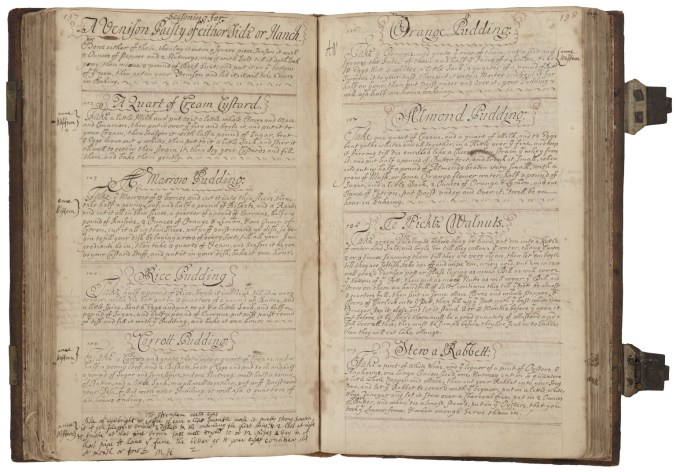
This recipe “To Make Jumballs of Chocholett” is from Elisabeth Hawar’s recipe book (now William Andrews Clark Memorial Library, fMS.1975.003). A favorite on the banqueting table or dessert spread, many recipes for “Jumballs” or jumbles are collected in early modern recipe books. These small cookies are made from flour and almonds in varying proportions, sweetened with sugar, and flavored with anise, caraway, and, in this recipe, lemon, rosewater, and chocolate.

I was thrilled to return to the Clark Library last week to speak about my recipe recreation work, take a look at Elisabeth Hawar’s recipe book again (and other manuscripts),  and to share this jumball recipe.

Original Recipe
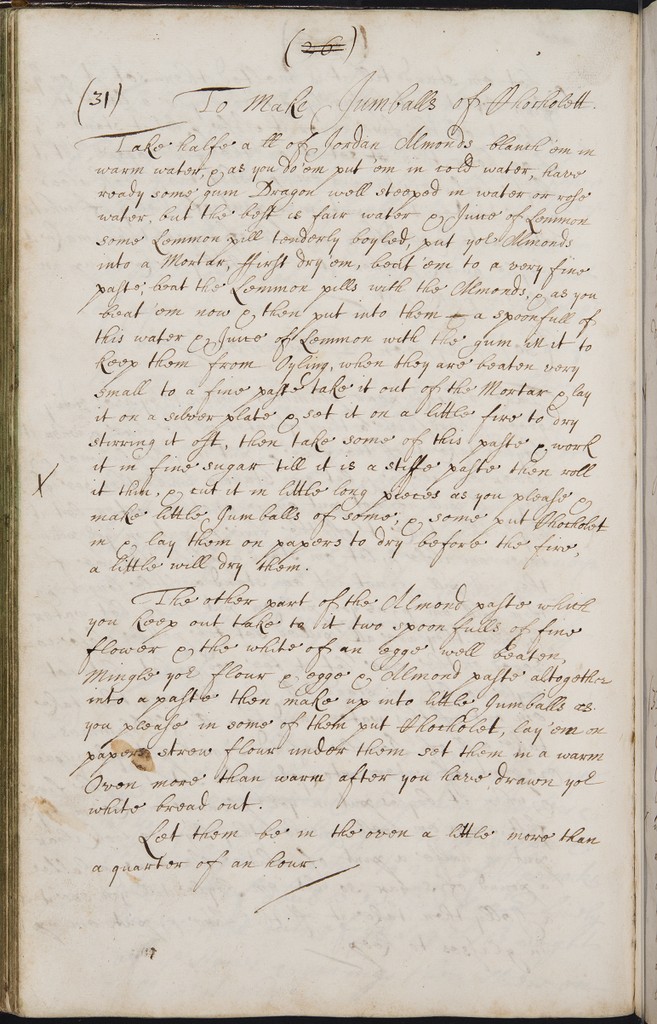
(31) To Make Jumballs of Chocholett
Take halfe a ll of Jordan Almonds blanch ‘em in
warm water, & as you do ‘em put ‘em in cold water; have
ready some gum Dragon well steeped in water or rose
water, but the best is fair water & Juice of Lemmon
some Lemmon pill tenderly boyled, put your Almonds
into a Mortar, ffirst dry ‘em, beat ‘em to a very fine
paste, beat the Lemon pills with the Almonds, & as you
beat ‘em now & then put into them & a spoonful of
this water & Juice of Lemmon with the gum in it to
keep them from Oyling, when they are beaten very
small to a fine paste take it out of the Mortar & lay
it on a silver plate & set it on a little fire to dry
stirring it oft, then take some of this paste & work
it in fine sugar till it is a stiffe paste then roll
it thin, & cut it in little long pieces as you please &
make little Jumballs of some, & some put Chocholet
in & lay them on papers to dry before the fire,
a little will dry them.
The other part of the Almond paste which
you keep out take to it two spoonfulls of fine
flower & the white of an egge well beaten,
Mingle your flour & egge & Almond paste altogether
into a paste then make it up into little Jumballs as
you please in some of them put Chocholet, lay ‘em on
papers strew flour under them set them in a warm
Oven more than warm after you have drawn you
white bread out.
Let them be in the oven a little more than
a quarter of an hour.

The original recipe for Hawar’s chocolate jumballs is a complex, two-part affair. The first part provides instructions for blanching and grinding almonds in a mortar and a pestle to make an almond paste . Lemon peel and juice, rosewater, sugar, and “gum dragon” — dried, water-soluble plant sap used as a binder — help the freshly cooked and pulverized almonds form a paste. The second part of the recipe provides instructions for shaping jumballs out of this mixture with the addition of an egg white and flour. The pliable dough can be formed into pleasing shapes and gently, carefully baked as the oven cools from an intense period of bread baking.

As always, I’m committed to using ingredients that my readers can buy at their local grocery store (and rosewater). So I started with ground almonds and I did not buy gum dragon (commonly known today as gum tragacanth) to prepare this recipe. Since I’ve made marzipan in the past, I had a sense of what proportions I could use working from the 1 egg white called for in the recipe and felt fairly confident that I could get the mixture to bind. That said, starting with whole almonds and including gum dragon would likely impact the texture of the final jumballs. (If you make them this way, let me know!)

This recipe also insists on the tantalizing possibility of flavoring the jumballs with chocolate, but it does not provide a lot of detail about what that chocolate would be like. Hawar also included a chocolate option, with minimal explanation, in her recipe for puffs (meringue). I’ve worked with seventeenth-century hot chocolate recipes before and they helpfully provided me with some clues. To my mind, cocoa nibs are the least processed form of chocolate that is widely available in supermarkets today. In the half of my jumball dough that I flavored with chocolate, I decided to include both cocoa powder and cocoa nibs for crunch deep, slightly bitter chocolate flavor. Cocoa powder is a modern ingredient and an all-cocoa nib version would be rather different. (If you make a cocoa-nib only batch, let me know how it turns out!)

Updated Recipe

This recipe makes about 30 jumballs – half almond and lemon, half almond and chocolate. If you plan to make a batch of entirely almond and lemon jumballs, simply skip the final steps that describe dividing the dough and adding cocoa powder and cocoa nibs. If you plan to make a batch of entirely chocolate jumballs, add a double amount of the chocolate flavorings to the mix from the start (¼ cup cocoa powder and 2 Tablespoons cocoa nibs).

1 lemon, peel and 1 tablespoon juice
2 ¾ cups ground almonds
1 cup sugar
2 Tablespoons flour
1 egg white
1 Tablespoon rosewater
2 Tablespoons cocoa powder
1 Tablespoon cocoa nibs

Peel a lemon using a vegetable peeler. Place the lemon peel and 1 cup water in a small sauce pan. Bring to a boil and cook for 5 minutes. Drain and set the peels aside to cool. Chop the cooked lemon peel as finely as you can.

Preheat your oven to 350F (180C). Line two baking sheets with parchment paper.

Measure the ground almonds, sugar, and flour into a large mixing bowl. Stir to combine. Then stir in the chopped lemon peel and ensure it is evenly distributed throughout the mix. Add the egg white, rosewater, and lemon juice. Stir with a spoon and then with your hands. The mixture should hold together when pressed.

Divide the jumball dough in two in the bowl or on a cutting board. Place one half on a cutting board and the other half in the mixing bowl. Add the cocoa powder and cocoa nibs to the jumball dough in the bowl. Mix with a spoon and your hands until the chocolate flavorings are evenly distributed throughout the dough.

Shape the almond lemon and the almond chocolate jumballs on a cutting board and place onto the lined baking sheets. Letters, knots, twists, and other shapes using 1-2 Tablespoons of dough all work well. 1 Tablespoon balls of dough rolled smooth work especially well.

Bake for approximately 10 minutes. The bottoms of the almond and lemon jumballs will be golden brown and the jumballs will be crispy on the outside and soft in the middle.

Set aside to cool on a baking sheet for at least 5 minutes before serving.
The Results

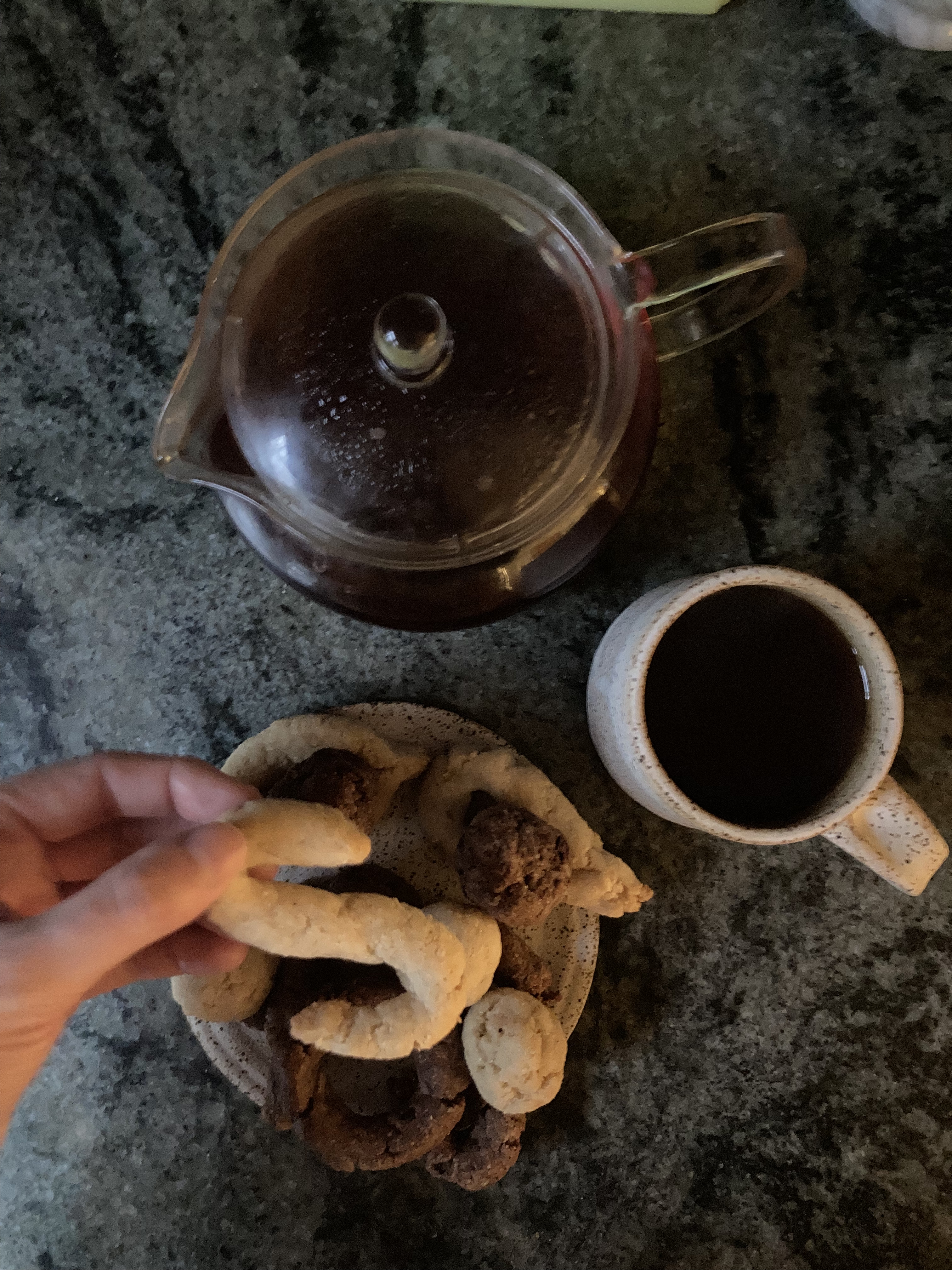
Honestly, these jumballs are just delicious. They reminded me of all sorts of almond-rich, marzipan-like, European-style cookies that I’ve had the pleasure to enjoy near home or while traveling. The lemon peel lifts both the almond and lemon and almond and chocolate jumballs. Friends and family really liked these and I anticipate baking them again sometime soon.
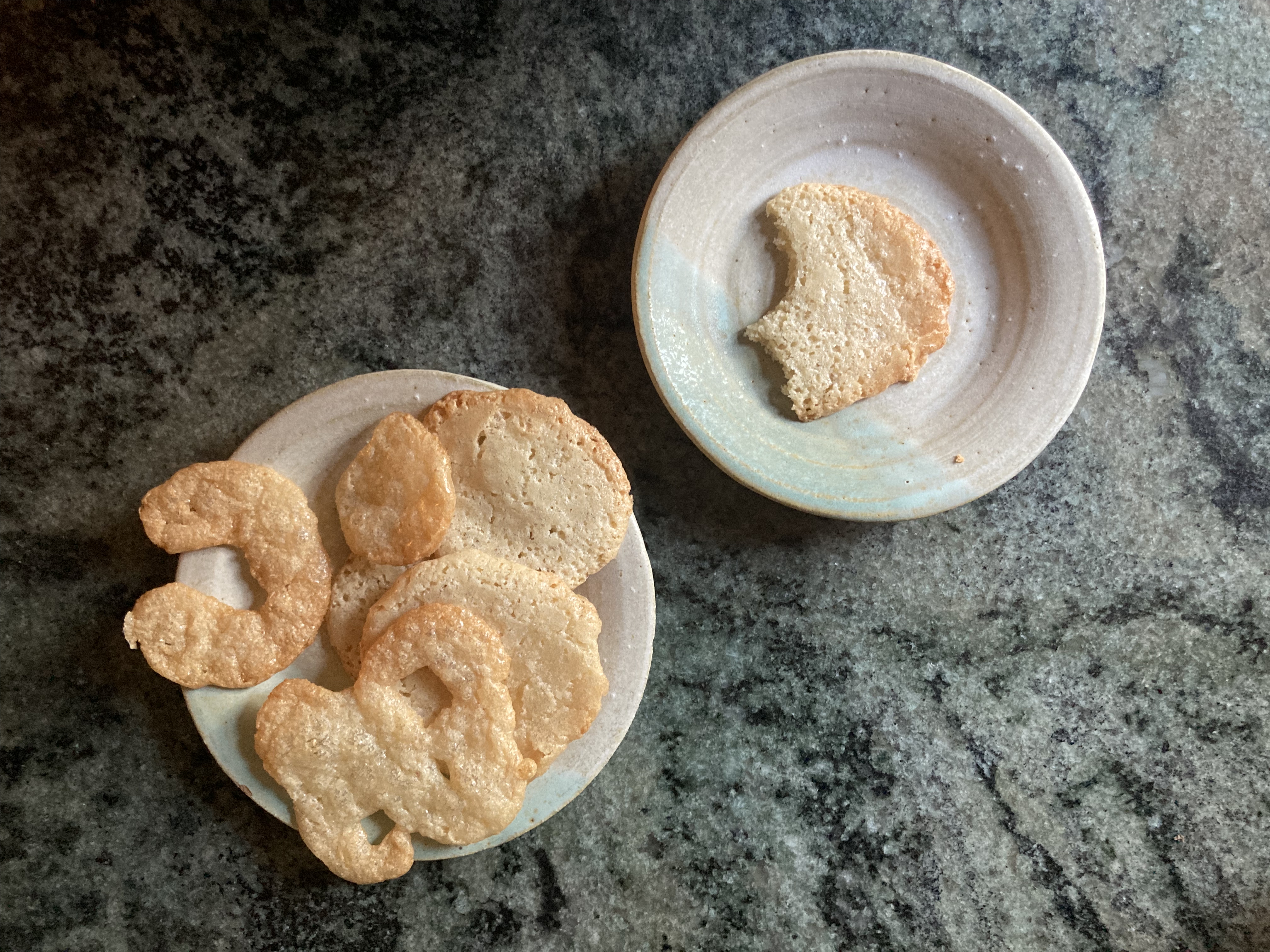
Christian Barclay’s Almond Jumballs

See the end of the post for information about the third annual Great Rare Books Bakeoff!

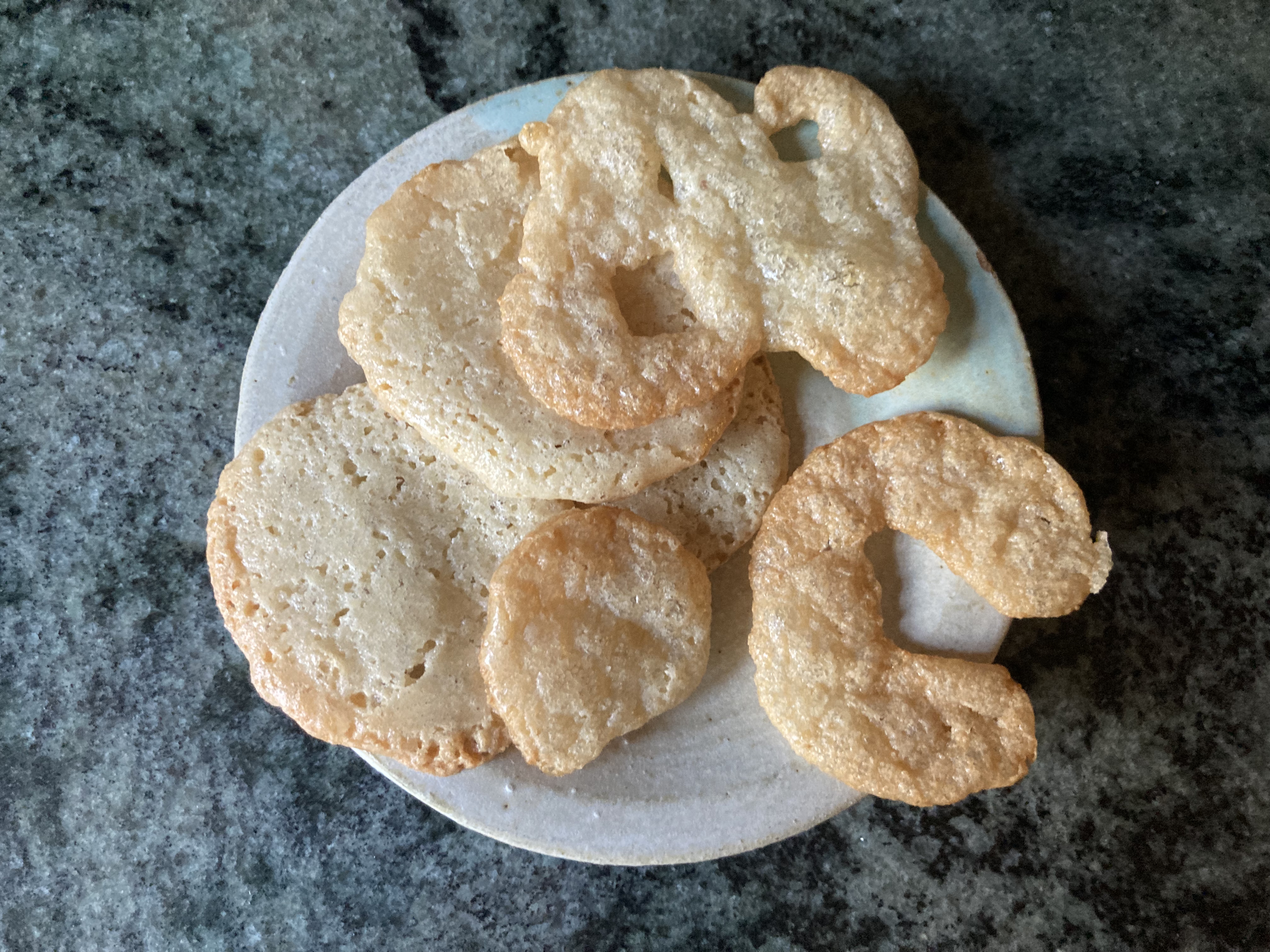
almond jumballs on a plate

There are so many recipes for jumballs in seventeenth-century recipe books. Even though I’ve been baking jumballs since I started this project in 2014, I’m still surprised by the major differences in flavor, texture, and method between recipes. As Stephen Schmidt explains in this helpful glossary entry, “When jumbles first came to England from Italy, in the sixteenth century, they were sugary, anise-flavored cookies formed by tying ropes of dough in elaborate two-sided knots, such as a figure-eight or a pretzel knot.” By the last decade of the seventeenth-century, when Christian Barclay wrote this recipe “To make Almond Jumballs” in her recipe book, they could either be sugary confections or buttery dough shaped in elaborate forms.

When I came across this recipe while looking at the manuscript with colleagues and undergraduate students working on my “What’s in a Recipe?”  project, I immediately knew I wanted to try it. Barclay’s jumballs are like macaroons. They only contain ground almonds, orange blossom water, sugar, water, and egg white. The method of preparation draws on confectionary practices as well as baking techniques. I spooned some of the thin jumball batter into rounds and piped the rest into letters and knot forms.

Original Recipe 

almond jumballs recipe

To make Almond Jumballs
Take half a pound of Almonds, blanch
them in cold water, & beat them very
fine, put in a spoonfull or 2 of
orange flower water to keep them
from oylling, when they are beaten
small, boyll half a pund of double
Refined sugar to a Candy not too high
when it is cold work into it 2 ounces
of fine searcht sugar, & a litle of the
froth of ane egg & squirt into a
paper, bake them in ane oven not too
hot.

The recipe uses a sugar syrup to bind the almonds and capture the fleeting scent of orange blossom water. A “frothed” egg white adds body and lift during baking. These almond jumballs are sweet, fragrant, and have a pleasing crunch on the outside and a slight chew in the center.

Updated Recipe

Makes approximately 24 jumballs.

This recipe requires a candy thermometer, a mixer, and baking parchment.

1 cup ground almonds (110 grams)
1 tablespoon orange blossom water
1 cup sugar (201 grams)
¼ cup water
1 egg white

Preheat your oven to 320F (160C).

Line two baking sheets with parchment.

Stir together the ground almonds and orange blossom water in a metal or ceramic mixing bowl.

Separate the egg and put the egg white in the bowl of a stand mixer. (You can also use a handheld mixer for this.) Whip the egg white until it is frothy, white, and full of small bubbles. It does not have to achieve stiff peaks to work in this recipe.

Put the sugar and water in a small saucepan. Affix a candy thermometer to the side. Bring the mixture to a boil and a syrup will form. Heat the syrup to 238F (114C). This is often called the “soft ball” stage.

Pour the sugar syrup into the ground almonds immediately. Stir until there are no almond clumps. Fold in the egg white. A thin batter will form.

Shape the jumballs on the prepared, parchment-lined baking sheets. (I used a tablespoon to measure out twelve even cookies. I pipped the rest of the batter into shapes, but they expanded substantially during baking and did not retain precise details.)

Bake for 10-12 minutes. (This will vary depending on the size and shape of your jumballs.) They are finished when they are golden at the edges and still pale in the center.

Allow the jumballs to cool completely on the baking sheet.

The Results

Crisp, floral, and sweet, Christian Barclay’s almond jumballs are a delicious treat. If I make them again, I may try to create more elaborate shapes now that I’ve seen how the batter expands when baked.

This recipe is naturally gluten free. I’d be curious to hear how an egg substitute would work if any of my readers prepare a vegan version.

Today I’m also inviting you to a virtual baking competition: the third annual The Great Rare Books Bake Off, a friendly contest between the sister libraries of Penn State University and Monash University. There are fourteen intriguing recipes to try from library collections. An engraved pie pan trophy will be awarded to the library that receives the most social media posts featuring photos of your baked goods tagged with its hashtag: #BakePennState or #BakeMonash. The competition runs 1-9 October 2022 so you have lots of time to read the recipes, shop for ingredients, and get baking. All the details are on the site linked above.

If these jumballs are not inspiring you to get baking, there are a lot of other recipes to choose from. In past years I’ve updated recipes for a lemon tart and for doughnuts. I’ve also enjoyed baking Suffrage Angel Cake, Cinnamon Buns,  Lamington Cake, and Pavlova in past years.

How to Make Knotts

This version of this post first appeared on the Folger Shakespeare Library’s Shakespeare and Beyond blog.

2019-11-09 16.13.03 copy.jpg

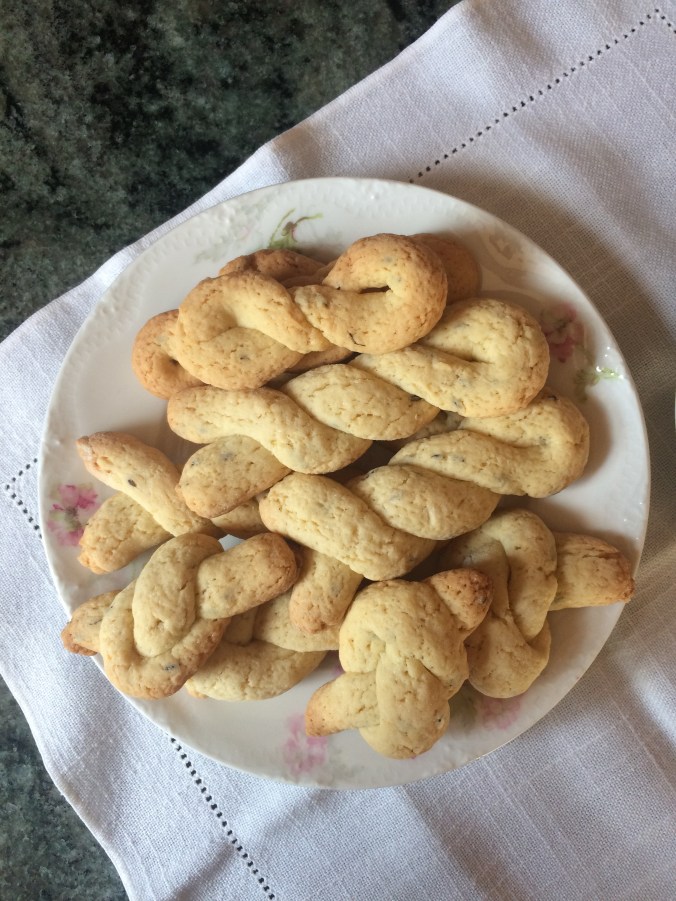
A plate of beautifully baked cookies is a wonderful thing. It is a welcoming gesture for guests, it signifies a holiday or a special meal, and it is a demonstration of a baker’s skill at making something pleasing to the eye and the palate. In Shakespeare’s England, bakers in elite households prepared sugar sculptures, confectionary, marzipan, and sweet doughs shaped into knots, twists, and letters.

2019-11-10 14.20.44 copy.jpg

Sweets were an occasion for British women to not only show that they were excellent bakers, but that they were masters of other handicrafts such as sewing and writing. In her book Pens and Needles: Women’s Textualities in Early Modern England, Susan Frye explores the deep and pervasive connection between sewing and writing in Renaissance culture. She writes, “Women from a variety of backgrounds created needlework pieces that placed accepted subjects in every room, that helped to clothe themselves and their families, and that declared the family’s social status, even as they may be read as personal and political expressions” (116). A woman’s style of knotting thread and creating samplers, or needlework pictures, was an indication of her class and taste. It was as individualized as handwriting. Likewise, as Wendy Wall shows in her book Recipes for Thought: Knowledge and Taste in the Early Modern English Kitchen, handwriting and needlework were connected to culinary skill. Although elite women employed cooks in their households, the lady of the house might personally participate in the preparation of finely shaped delicacies. Recipes that instructed cooks to shape soft dough or marzipan into “knots,” asked bakers to draw on their experience knotting thread as well as writing “knots,” meaning elaborate circular flourishes or majuscule and miniscule letterforms (Wall 143).

143012.jpg

Over the course of Shakespeare’s lifetime, sugar went from being an incredibly expensive ingredient, imported overland from Asia, to a more widely used seasoning. Kim Hall’s scholarship on sugar and status in the period demonstrates that British women’s increased use of sugar implicated them in the systems of commerce and colonialism that kept people of African and Caribbean descent enslaved as laborers in sugar cane fields in the Americas. As these systems persisted in the century after Shakespeare’s death, sugar became cheaper still and more widely available to upper and middle class British people. A manuscript whose inception we can date to 1677, Folger manuscript V.b.380, shows a range of beautiful flourishing and handwriting as well as many recipes for spectacular sweets.

2019-11-09 05.41.08 copy.jpg

Original Recipe

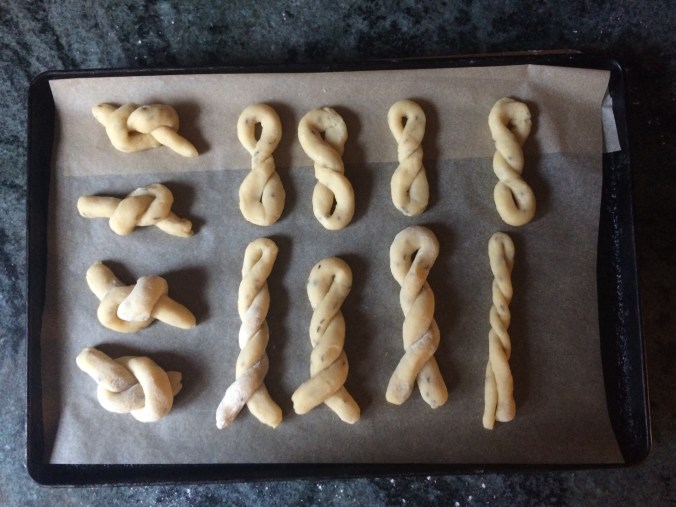
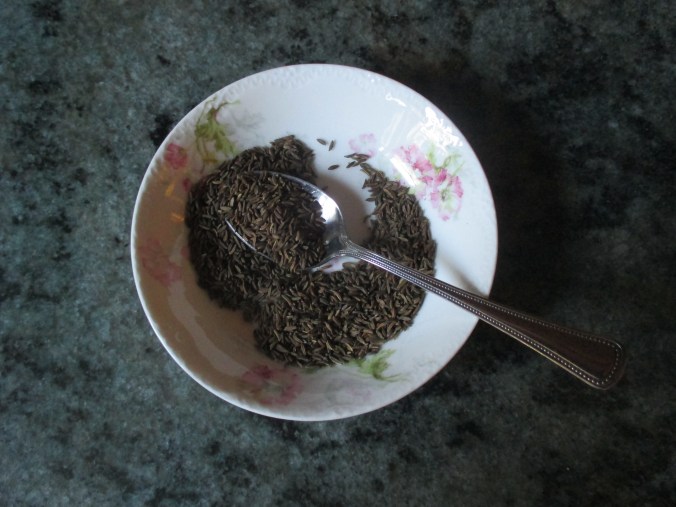
How to Make Knotts,” draws on a cook’s skill in shaping dough, writing, and sewing. The “Knotts” here are sweet cookies flavored with rosewater and caraway seeds. Although this flavor combination may sound unfamiliar, it is delicious and it was not uncommon in the period. Earlier this year, I prepared a delicious Seed Cake recipe with the same two dominant flavors.

142942 copy.jpg

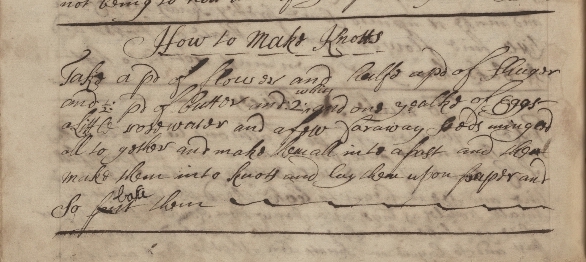
How to Make Knotts

Take a pound of flower and halfe a pound of shuger
and 1/2: pound of butter and :2: whits and one yealke of Eggs
a Little rosewater and a few Caraway seeds mingled
all to gather and make them all into a past and then
make them into knots and lay them upon paper and
so past bake them

Updated Recipe
Makes 24 cookies

1 cup, 2 tablespoons sugar
2 sticks butter (1 cup), room temperature
1 egg plus 1 egg white
1 tablespoon rosewater
3 1/3 cups flour (plus extra flour for shaping)
1 tablespoon caraway seeds
½ teaspoon salt

Preheat oven to 350F. Prepare two baking sheets by lining them with baking parchment or greasing them with butter or baking spray.

Cream together butter and sugar. Add the eggs and rosewater and stir to combine. Mix in salt, caraway, and flour to form a dough.

Shape into knots, twists, and letters on a lightly floured surface.

Bake 20-25 minutes.

This recipe comes from my year-long investigation of Folger Shakespeare Library manuscript V.b.380 alongside students and collaborators. I would like to thank the students (past and present) in my What’s in a Recipe? independent study (run through the Abington College Undergraduate Research Activities program); my collaborators Christina Riehman-Murphy and Heather Froehlich; and Shivanni Selvaraj and the PSU Outreach Seeding Change Engagement Grant for supporting my students in their research, event planning, and engagement with  Philadelphia.  

Jumballs from “Mariabella Charles her booke” Clark Library MS.1950.009

I have a thing for jumballs. When Alyssa and I started this website (four years ago this month!), I only had the vaguest idea of what “jumball” was or might be. Then I read many, many recipes for these delicious early modern sweets. It seems like there is at least one jumball recipe in every manuscript that I’ve consulted. I’ve also posted some here: My Lady Chanworths Receipt for Jumballs (UPenn) and Almond Jumballs (Folger). The first recipe has seamlessly entered my regular baking repertoire and my friends love them. Toothsome, spiced, and versatile, jumballs showcase my favorite parts of early modern confectionary and baking. I think this recipe for jumballs flavored with aniseed and sack then twisted into letters and knots has the potential to become a perennial crowd-pleaser as well.  And I promise you, for better or worse, this is not the last you’ll hear from me about jumballs.

This recipe is from Mariabella Charles’s recipe book, UCLA’s Clark Library MS.1950.009. I had the pleasure of consulting this manuscript on a recent visit and I’m looking forward to returning for a month-long residential fellowship next year. I’m excited to share more recipes from this manuscript, and other Clark holdings, soon. Mariabella Charles started this recipe book in 1678 and it includes entries in three other seventeenth-century hands by individuals who the catalog suggests may, or may not, be connected to Charles. Like most recipe books from this era, Charles’s has a recipe for jumballs and I was intrigued to see flavorings that I hadn’t tried in a jumball before listed among familiar ingredients.

Aromatic with aniseed and sack, rich with egg, these jumballs reminded me of my Grandmother’s Italian cookies. When I called her to ask about this she confirmed that she puts these flavors in her biscotti. In her words, “It’s a good cookie to have around so you can have it with coffee” and I heartily agree. If you don’t have aniseed around you can substitute fennel, but I loved the specific flavor of the aniseed here.

The Recipe

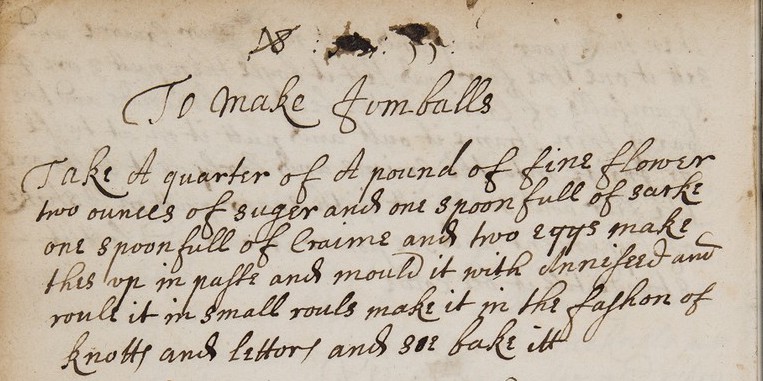
To make Jumballs

Take A quarter of A pound of fine flower
two ounces of suger and one spoonfull of sacke
one spoonfull of Craime and two eggs make
this up in paste and mould it with Anniseed and
roule it in small rouls make it in the fashon of
knotts and lettors and soe bake itt

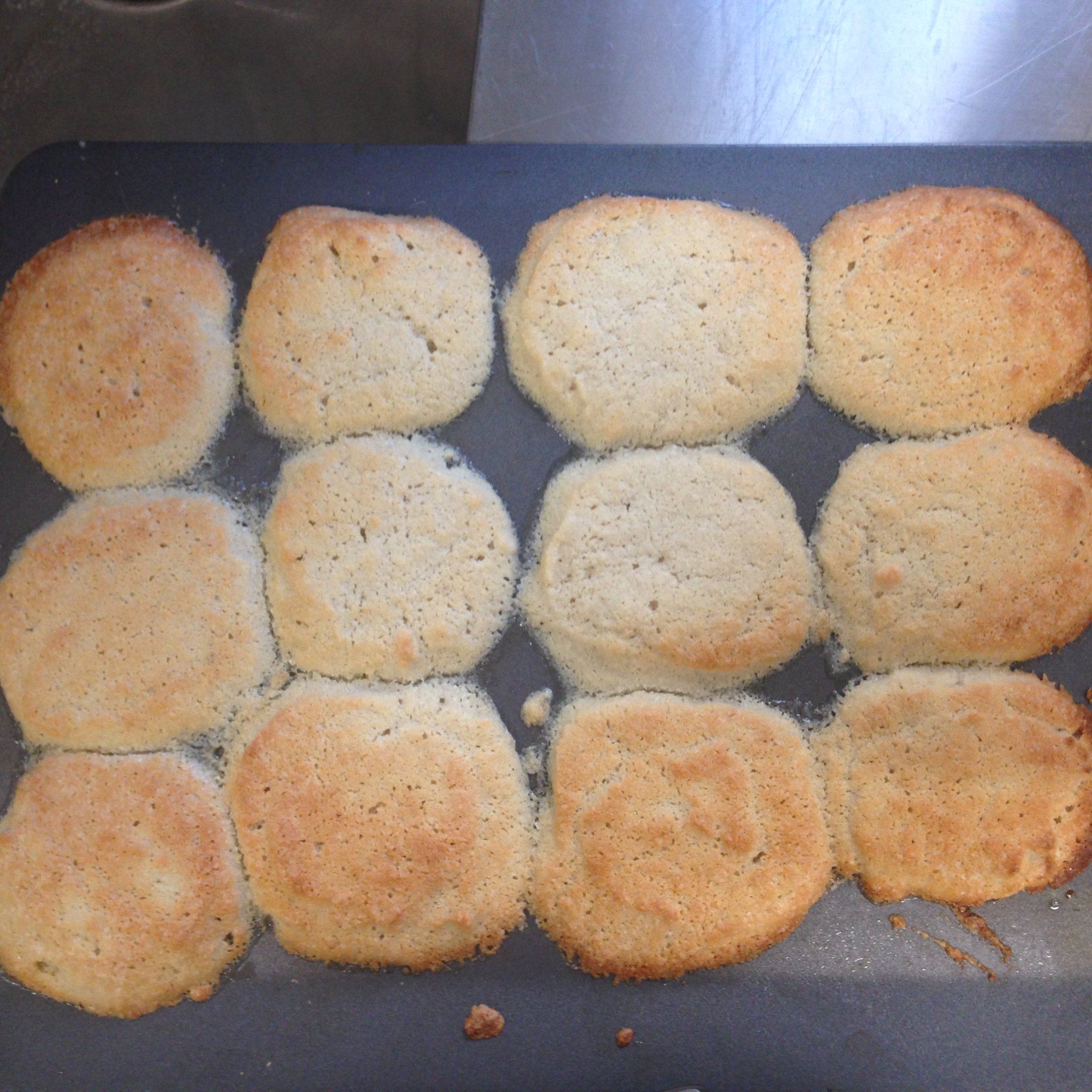
At first, this dough wouldn’t come together. I added an extra half cup of flour tablespoon-by-tablespoon until I could shape the dough into “knotts and lettors” as the recipe instructs. The recipe below includes the flour that I added in the total flour amount. I successfully shaped a few knots and the letters M, C, and J for Mariabella Charles’s Jumballs. Although shaping letters and patterns is often a part of making jumballs (as this GBBO technical challenge showcased), I’ve often found the doughs difficult to handle. I think these pliability issues have to do with the liquid content of twenty-first-century eggs and the texture of modern, milled flour.

Our Recipe

1 c flour, plus more for shaping
1/4 c sugar
1T sherry
1T cream
2 eggs
1T anise seed (or less to taste)

Preheat oven to 350F (180C).

Mix ingredients together. The dough will still be tacky, but you should be able to roll it into strips on a floured board. Shape rolls into letters, knots, etc.

Bake on a baking sheet lined with baking parchment or greased for approximately 30 minutes. Check at 20 minutes and extend your baking time if needed. The jumballs should be golden on the outside and still soft in the middle.

The Results

These were truly delicious. I ate one. Then another. They paired beautifully with my morning coffee and my afternoon tea. As usual, my grandma was right. They’re a great cookie to have around. I’m glad to have another jumball recipe in my pocket and especially pleased that I can shape this one in creative ways.

Cooking Almond Jumballs at the Folger Shakespeare Library

It’s time that we talk about paleography – the study of  handwriting. (Bear with me, we’re also going to make Almond Jumballs!) Without specialized training, Alyssa and I wouldn’t be able to read the historical recipes that we cook, research, and write about on this site. The archive of early modern manuscript recipe books is written in a mix of the two most common styles of handwriting:  secretary hand and italic hand.

Can you read these two recipes? The first hand has more italic features and the last one is a classic secretary hand.

If you’re looking for more resources, this website hosted by Cambridge University has a great online tutorial and the Folger Shakespeare Library hosts a resource guide here.

If you liked the experience of grappling with historical scripts, we encourage you to participate in Shakespeare’s World, a community transcription site developed by Zooniverse and the Folger’s Early Modern Manuscripts Online project.

Alyssa and I learned how to read medieval and early modern handwriting when we were graduate students at the University of Pennsylvania. We both participated in a student-run Paleography Workshop and I took a week-long course with Heather Wolfe, Curator of Manuscripts at the Folger Shakespeare Library  at the Rare Book School at the University of Virginia on “The Handwriting & Culture of Early Modern English Manuscripts.”  These experiences gave us the tools we needed to conduct our doctoral research and launch this project. In addition to providing you with tasty updated recipes and interesting background information, we have always included “semi-diplomatic transcriptions” of the original recipes completed to a high academic standard. Many of these recipes have never been transcribed before and posting them online in this readable form is one of our contributions to the field of historical food studies.

I’m currently in residence at the Folger Shakespeare Library working on my book project, but when my former paleography teacher Heather Wolfe asked me to talk about historical recipes with her Introduction to English Paleography course I jumped at the chance.  I love the “Chacolet” recipe we made this winter from a Folger manuscript and wrote about for the Collation blog. We also had a great time giving a talk at the library last December. Within a few minutes of discussion, Heather and I had settled on a cooking project in addition to a visit to her class. Last week I cooked “Almond Jumballs” from Folger Manuscript V.a.429, fol. 52v with Heather, members of her class, and library staff and interns.  It was a blast!


This manuscript contains the handwriting of three (or more) individuals and it was used in the seventeenth and eighteenth centuries. Two sets of ownership inscriptions grace the  opening leaves (above).

Rose Kendall
& Ann Cater
there Book
1682

Anna Maria Wentworth
Her Book 1726

The opening pages of the book are beautifully planned and decorated with remarkable calligraphic flourishes. Although the red ink disappears from later sections, the manuscript is neat overall. The index at the beginning seems to have been updated as recipes were added.

The Recipe

127366 - cropped

Almond Jumballs

Take a pound of Blanched Almonds, and beate them small in a Morter, putt
in a little Orange fflower, or Rose Water, to keep them from oyling, dry them against
the fire, till they crumble like bread, then boyle as much Sugar to a pritty thick
Syrrup as will make it up like Balls. keep it by you, to make Jumballs when you
please, half a pound will make a great many, put half a pound of the Balls in
a Morter, with three quarters of a pound of Sugar sifted and as just as many
whites of Eggs as will make it so stiffe as not to runn out. when it shall be spouted
with a syringe, for the purpose if you have not that Instrument you may lay them one
Paper in what figure you please but the Sugar almonds and Eggs must be well
beaten togeither. If it should not taste enough of Orange fflower Water you
may put in more as you beat it. sett them in an Oven as hot as for Biskett

This recipe has it all: lots of manuscripts have recipes for “jumballs” (like the one we posted a while back), the script included some tricky letter forms, and the recipe required fairly simple ingredients and methods. We knew we could make it in the Folger’s on-site tea kitchen. While I went into the classroom with a general plan for how to prepare the jumballs (we’d already purchased ingredients, after all!), we did ask the students in the course to consider how they would translate this recipe into actual ingredients and steps. They asked great questions which forced me to rethink my draft recipe both at the start and while we were in the kitchen.

There are two especially interesting things about this recipe. First of all, it instructs you to make a flower-water flavored ball of almond paste from blanched almonds and sugar. Presumably this mix might have been a shelf-stable item. Then, when you’re ready to make the jumballs, the recipe instructs you to pipe the batter through a syringe or otherwise shape them elaborately. Although we made valiant attempts to shape our jumballs, our dough did not cooperate.  We even tried piping it through a plastic glove with a snipped finger since we didn’t have a pastry bag! As a result, the egg measurement in our recipe below asks you to add egg whites one at a time and pay attention to the consistency of the mix.


Our Recipe

Makes about two dozen cookies.

1lb blanched almonds or ground almonds
2T orange flower water (or rose water)
3C sugar (1C for sugar syrup, 2C for cookie formation)
4-5 egg whites

Preheat your oven to 350F.

Mix together ground almonds and flower water. Toast the almond mix for about 2 minutes. Remove when the mix starts to brown.

Make a “thick” sugar syrup. Bring 1C sugar and scant 1C water to a boil until the sugar is dissolved. This will produce about 1 1/2C sugar syrup.

Add the sugar syrup 1/2C at at time to the toasted almond mix. At this point you can form the mix into balls and divide into batches (if you prefer).

Raise the oven temperature to 400F.

Put the almond mix balls in a large mixing bowl. Stir in 2C sugar (for the whole amount).

Separate your eggs. You can either whip your egg whites to produce a slightly fluffier jumball or skip this step to create a chewier jumball (see results discussion below). Add egg whites to the almond sugar mix one at a time (approximate if whipped) until your dough is moist and pliable. You should be able to roll a piece of it into a log on a flat surface.

Taste the mixture and add additional flower water to taste. (We didn’t add any more at this point.)

Shape your dough into twists, letters, etc. Write your name, make a funny face, shape a flower, and have fun with it! Place your jumball shapes on two or more greased baking sheets.

Bake at 400F for 20 min until the jumballs are lightly browned.

The Results

Fresh from the oven the jumballs were chewy, sweet, and fragrant. A day later they were like hard macaroons. We were pleased with how they turned out. They were nothing like the buttery seed-filled shortbread-like Jumballs Alyssa and I made in 2014. Every recipe book seems to have a receipt for Jumballs and we look forward to exploring more versions with you soon.

Alyssa and I always learn when we cook together, but cooking with a group was a new experience for me. With so many people completing tasks and offering opinions, we collaborated to make a better version of the recipe. For example, we weren’t sure if we needed to whip the egg whites or not before adding them to the almond and sugar mixture. By dividing the almonds into two batches, were were able to try both approaches. After trying and tasting both versions, we decided that the  whipped egg whites added fluffiness, but because of the density of the almond mix they did not add enough buoyancy to make the step absolutely necessary. Others preferred the denser texture of the batch with the normal egg whites. My recipe above includes both options.

Here at Cooking in the Archives we believe that people can learn a lot about early modern recipes by reading them and cooking them. I can’t wait to here what else the Introduction to Paleography students find, try, taste, read, and learn as a result of this training.

Transcription Answers

The first example is from UPenn Ms. Codex 626 (32r) “Hopestill: Brett, Her Booke: 1678”

A sawce for a hare

Rost beef suit in the hares
shred when put in
belley: then bake it when shee is
Rosted and then put the graue
to it and sum butter and stis
Sum nutmig in and salt

The second example is from UPenn Ms. Codex 1601 (7r)

To boile Chickens on sorrell sops.
Truss your chickens & boile them in water
& salt, verie tender, then take a good
handfull of sorrell & beate itt stalke &
all, then straine itt & take a manchet
& cutt itt in sippetts & drye them before
The fire, then putt your green brouth

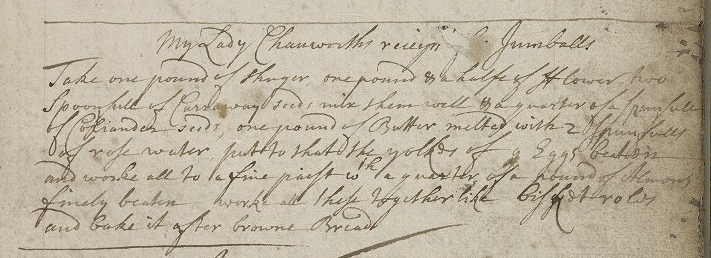
My Lady Chanworths receipt for Jumballs


CookingArchives-4184

Photo by Carley Storm Photography http://www.carleystormphotography.com

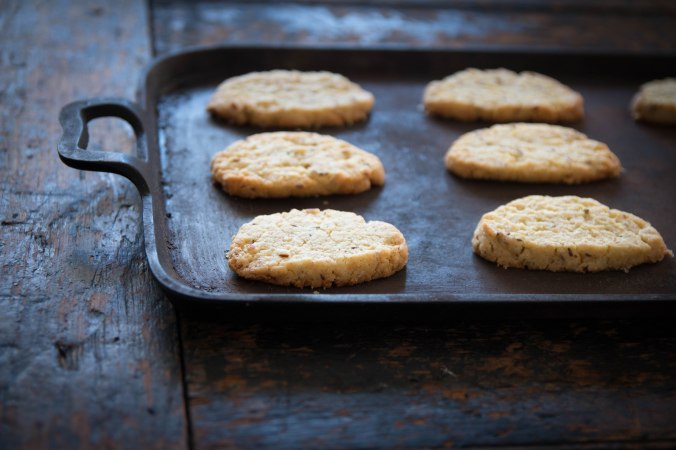
It’s high time that we talk about jumballs. We were initially mystified by the moniker, but jumballs are a classic early modern treat: A rich, satisfying, highly-spiced, shortbread cookie. They are the single most delicious thing we’ve cooked from the archives to date.

Even a quick search to define the term revealed the jumball’s long-term popularity, from Gervase Markam’s classic English Housewife (1649) to the iconic Mrs Beeton’s Book of Household Management (1888), with examples on many other historical cookery sites like this one. The Oxford English Dictionary generalizes among the range of different spices and methods in these various recipes to define early modern jumballs as a “kind of fine sweet cake or biscuit, formerly often made up in the form of rings or rolls.”

In LJS 165 there are two recipes for jumballs back to back: “To Make Jumballs / My Mother Anges receipt” and “My Lady Chanworths receipt for Jumballs.” We thought that the first recipe’s mention of the compiler’s mother (or another source’s mother) was a poignant look into the perennial practice of handing down knowledge from mother to child, most likely mother to daughter. But the final instruction in that first recipe — soaking the baked jumballs in vinegar overnight — was not especially appealing, although it is very likely an excellent method for preserving the biscuits.  Besides, who among us can take delicious cookies out of the oven and not eat them immediately? We decided to prepare the second recipe instead: “My Lady Chanworths receipt for Jumballs.” (If any readers try the alternate recipe, we’d love to hear how it turns out.)

The Recipe

jumballs

My Lady Chanworths receip[t  for] Jumballs

Take one pound of shuger, one pound & a halfe of fflower, two
spoonfull of Carraway seeds, mix them well & a quarter of a sponfull
of Coriander seeds one pound of Butter melted with 2 spunfulls
of rose water, put to that the yolkes of 4 Eggs beaten
and worke all to a fine paist with a quarter of a pound of Almons
finely beaten worke all these together like bisket roles
and bake it after browne Bread

Like other sweet and savory recipes from the period, this recipe uses fragrant whole caraway and coriander seeds enlivened by aromatic rose water, the richness of egg yolks and butter, and the deep nuttiness of ground almonds. Other than halving the quantities in the recipe (which still made a lot of cookies) we’ve made no changes to the dough mix and simply reformatted the instructions into a modern style below.

Now, there are a wide variety of ways to shape jumball dough before baking. Recipes call for twisting, rolling, slicing, and folding. Given the texture of the jumball dough in a very hot kitchen (summer in Philadelphia) we decided to follow a classic shortbread method and to roll our dough into a long log, slice cookies 1/4 inch thick, and bake them. (If you try this recipe and shape them differently, send us a photo!)

Our Recipe

*Halved from the original. We also used a baking scale for this one, but we’ve included approximate volume measurements.

1/2 lb sugar (1c)
3/4 lb flour (2 3/4 c)
1 t caraway seeds
1/2 t coriander seeds
1/2 lb butter, melted (2 sticks or 16 T)
1 t rosewater
2 egg yolks, beaten
1/8 lb ground almonds (generous 1/2 c)

Preheat oven to 350F.

Mix flour, sugar, and spices in the bowl of a stand mixer (or a large bowl if mixing by hand). Add melted butter, rosewater, egg yolks, and ground almonds and mix until a uniform dough forms.

Place dough on a lightly floured surface and shape into cookies. We did this by rolling the dough into a log and slicing 1/4 inch cookies, but there are many other ways to shape this kind of dough.

Bake 20 minutes or until brown around the edges. Cool on a rack before devouring, if you have the willpower.

Results

They don’t look like much when you lift them onto the cooling rack (does shortbread ever look impressive?). But the aroma of spice and sweet gives it all away.

Jumballs are truly delicious. Their balance of nut and spice, fragrance and buttery texture is divine. They’d hold their own in a spread of cookies. We’ve since learned that they pair well with Italian Cheese, but we suspected from the beginning that they would complement vanilla ice cream, custard, fresh fruit, or a simple cup of tea.

When we shared these with unsuspecting friends they were bowled-over by the surprising and delightful presence of coriander. And their first guess was that we’d found the recipe on one of the latest trendy food blogs, not through this archival project. We’ll be making these again.