hou to bake Quinoces

quinces in bowl and on cloth on table

I always buy too many quinces. I am so excited when I first encounter them at the market in the autumn. I fill my bag. (I’ve written about my love of quinces here before.)

So it was a good thing that I had already transcribed these two recipes for baked quinces from an early seventeenth-century manuscript cookbook now held at the British Library — Add MS 28319.

The Recipe(s)
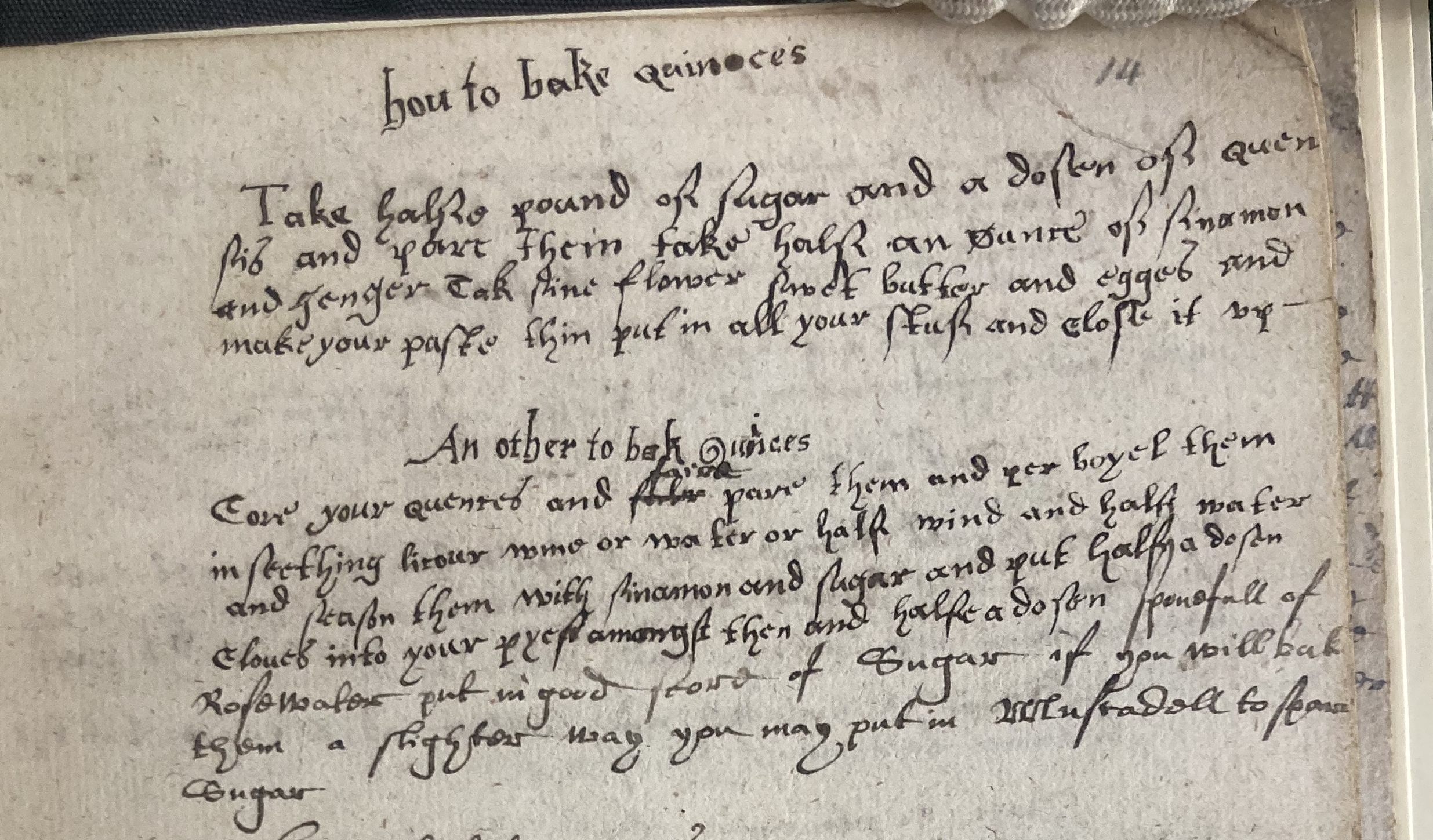
original recipe in culinary manuscript

hou to bake Quinoces
Take halfe pound of sugar and a dosen of quen
sis and pare them take half an ounce of sinamon
and genger Tak fine flower swet butter and egges and
make your paste thin put in all your stuf and close it vp

An other to bak Quinces
Core your quences and falx faire pare them and perboyel them
in seething licour wine or water or half wind and half water
and season them with sinamon and sugar and put half a dosen
Cloues into your pye amongst then and halfe a dosen sponefull of
Rosewater put in good store of Sugar if you will bak
them a slighter way you may put in Muscadell to spare
Sugar

Both recipes can be used to bake large volumes of quinces into delicious, sweet pies flavored with aromatic spices. The second recipe attends to the distinct toughness of the quince by first boiling the quince in water, wine, or a mixture of water and wine before baking in a lidded pie. There are other recipes later in the manuscript for open-topped tarts full of seasoned pureed quince.

My recreation below takes the method of parboiling in water and wine from the second recipe and combines the flavorings from both. I used sugar, cinnamon, ginger, cloves, and rosewater.

(Curiously, this is the only place in the manuscript where the recipe titles mimic printed lettering, instead of traditional cursive forms. Perhaps they were copied from a printed source into the manuscript.)

Updated Recipe

I tested these tarts with this pastry recipe and I have copied it into the instructions below. Feel free to use an historical or modern pastry recipe of your choice.

Parboiled Quinces
2 quinces
1.5 cups red wine
2 cups water

Pastry
1 3/4  cup flour (210 grams, 1/2 lb)
1 Tablespoon sugar
3/4 teaspoon salt
1 stick butter (113 grams, 8 Tablespoons, 1/4 lb)
1 egg
4 Tablespoons water (1/4 cup, added a spoonful at a time)

Filling
Parboiled quinces (above)
1/4 cup sugar
1/4 teaspoon cinnamon
1/4 teaspoon ground ginger
1/8 teaspoon ground cloves
1T Rosewater

Optional: milk or egg wash for the pastry

Peel and core the quinces. Cut them into ¼ inch slices.

Put the quinces, wine, and water into a medium sized saucepan. Bring to a boil. Reduce to a simmer and cook for approximately 20 minutes. The quinces should be tender when poked with a fork. Pour off the cooking liquid and let the quince cool. (This step can be completed in advance.)

When you are ready to assemble the pie, make the pastry. Put the flour, sugar, and salt in a large bowl. Stir to combine. Chop the butter into small pieces. Work the butter into the flour mix until a fine meal forms. Add the egg. Add the water one tablespoon at a time. Using your hands and/or a spoon, work the mix until it holds its shape as a ball. It will still feel dry to the touch.

If you are going to bake the pie immediately, put the pastry in the refrigerator to chill and preheat the oven to 450F. Grease a 9-inch pie dish with butter or baking spray. (Either the prepared pastry or the assembled pie can rest in the refrigerator before baking if needed.)

Put the cooked quinces into a large bowl. Add the sugar, cinnamon, ginger, cloves, and rosewater. Toss gently to combine without breaking up the pieces too much.

Assemble the pie by first dividing the pie crust into two balls. Roll out the first ball into a large, even circle on a floured surface. Line the 9-inch pie dish with pastry.

Arrange the seasoned quinces in an even layer inside the crust.

Roll out the second crust and place it on top of the pie. Cut off any excess pastry. Use a fork or your fingers to seal the edges. Cut vent holes or slits into the top crust. (At this stage you can add a milk or an egg wash for an especially golden crust.)

Put the pie on a baking sheet and put it in the oven. Bake at 450F for 10 minutes. Then reduce the temperature to 350F and bake for about 35 minutes until the pie is golden brown. Cool on a rack before serving.

The Results

A delicious fragrant pie. The flavors of wine, spice, and floral quince and rosewater pair beautifully with the rich pastry. I shared slices with friends and family who loved the flavors and found the dish both agreeably similar to an apple pie and delightfully unique.

I also had the pleasure of sharing the draft recipe with participants in a history skills workshop organized by the Historical Society of Michigan. We discussed how different the seasoning of the pie might be depending on when and how one used the cloves — what if I had added whole cloves to the red wine poaching liquid? what if I had used whole cloves in the pie, instead of ground cloves? Mulling this over, I also wonder how the fruit would taste if I had added whole cloves and cinnamon sticks to the wine during parboiling. If any of you try to spice your quinces or make your a bit differently, please let me know in the comments.

Tartes of strawberryes


I love strawberry season. If anything will prompt me to turn on the oven at the start of a June heatwave, it’s probably a favorite strawberry recipe. Over the years, I’ve tried various historical recipes for tangy strawberry preserves, a refreshing strawberry water beverage, and chilled snow cream served with strawberries. Yesterday morning, before it got too hot, I tried my hand at some strawberry tarts.

The Recipe

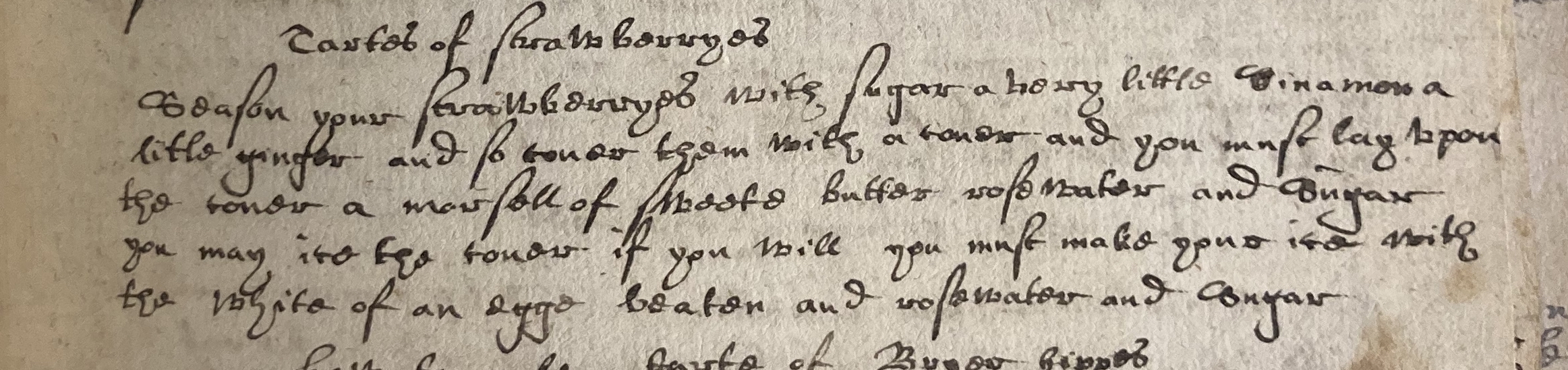
Image of strawberry tart recipe in original manuscriptTartes of strawberryes
Season your strawberryes with sugar a very little Sinamon a
litle ginger and so couer them with a couer and you must lay vpon
the couer a morsell of sweete butter rosewater and Sugar
you may ice the couer if you will you must make your ice with
the white of an egge beaten and rosewater and Sugar
(British Library, Add MS 28319, f. 16r)

This recipe for “Tartes of strawberryes” is from an early seventeenth-century manuscript cookbook now held at the British Library — Add MS 28319.* Culinary recipes and instructions for serving various courses fill the twenty leaves of this short manuscript this is written in a small, regular secretary hand. Earlier this summer, I had a chance to travel to the British Library and transcribe the entire manuscript (thanks to a Franklin Research Grant from the American Philosophical Society). As you’ve probably noticed, I haven’t been in the kitchen much this year. I’ve been at my desk writing about the recipes I’ve developed for my new book Shakespeare in the Kitchen (which will be out next year in this series) and, lately, I’ve been back in the library gathering more material for this book and my ongoing projects.  So I was even more eager to spend a morning in the kitchen engaging with this manuscript in a different way — cooking it.

* Although manuscripts are not currently available through the British Library catalog due to the cyberattack, a 2020 post on their medieval manuscripts blog includes a discussion of this cookbook.


Strawberries only appear twice in this manuscript — as the filling of these closed tarts and as a seasoning for stewed mullet where gooseberries or barberries might also add a sharp, acidic flavor (9v). The menus that begin the manuscript, however, show how central tarts were to the contemporary style of dining. Tarts like these would be served in the second spread of various dishes at dinner (the large midday meal) and supper (the lighter evening meal) alongside meat, vegetable, and fish dishes depending on the season or fish-day constraints (2r-3r). There are seventeen tart recipes in the cookbook, some lidded and some open-faced, that would allow a cook to serve a variety of tasty tarts throughout the year (15r-16r). Seasoned with spicy ginger and warm cinnamon, these strawberry tarts would hold their own against the strong flavors of venison, shrimp, gingerbread, duck, or fritters that might also have been served on the same table.

Updated Recipe

Makes about 20 tarts.** 

I tested these tarts with this pastry recipe and I have copied it into the instructions below. Feel free to use an historical or modern pastry recipe of your choice.

Pastry
1 3/4  cup flour (210 grams, 1/2 lb)
1 Tablespoon sugar
3/4 teaspoon salt
1 stick butter (113 grams, 8 Tablespoons, 1/4 lb)
1 egg
4 Tablespoons water (1/4 cup, added a spoonful at a time)

Filling
2 cups strawberries, chopped (400 grams)
1/4 cup sugar (50 grams)
1 teaspoon ginger
1/2 teaspoon cinnamon

Topping***
2 Tablespoons butter, room temperature
1 teaspoon rosewater
1 Tablespoon sugar

Preheat the oven to 425 F (220 C). Take out the butter for the topping to give it time to come to room temperature.

Make the pastry. Put the flour, sugar, and salt in a large bowl. Stir to combine. Chop the butter into small pieces. Work the butter into the flour mix until a fine meal forms. Add the egg. Add the water one tablespoon at a time. Using your hands and/or a spoon, work the mix until it holds its shape as a ball. It will still feel dry to the touch.

While the pastry rests in the fridge or at a cool room temperature, remove the stems from your strawberries and cut them into small pieces (approximately 1/2 in or 1 cm). Season the chopped strawberries with sugar, ginger, and cinnamon.

In a small bowl, stir the room-temperature butter and rosewater with a fork so that the whipped butter it is well-combined and ready to spread.

Roll out the pastry. Using a pastry cutter or drinking glass, cut circles. I used a 2 5/8 in (68 mm) pastry cutter to make nice little tarts. Make sure you have an even number of circles so that you have bottoms and lids.

Grease your pan. Lay out the bottom pieces. I used my handy mince pie pan to make a batch of 12. You can easily make these pies on a baking sheet by shaping the top piece of pastry over a mound of seasoned strawberries. (See note about extra filling below.**)

Fill each pie with seasoned strawberries. Place a lid on each pie. Push down the edges of the pastry to seal. Coat the lids with the butter and rosewater mixture. Sprinkle generously with sugar.

Bake the tarts for 15 minutes until golden brown. (Check them at 10 minutes and see how they’re faring.)

Let the pies cool in their pan for 10 minutes before transferring to a cooling rack or serving plate. Serve warm or at room temperature.

The Results

When I think of a strawberry tart, I usually think of an open-faced dessert, with an abundance of glistening strawberries and crisp, fluted pastry. (Or I think about how I love to add strawberries to these very rustic rhubarb tarts.) Instead, these strawberry tarts show how warming spices such as ginger and cinnamon — spices I’m more used to pairing with apples — compliment the bright sharpness of summer strawberries. The ginger especially shines in this recipe as it pairs with the rich pastry and the soft, tart strawberries. It’s a perfect recipe for strawberry season.

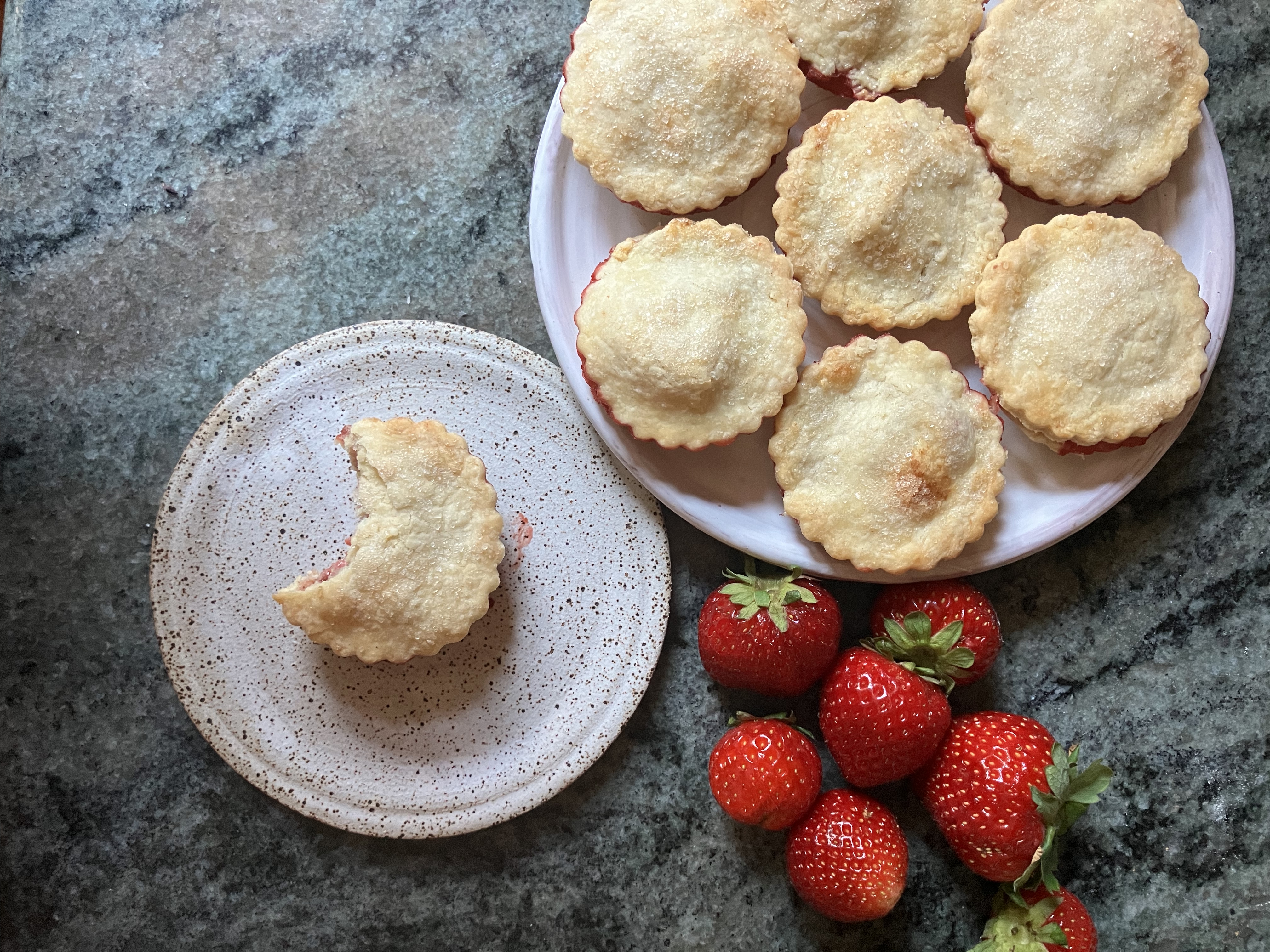
strawberry tart on plate with bite taken out, plate with tarts, strawberries on counter

**Extra Filling

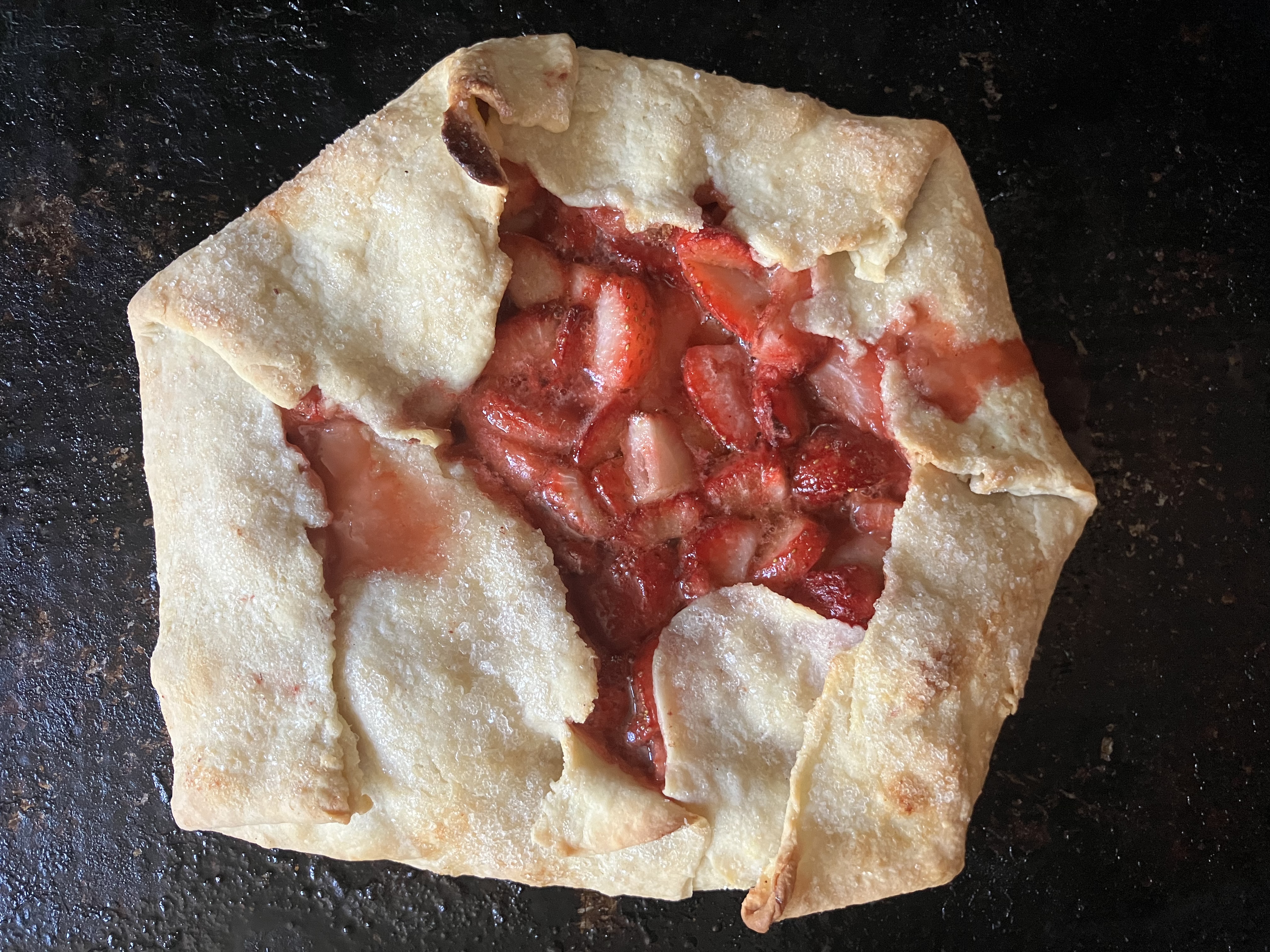
I made one tart pan full of 12 tarts. By the time these came out of the oven, my kitchen was getting incredibly hot and I quickly shaped the remaining pastry into a (delicious) rustic galette filled with the remaining seasoned strawberries. I believe I had enough of everything to make about 8 more lidded tarts. If you only want to make a dozen tarts, I believe half the seasoned strawberry fulling will suffice, but you will need more than half the dough and the recipe above is not easy to divide as it contains a whole egg.

strawberry galette

*** Rosewater butter topping update
When Lisa Smith tried this recipe the week it was posted, she found that the rosewater overpowered the spices in the tarts. This was not my experience, but rosewater strength varies across brands so do keep this in mind as you prepare these tarts! Thanks again for baking and sharing your experience, Lisa!!