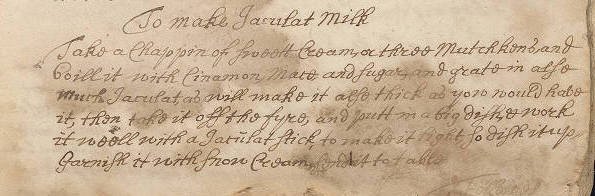
To make the Lady Duthes Crakenles 

This post was written by Marissa Nicosia and Sarah Peters Kernan. Sarah, a culinary historian,  is co-editor of The Recipes Project and host of the Around the Table podcast. 

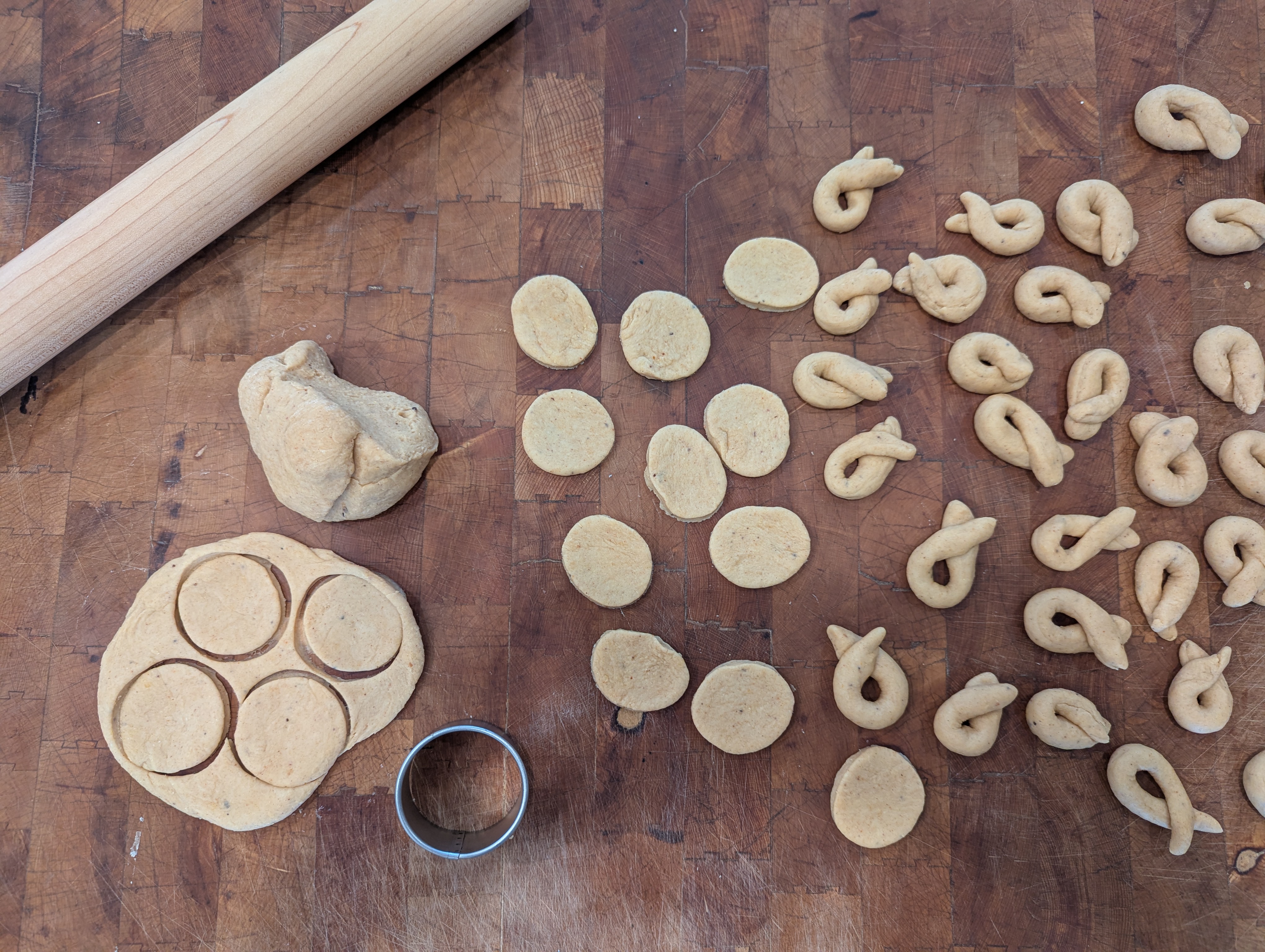
cracknels on cutting board with rolling pin

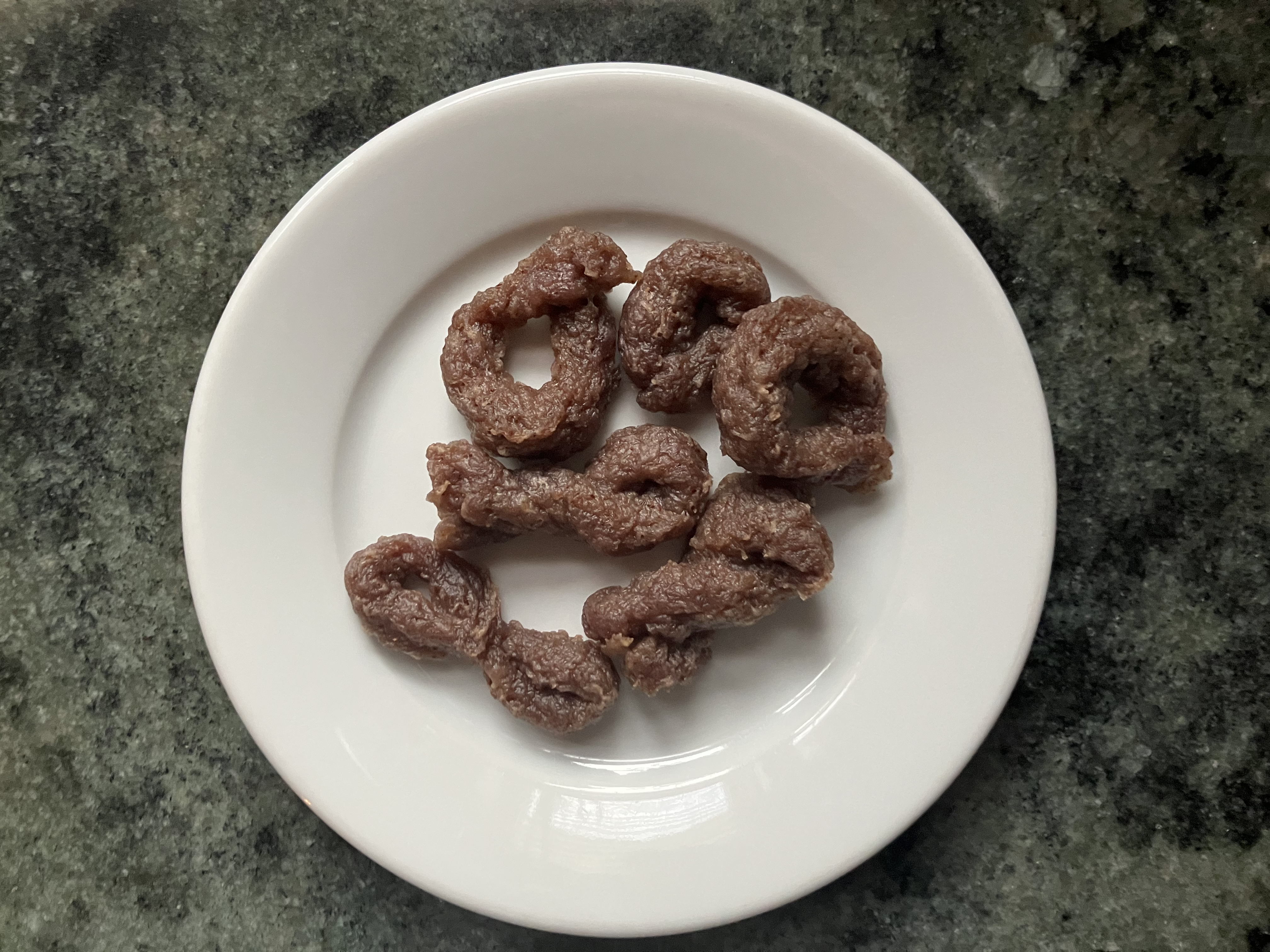
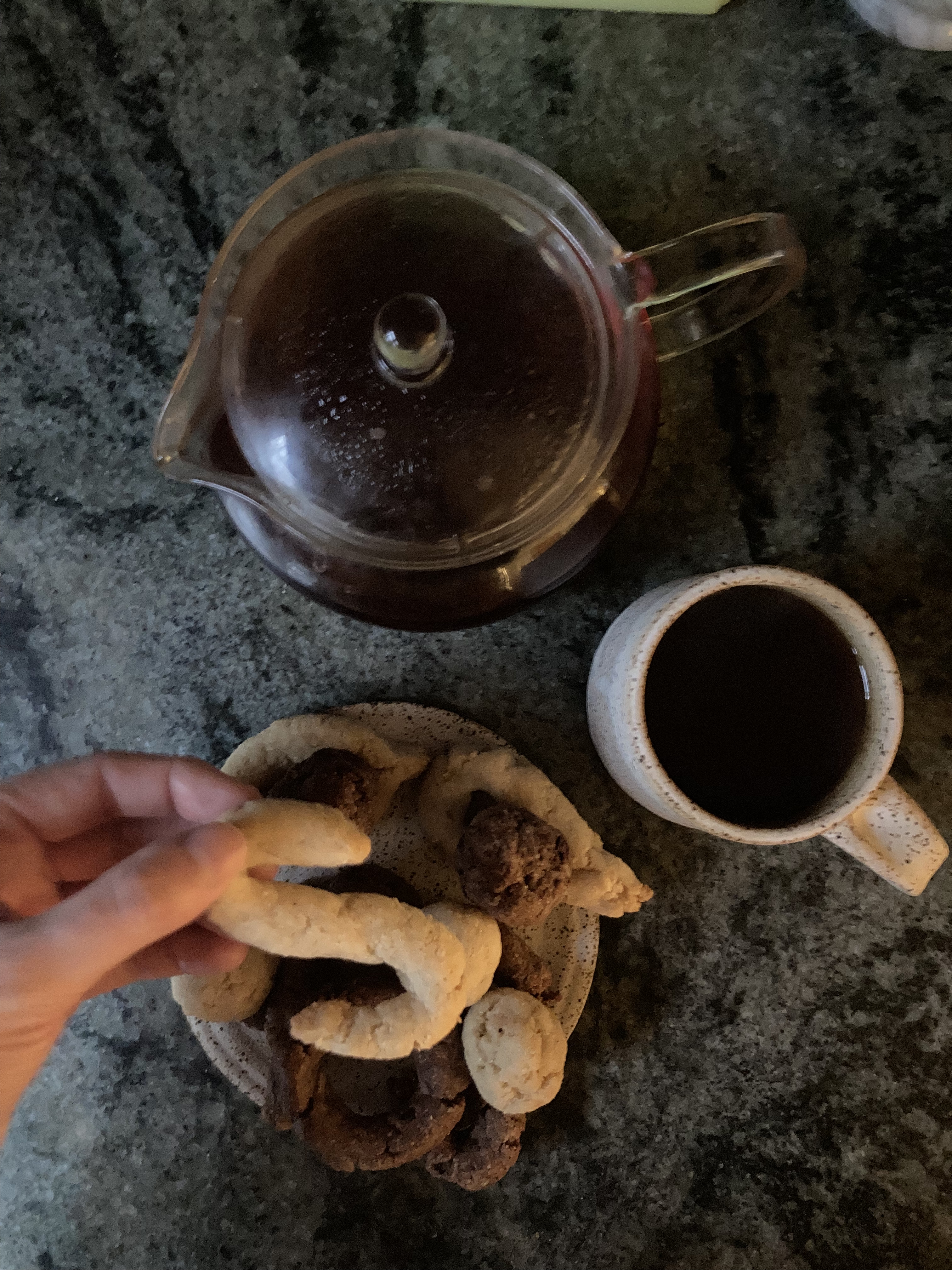
When Sarah and I realized that we had a shared interest in Lady Anne Percy’s recipe book, we decided to try out a recipe for a kind of cookie, called a cracknell, that we both found very curious: “To make the Lady Duthes Crakenles.” 

A teenaged Lady Anne Percy copied her mother’s recipes into her recipe book in a distinct hand with a mix of italic, roundhand, and secretary features around 1650. Philip Lord Stanhope, her husband, writes a note inside the front cover of this manuscript to tell us that it is her hand and that these are her family recipes. Remaining in her husband’s family’s library for generations, the undigitized manuscript, Whitney MS 2, is now part of the Whitney Cookery Collection in the New York Public Library’s Manuscripts and Archives Division. It contains a variety of culinary, confectionary, medical, and household recipes. This recipe is one of three cracknell recipes in the manuscript. 

What exactly are cracknells? They are cookies, sometimes spelled cracknel or cracknell, and they appear frequently in early modern English cookbooks and recipe books. Despite their constant presence, cracknells actually changed quite a bit over three hundred years.

During the sixteenth and seventeenth centuries, cracknells were boiled prior to baking. This is the type of cracknell recipe included in Lady Anne Percy’s recipe book. These cracknells have an outer layer that cracks when you bite into it but depending on exactly when you are eating it and what type of baking and drying method you use, it might be dry and crisp on the interior, or slightly chewy. The cookie, however, should not be tough or heavy. These cracknells were usually spiced and slightly sweetened, and some recipes included ingredients like wine or yeast in the dough. A seventeenth-century recipe from a manuscript at the Folger Shakespeare library describes shaping cracknells by rolling dough “vpon a smooth table with your hands into little long roules, and make them into knotts as you doe iumballs, or what fashion you will.” This older cracknell form has much in common with Italian tarelli, another boiled-and-baked treat still available today.

During the seventeenth century, English cracknells began to change into a very different type of biscuit. As Stephen Schmidt describes in detail, these new cracknells were very thin, crisp cookies and did not involve any boiling prior to baking. These thin, unboiled cracknells became the standard form of the recipe in England by 1700 and remained in circulation for at least another century.

In what follows, we include a transcription of the original recipe and our two different recreation attempts – one with white wine and one with red wine – as well as our tasting notes. Let us know if you try these and what you think!

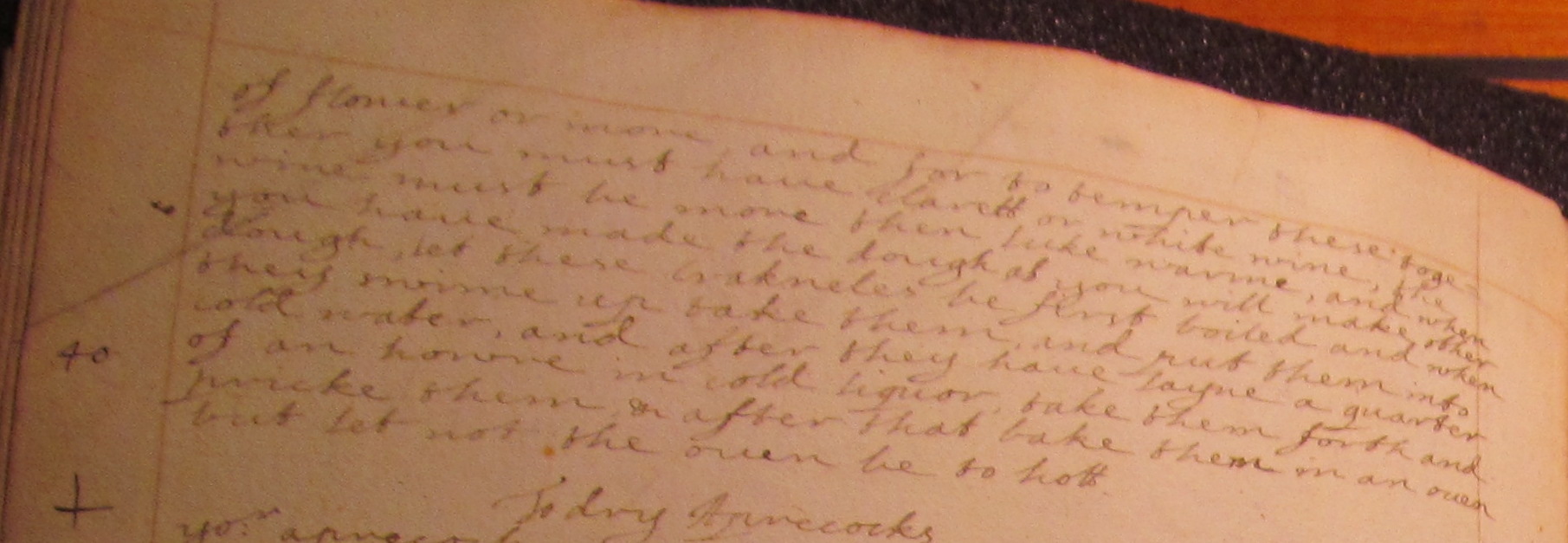
Original Recipe

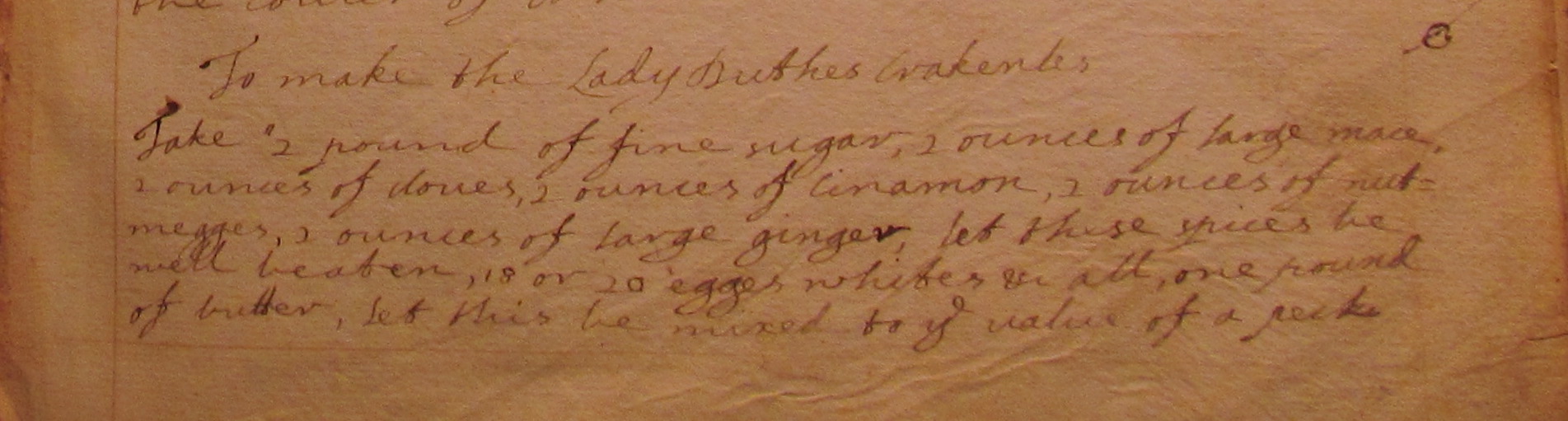
To make the Lady Duthes Crakenles
Take “2 pound of fine sugar, 2 ounces of large mace,
2 ounces of cloves, 2 ounces of cinamon, 2 ounces of nut=
megges, 2 ounces of large ginger, let these spices be
well beaten, 18 or 20 egges whites & all, one pound
of butter, let this be mixed to y
e value of a peck
of flower or more, and for to temper these toge
ther you must have clarett or white wine, the
wine must be more then luke warme, and when
you have made the dough as you will make other
dough, let these crakneles be first boiled and when
they swime up take them, and put them into
cold water, and after they have layne a quarter
of an howre in cold liquor, take them forth and
pricke them, & after that bake them in an oven
but let not the oven be to hott.

SK Updated Recipe

⅛ of original recipe with white wine

Ingredients

½ cup sugar

1 ½ teaspoon ground mace

1 ½ teaspoon ground cloves

1 ½ teaspoon ground cinnamon

1 ½ teaspoon ground nutmeg

1 ½ teaspoon ground ginger

2 eggs, gently beaten

4 Tablespoons unsalted butter (at room temperature)

3 ¾ cups all-purpose flour

1 cup white wine

Instructions

Preheat oven to 325 F.

Bring a large pot of water to a gentle boil. 

Heat the wine over low heat in a pan on the stovetop. Do not boil! The wine should be warmed just “more than luke warme.”

Prepare a large bowl of cold water.

Combine the sugar, mace, cloves, cinnamon, nutmeg, ginger, and flour. Mix together until well combined. 

Add the eggs, butter, and warm wine to the flour mixture. Begin mixing together with a wooden spoon. The mixture will seem very shaggy at first. 

Once most of the mixture is combined in the bowl and forming into a single ball of dough, turn out the dough onto a flat surface and knead together with your hands for 1-2 minutes. The dough will come together quickly and form into a smooth ball. The dough will not feel sticky at all. You will not need any additional flour on your kneading surface.

Form the cracknels.

Option 1: To form knots 

Cut the dough into 64 same-sized pieces using a bench scraper or knife. Roll each piece into a 3-4 inch cylinder and overlap the bottom edges. Pinch the area where the dough overlaps so the cracknell keeps its shape.

Option 2: To form circles 

Roll out the dough flat, measuring about .25 inch high. Using a circular biscuit cutter or small drinking glass, cut out small circles in the dough. Re-roll the remaining dough and continue cutting out circles until no dough remains. I used a 2-inch biscuit cutter to yield 60 circles.

When you have formed the cracknells, place approximately a quarter of them into the gently boiling water. Do not overcrowd the pot, or some could stick to each other. Gently stir so they do not stick to the bottom. Once they begin rising to the top (about 1 minute 30 seconds-2 minutes) remove them with a slotted spoon or spider and place them into the bowl of cold water. Repeat with the remaining cracknells.

After the cracknells have sat in the cold water for 15 minutes, remove them and gently dry them off with a clean, dry kitchen towel. Prick each cracknell several times with a fork. 

Place the cracknells on two baking sheets lined with parchment paper or Silpat. Then, place the sheets into a preheated oven. Bake for 325 F for 30 minutes. Then, without opening the oven, change the temperature to 250 F and bake for an additional 60 minutes. 

Tasting Notes

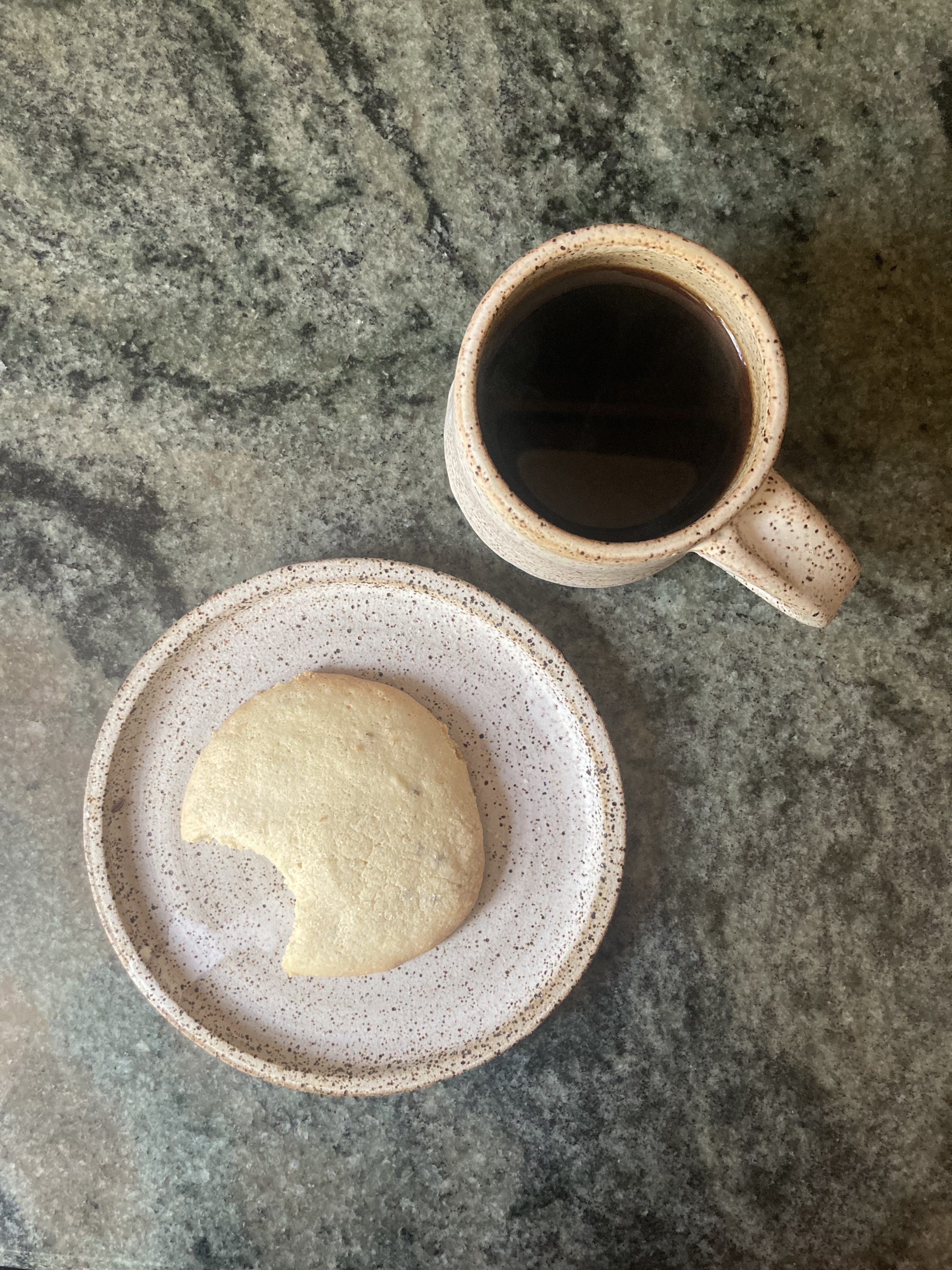
These are delicious slightly warm or just cooled with coffee. I recommend eating them the same day as baking. While the knots dry out fairly well and still remain light, the circles tend to get tougher the longer they cool.

MN Updated Recipe

1/8 original with red wine


Ingredients

½ cup sugar

1 ½ teaspoons ground mace

1 ½ teaspoons ground cloves

1 ½ teaspoons ground cinnamon

1 ½ teaspoons ground ginger

1 ½ teaspoons ground nutmeg (or 1 teaspoon freshly grated nutmeg – ¼ nutmeg)

4 Tablespoons butter, room temperature

2 eggs, room temperature

3 2/3 cups flour

1 cup red wine 

Instructions

Set up a wide saucepan filled ¾ of the way with water. Cover and bring to a boil.

Pour the wine into a small saucepan. Warm until it just begins to simmer. Cover with the lid and set aside. Use when the wine is still hot to the touch, but not scalding or painful.

While the wine is warming up and then cooling to “warmer than lukewarm”, start the base of the dough. Cream together the sugar, spices, and the butter. When the wine is ready, add the eggs and two cups of the flour to the sugar, spice, and butter mix. Combine well. Add 1/3 cup of the warm wine and stir to combine. Add the rest of the flour and another 1/3 cup of the warm wine and combine. Add the rest of the warm wine a tablespoon at a time if you need it. The dough will be smooth, pliable, and a little sticky.

Shape pieces of dough between 1 teaspoon and 1 tablespoon large into rolls, twists, rings, figure eights, and knots.

Set up a heat-safe casserole or glass storage dish on the side and fill it with cold water. Have thin kitchen towel or some paper towel ready on the side.

Preheat your oven to 325 F.

Prepare a large baking sheet with parchment paper, butter, or baking spray.

Working in batches, drop the shaped cracknels into the boiling pan of water. When the float to the top, take them out with a spoon and put them into the cold water dish. This takes about a minute with the water at a rolling boil. You may need to replenish the cooking water and bring it back to a boil during this stage. You also may need pour off warmed water from the cooling dish and refresh with more cold water.

Let the cracknels soak in the cold water for 15 minutes. Remove from the water and put on a clean kitchen towel or paper towel sheets before transferring to your prepared baking sheet.

Bake for 25 minutes.

Tasting Notes

Rights after baking and cooling these cracknells had a wonderful spice and wine flavor and a chewy interior. It was clear that the boiling step had transformed the surface texture, but the cookies were yielding, not crunchy. The sweetness of the cracknells was nicely balanced with the spice. As they dried out over the next few days, they became increasingly crunchy. They hit their peak deliciousness three-five days after baking, I kept returning to the container to have a few with every cup of tea or coffee. 


hou to bake Quinoces

quinces in bowl and on cloth on table

I always buy too many quinces. I am so excited when I first encounter them at the market in the autumn. I fill my bag. (I’ve written about my love of quinces here before.)

So it was a good thing that I had already transcribed these two recipes for baked quinces from an early seventeenth-century manuscript cookbook now held at the British Library — Add MS 28319.

The Recipe(s)

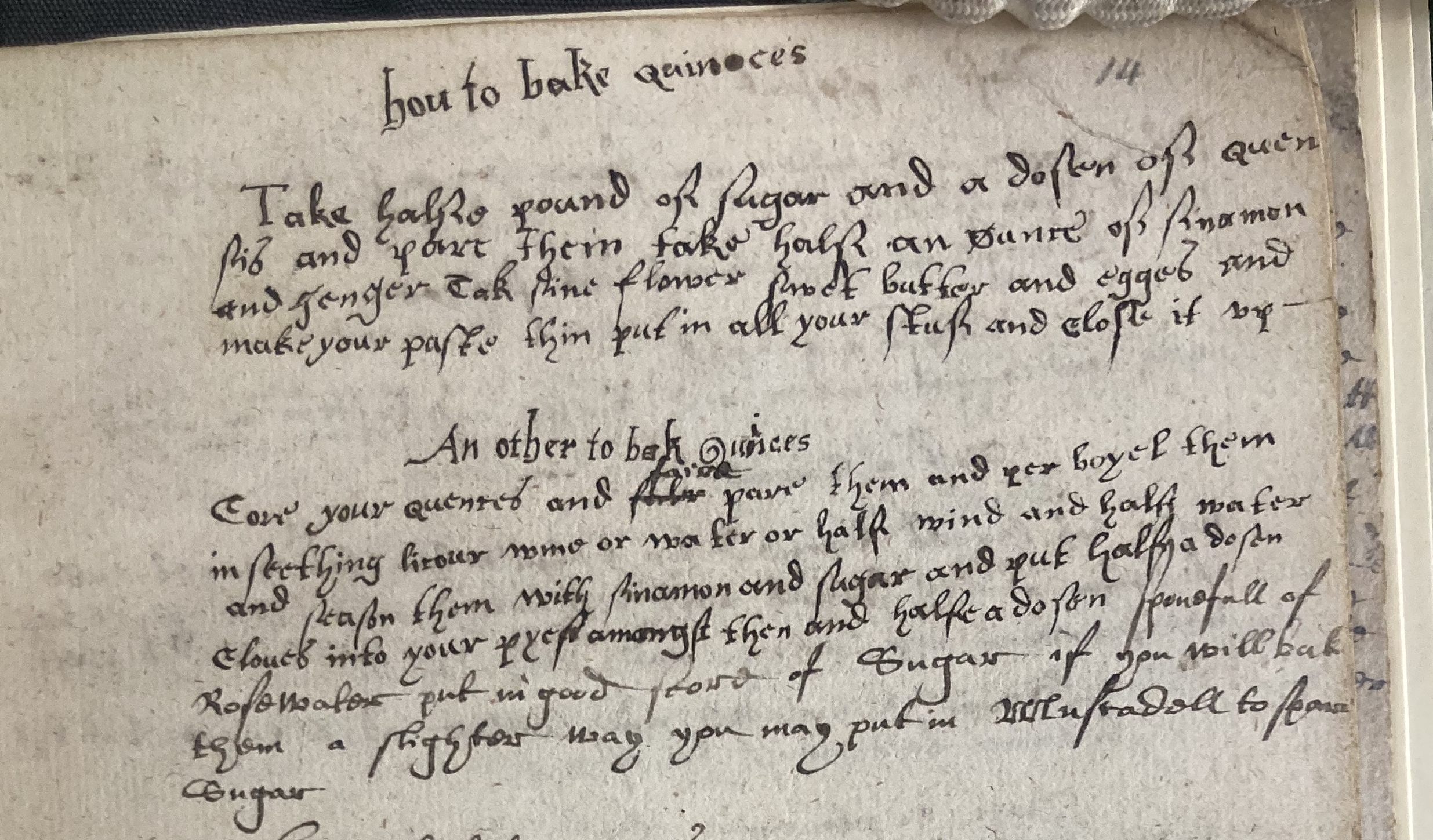
original recipe in culinary manuscript

hou to bake Quinoces
Take halfe pound of sugar and a dosen of quen
sis and pare them take half an ounce of sinamon
and genger Tak fine flower swet butter and egges and
make your paste thin put in all your stuf and close it vp

An other to bak Quinces
Core your quences and falx faire pare them and perboyel them
in seething licour wine or water or half wind and half water
and season them with sinamon and sugar and put half a dosen
Cloues into your pye amongst then and halfe a dosen sponefull of
Rosewater put in good store of Sugar if you will bak
them a slighter way you may put in Muscadell to spare
Sugar

Both recipes can be used to bake large volumes of quinces into delicious, sweet pies flavored with aromatic spices. The second recipe attends to the distinct toughness of the quince by first boiling the quince in water, wine, or a mixture of water and wine before baking in a lidded pie. There are other recipes later in the manuscript for open-topped tarts full of seasoned pureed quince.

My recreation below takes the method of parboiling in water and wine from the second recipe and combines the flavorings from both. I used sugar, cinnamon, ginger, cloves, and rosewater.

(Curiously, this is the only place in the manuscript where the recipe titles mimic printed lettering, instead of traditional cursive forms. Perhaps they were copied from a printed source into the manuscript.)

Updated Recipe

I tested these tarts with this pastry recipe and I have copied it into the instructions below. Feel free to use an historical or modern pastry recipe of your choice.

Parboiled Quinces
2 quinces
1.5 cups red wine
2 cups water

Pastry
1 3/4  cup flour (210 grams, 1/2 lb)
1 Tablespoon sugar
3/4 teaspoon salt
1 stick butter (113 grams, 8 Tablespoons, 1/4 lb)
1 egg
4 Tablespoons water (1/4 cup, added a spoonful at a time)

Filling
Parboiled quinces (above)
1/4 cup sugar
1/4 teaspoon cinnamon
1/4 teaspoon ground ginger
1/8 teaspoon ground cloves
1T Rosewater

Optional: milk or egg wash for the pastry

Peel and core the quinces. Cut them into ¼ inch slices.

Put the quinces, wine, and water into a medium sized saucepan. Bring to a boil. Reduce to a simmer and cook for approximately 20 minutes. The quinces should be tender when poked with a fork. Pour off the cooking liquid and let the quince cool. (This step can be completed in advance.)

When you are ready to assemble the pie, make the pastry. Put the flour, sugar, and salt in a large bowl. Stir to combine. Chop the butter into small pieces. Work the butter into the flour mix until a fine meal forms. Add the egg. Add the water one tablespoon at a time. Using your hands and/or a spoon, work the mix until it holds its shape as a ball. It will still feel dry to the touch.

If you are going to bake the pie immediately, put the pastry in the refrigerator to chill and preheat the oven to 450F. Grease a 9-inch pie dish with butter or baking spray. (Either the prepared pastry or the assembled pie can rest in the refrigerator before baking if needed.)

Put the cooked quinces into a large bowl. Add the sugar, cinnamon, ginger, cloves, and rosewater. Toss gently to combine without breaking up the pieces too much.

Assemble the pie by first dividing the pie crust into two balls. Roll out the first ball into a large, even circle on a floured surface. Line the 9-inch pie dish with pastry.

Arrange the seasoned quinces in an even layer inside the crust.

Roll out the second crust and place it on top of the pie. Cut off any excess pastry. Use a fork or your fingers to seal the edges. Cut vent holes or slits into the top crust. (At this stage you can add a milk or an egg wash for an especially golden crust.)

Put the pie on a baking sheet and put it in the oven. Bake at 450F for 10 minutes. Then reduce the temperature to 350F and bake for about 35 minutes until the pie is golden brown. Cool on a rack before serving.

The Results

A delicious fragrant pie. The flavors of wine, spice, and floral quince and rosewater pair beautifully with the rich pastry. I shared slices with friends and family who loved the flavors and found the dish both agreeably similar to an apple pie and delightfully unique.

I also had the pleasure of sharing the draft recipe with participants in a history skills workshop organized by the Historical Society of Michigan. We discussed how different the seasoning of the pie might be depending on when and how one used the cloves — what if I had added whole cloves to the red wine poaching liquid? what if I had used whole cloves in the pie, instead of ground cloves? Mulling this over, I also wonder how the fruit would taste if I had added whole cloves and cinnamon sticks to the wine during parboiling. If any of you try to spice your quinces or make your a bit differently, please let me know in the comments.

to pickle mushroomes

I have wanted to share this mushroom recipe with you for a long time. In the autumn of 2023, I puzzled over an image of this recipe from the William Andrews Clark Memorial Library, UCLA f MS. 1968.004 on my laptop screen – how did the two parts of the recipe connect?

The Recipe

to pickle mushroomes Cor. Newman

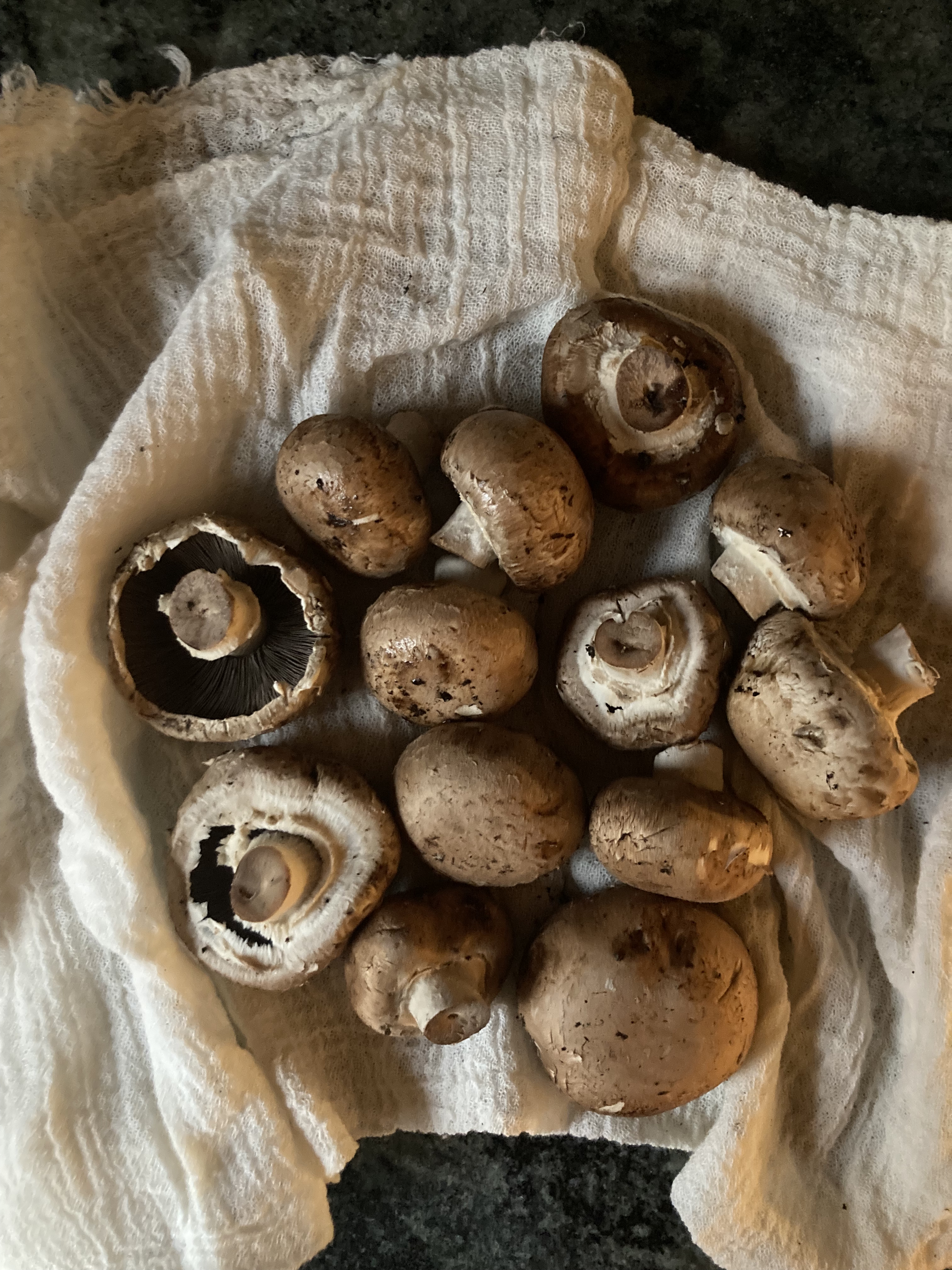
Take all the sort of the best button Mushroomes & peel
them very Cleane & put them in a pail of fair water
set the water tho boyle your Mushroomes boyle before yo
put your Mushroomes in as soon as your water boyles
after your Mushroomes are in, take your kettle off
then take your Mushroomes  straine the water from
them in a sive, then take a Clean Cloth & lay them
upon it with ther Combes downwards till they are
Cold, then take vinegar & peper & Cloves & salt
& put to the Mushroomes in a Crock for 3 wekks
then Change the vinegar & put them into a pot or
bottle with oyle or suit & stop them Close, Change
your vinegar as often as you see occasion
She letts you boyle a while but then they will
not look so white, & she does not Chang the
vinegar at all if she doe not see they want
it & she put nether oyle nor suit upon them &
they keep very well, & instead of
peeling them she rubs them with a flannell.

The recipe “to pickle mushroomes” from “Cor. Newman” unfolds in two parts. First, the general recipe. After the mushrooms have been harvested, cleaned and boiled, they can be seasoned with pepper and cloves and preserved with vinegar and salt. Regularly changing the vinegar will keep them fresher longer as will sealing the pot with oil or suet (animal fat) to keep out foreign matter that might spoil the batch. In the second part of the recipe, “she” provides specific emendations to the previous instructions. She rubs the mushrooms with a flannel instead of pealing them. She neither changes the vinegar nor uses fat to seal the pickle.

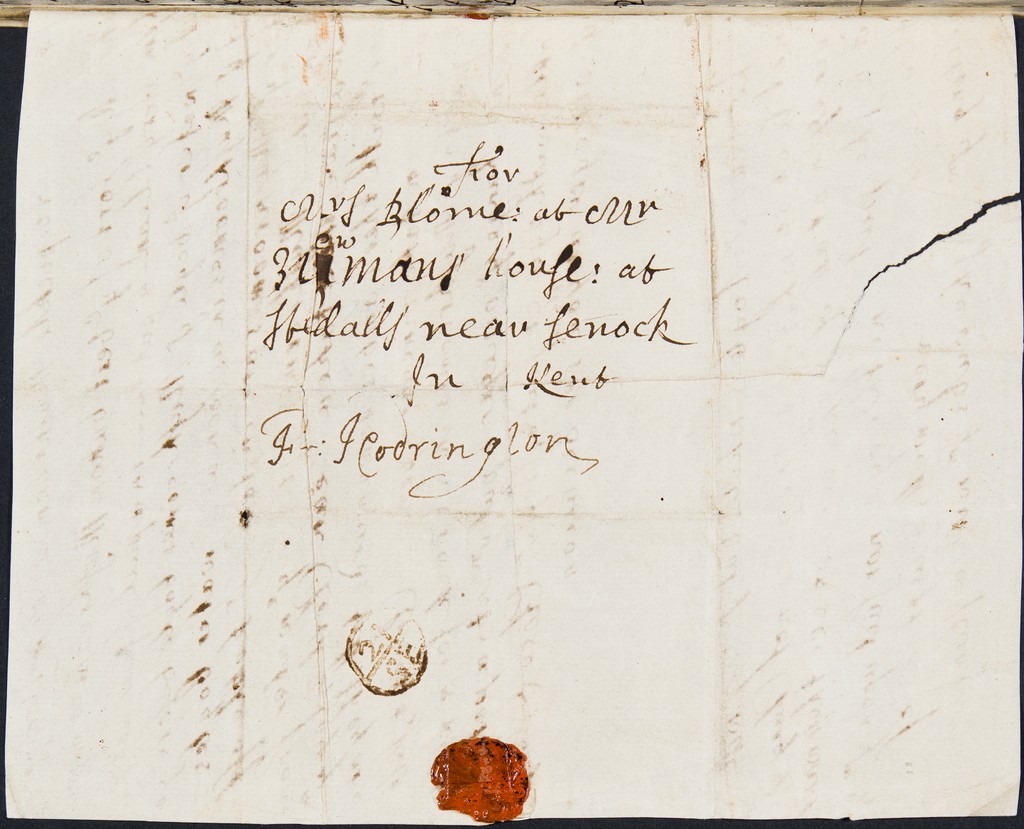
Looking at the recipe on my computer screen I could not tell if I was seeing a cut or a crease in the gap between the two versions of the recipe. Was there more material? Was part of the recipe missing? f MS. 1968.004 is a miscellaneous volume of manuscript recipes that were bound together at a later date. Some of the leaves seemed to have once been a part of other bound recipe books, some seemed to be loose papers, and others, tantalizingly, seemed to be letters.  When I saw the manuscript in person, it all made sense: There was a fold between the two parts of the recipe because the recipe was a part of a letter.


For
Mrs Blome: at Mr
Nuewmans house: at
Hedalls near Lenock
In Kent
Fr: I Codrington

This recipe “to pickle mushroomes” is on one side of a sheet of paper and the address and closing seal are on the other. The sheet bears the distinct folds of a letter. Hendall Manor in Kent, mentioned in this address, still stands and is now a wedding venue.

I cannot always locate a recipe in place and in a community of people as well as I can locate this one. The letter writer (I Codrington) layered two recipes (Cor. Newman’s original and the variations) and sent them on their way to Kent (to Mrs Blome at Mr Nuewman’s house). We not only know where this recipe moved, but that it was used. In my recipe recreation, I have drawn on both versions of the recipe.

Updated Recipe

8 oz, 227g pack button mushrooms
3 cups water
8 whole black peppercorns
4 whole cloves
¾ cup apple cider vinegar
½ cup white wine vinegar
1 Tablespoon salt
¼ cup olive oil
a 4-cup mason jar, fresh from the dishwasher or sterilized with boiling water

Clean the mushrooms. Trim the stalks as needed.

Bring the water to a boil in a small saucepan. Put the mushrooms in just as the water boils. Turn off the heat and let the mushrooms sit in the hot water for five minutes.

Pour off the water and remove the mushrooms from the pot. Arrange them, combs down, on a clean dishtowel.

When the mushrooms are dry, place them in your prepared mason jar. Add the whole peppercorns and cloves. Prepare the brine by stirring together vinegar and salt in a bowl or measuring jug. Pour over the mushrooms. Pour the olive oil on top last.

Store in the refrigerator for three weeks.

Allow the mushrooms to come to room temperature before serving.

The Results

The pickled mushrooms are surprisingly meaty and sharply acidic. I suspect their texture is in part an illusion forged from the strong flavors of the peppercorns, cloves, and salt and their association with cooked meat. But the texture created by quick-cooking and then pickling also contributes to the meatiness of these mushrooms. I enjoyed eating them alongside cheese, bread, and greens for their substantial savoriness and for the vinegar tang that added contrast to the spread. I appreciated the fatty hints of olive oil coating the mushrooms, too. Although the fat was intended as a preservative, it also contributed to the finished dish as an incidental dressing.

If I were to make these pickled mushrooms again, I might dilute the vinegar or play with the balance between vinegars to seek-out a more mild acidity. Let me know if you try these and if you adjust the vinegar!

French Tosts

Bake this recipe October 5-13, 2024 to participate in the fifth annual Great Rare Books Bakeoff! (More information at the end of the post.)


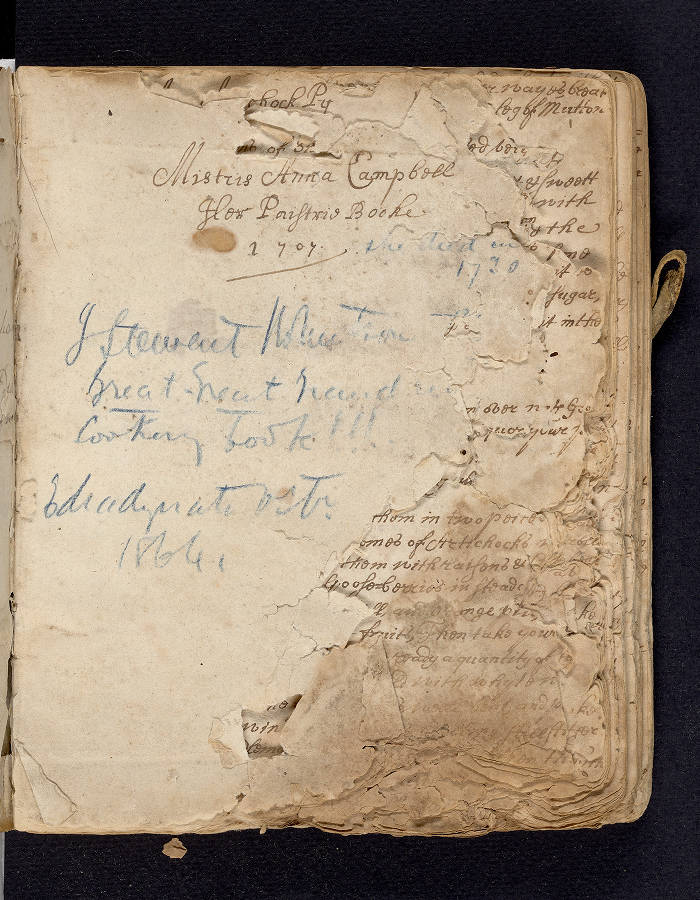
It is always a thrill to take a look at a receipt book that I have never seen before. About a year ago, I sat down with Mistress Anna Campbell’s early eighteenth-century Scottish recipe book in the reading room at Penn State Libraries Eberly Family Special Collections. On the title page, Campbell provides her manuscript with a title — “Her Paistrie Booke” — and date — 1707. In my notes from my first encounter with the manuscript I wrote that, as promised, Campbell’s book is a deep exploration into pastry and baking.

As the library catalog notes, Campbell’s manuscript contains around 400 recipes and almost all of them are written in her lovely handwriting. She loosely organized her recipe book and gathered recipes for pies, pastries, cakes, tarts, custards, meat and various sauces, sweet and savory puddings, dairy, biscuits, and fruit preparations. After that brief encounter, the manuscript made its way to the conservation and digitization teams so it could be safely and completely imaged for our growing Historical Recipe Books Collection and I turned my attention to other recipe books (like Christian Barclay’s manuscript that I wrote about here and this one at the British Library). You can access the catalog description and the complete digitized manuscript here.

When it came time to gather new recipes for this year’s Bake Off, I was delighted when Christina Riehman-Murphy pointed out that Campbell’s recipe book contained a recipe for “French Tosts.”

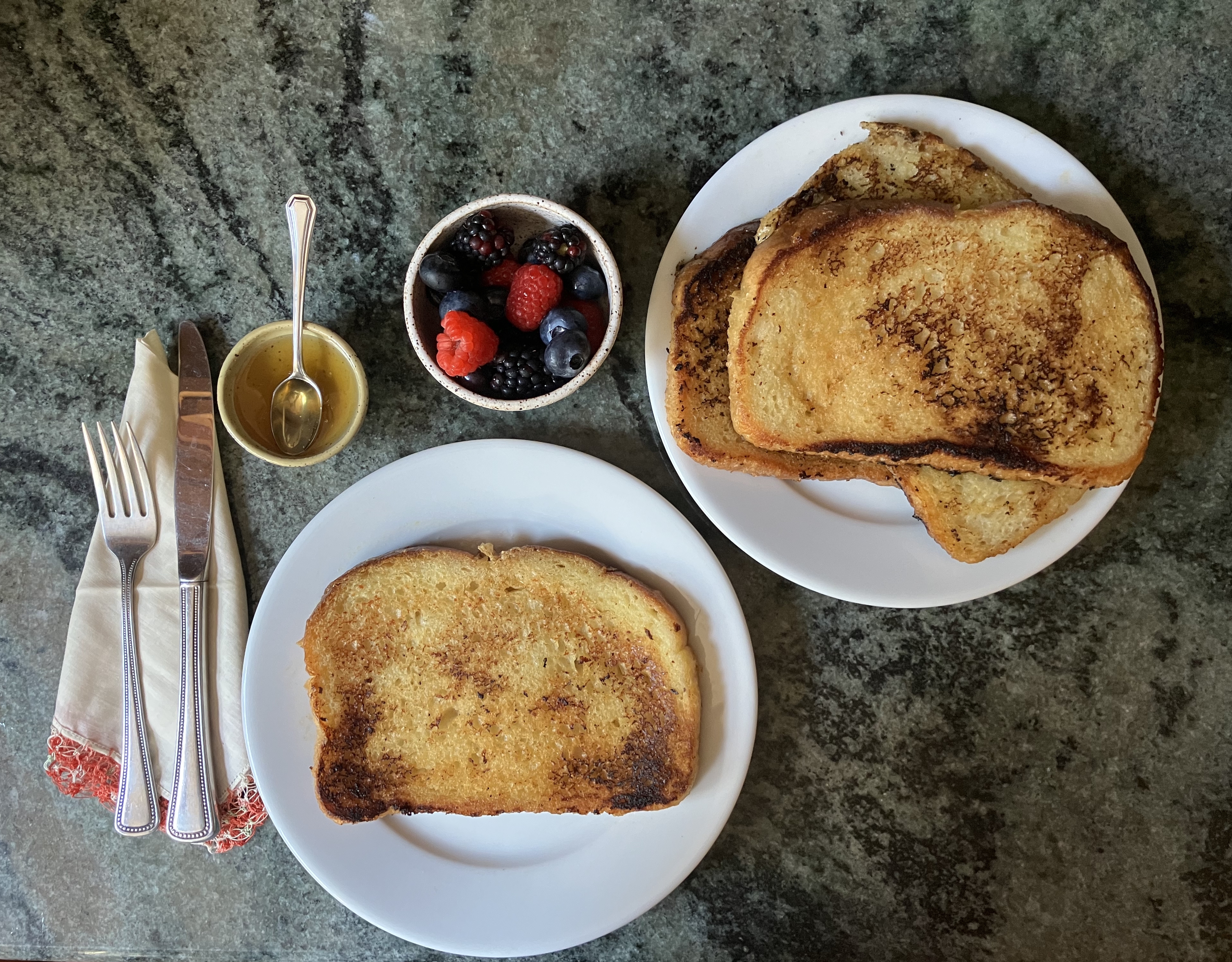
finished French toast on plates, utensils, bowls with honey and berries

The Recipe

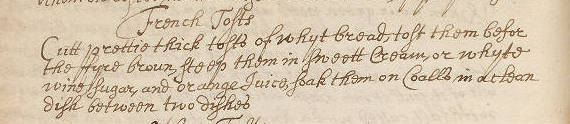
French Tosts
Cutt prettie thick tosts of whyt bread, tost them befor
the fyre broun, steep them in sweett Cream, or whyte
wine, sugar, and orange Juice, soak them on Coalls in a clean
dish between two dishes

The original recipe is both easy and confusing. It asks you to toast bread, soak it in cream, sugar, and orange juice, and cook the soaked toast in a lidded cooking vessel over a brazier filled with hot coals from the hearth. As I have learned from my research and from hands-on cooking at Pottsgrove Manor last year, this  cooking method was commonly used for pancakes, fritters, and fragile fruit preserves. If you find yourself camping or grilling over charcoal, you, too, could toast your bread over a fire or grill and set your soaked toast to steam in a covered cast iron pan.

The simple bread and dairy ingredients in this recipe (and the recipe for eggy “Other Tosts” that Campbell includes below it in her manuscript) brought me back to the last time I made a historical French toast. Taken together, these three toast recipes start with abundant (likely day-old) bread, eggs, and cream, and are enhanced with flavors from imported sugar, spices, wine, and oranges.  As Campbell’s original “French Tosts” recipe states, you can also swap out the cream for white wine. I should also acknowledge the ambiguity of the punctuation here. An alternate, and valid, reading of the two versions of Campbell’s recipe could be — one version with cream only and a second version with white wine, sugar, and orange juice. I can say, however, that the cream, sugar, and orange in the version that I prepared created a distinctly delicious caramel flavor.

I used pre-sliced “White Sourdough Bread” from the bakery section of my local chain grocery store to test this recipe. The bread does not have sugar or sweetener in it. I believe that this recipe will work wonderfully with a range of store-bought or homemade breads. I think it would also work well with a gluten-free bread. If you try any bread that turns out especially well, leave a comment!

Updated Recipe

Serves 2 (easy to scale up!)

4 slices white bread
1 cup (250ml) cream
¼ cup (50g) sugar
¼ cup (62.5ml) orange juice
Butter or oil for greasing your cooking pan

Equipment: toaster, skillet or frying pan with a lid

Slice the bread into pieces that will fit in your toaster or select 4 slices from a pre-sliced loaf. Toast the bread until lightly browned. Adjust the settings of your toaster or toaster oven, or the placement of your toast, to ensure even, light browning. Arrange the toast in a large, shallow baking dish for seasoning.

Stir together the cream and sugar until the sugar mostly dissolves. Stir in the orange juice.

Pour the cream mix over the prepared toast. Use a spatula to spread the mixture. Make sure that  the top of each slice is coated with a layer of the cream mix. Set aside to rest for 5 minutes.

Flip the slices of toast. Use a spatula to spread the cream mixture over the second side of each toast. Set aside to rest for 5 minutes.

While the toast is absorbing the cream mixture, set a large frying pan or skillet over a medium heat. Add butter or oil as necessary to grease the cooking surface.

Place two slices of toast in your cooking pan, cover with the lid, and cook for approximately 3 minutes. Remove the lid, flip the toast with a spatula, cover again, and cook the second side for 3 minutes. Repeat these instructions to cook the second batch. You may need to adjust the heat levels and cooking times depending on your pan, your stove, and your bread. If your cooking pan fits more than two slices at a time, feel free to cook more slices simultaneously. My lid allowed some steam to escape so you may want to set your lid askew if slices are not crisping up.

Serve the French Tosts immediately.

The Results

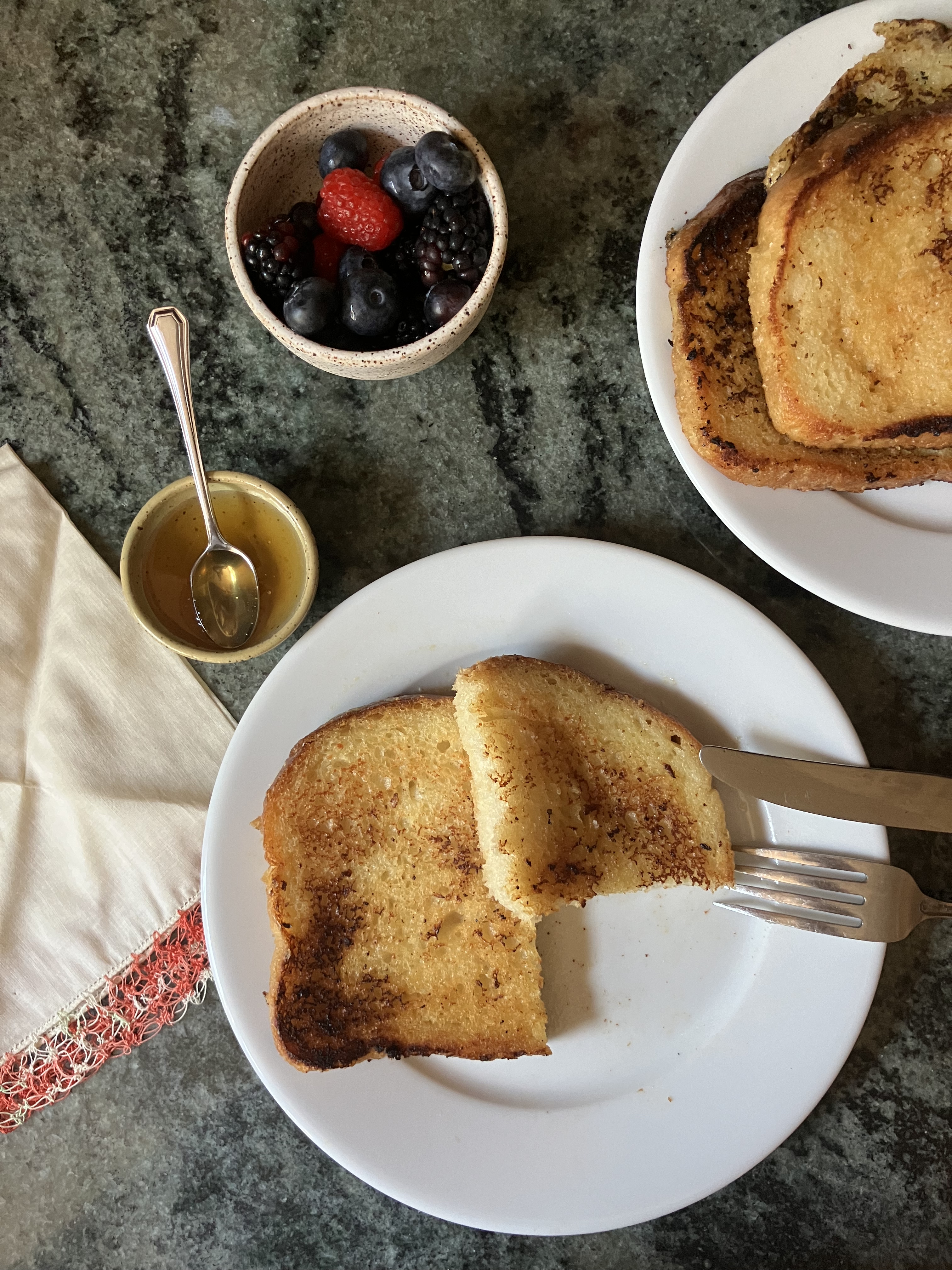
The French Tosts taste like toasty malted milk and caramelized sugar with a hint of orange. Crispy on the edges and soft in the middle, this dish is a delight to eat. I suggest you try this recipe out on a lazy weekend morning and enjoy the warm, sweet smells that will envelop your kitchen.

Although I did dress some of my French toast up with honey and fresh fruit, those bold flavors overpowered the subtle malt and caramel that I so enjoyed in my first bites. I suggest that you hold back on adding any syrup, honey, yogurt, or fruit toppings until after you’ve taken a few bites.

finished French toast on plates, utensils, bowls with honey and berries

The Bake Off

Today I’m also inviting you to mark your calendars for the fifth annual The Great Rare Books Bake Off! This virtual baking competition is a friendly contest between the sister libraries of Penn State University and Monash University. There are so many intriguing recipes to try from our library collections and you can learn so much by baking a recipe instead of just reading it! An engraved pie pan trophy will be awarded to the library that receives the most social media posts featuring photos of your baked goods tagged with its hashtag: #BakePennState or #BakeMonash. If you don’t use social media, you can submit your entry via this form. The competition runs October 5-13, 2024 so you have lots of time to read the recipes, shop for ingredients, and get baking. All the details are on the site linked above.

If this recipe for “French Tosts” is not inspiring you to participate, there are a lot of other recipes to choose from. In past years I’ve also updated seventeenth- and eighteenth-century recipes from PSU’s collections for delectable sugar bisket, satisfying doughnuts, playful almond jumballs, a delicious lemon tart, and a tasty chocolate cream. I’m also fond of some of the other recipes that we’ve featured, such as PSU’s feather-light Suffrage Angel Cake and gooey Ogontz Cinnamon Buns and Monash’s decadent Pavlova and festive Lamington Cake.

Tartes of strawberryes


I love strawberry season. If anything will prompt me to turn on the oven at the start of a June heatwave, it’s probably a favorite strawberry recipe. Over the years, I’ve tried various historical recipes for tangy strawberry preserves, a refreshing strawberry water beverage, and chilled snow cream served with strawberries. Yesterday morning, before it got too hot, I tried my hand at some strawberry tarts.

The Recipe

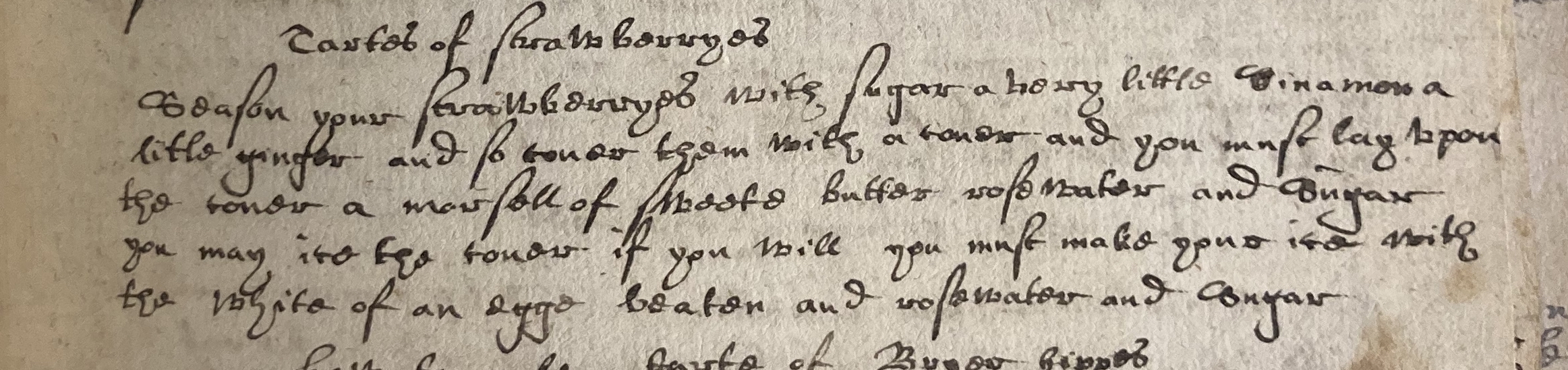
Image of strawberry tart recipe in original manuscriptTartes of strawberryes
Season your strawberryes with sugar a very little Sinamon a
litle ginger and so couer them with a couer and you must lay vpon
the couer a morsell of sweete butter rosewater and Sugar
you may ice the couer if you will you must make your ice with
the white of an egge beaten and rosewater and Sugar
(British Library, Add MS 28319, f. 16r)

This recipe for “Tartes of strawberryes” is from an early seventeenth-century manuscript cookbook now held at the British Library — Add MS 28319.* Culinary recipes and instructions for serving various courses fill the twenty leaves of this short manuscript this is written in a small, regular secretary hand. Earlier this summer, I had a chance to travel to the British Library and transcribe the entire manuscript (thanks to a Franklin Research Grant from the American Philosophical Society). As you’ve probably noticed, I haven’t been in the kitchen much this year. I’ve been at my desk writing about the recipes I’ve developed for my new book Shakespeare in the Kitchen (which will be out next year in this series) and, lately, I’ve been back in the library gathering more material for this book and my ongoing projects.  So I was even more eager to spend a morning in the kitchen engaging with this manuscript in a different way — cooking it.

* Although manuscripts are not currently available through the British Library catalog due to the cyberattack, a 2020 post on their medieval manuscripts blog includes a discussion of this cookbook.


Strawberries only appear twice in this manuscript — as the filling of these closed tarts and as a seasoning for stewed mullet where gooseberries or barberries might also add a sharp, acidic flavor (9v). The menus that begin the manuscript, however, show how central tarts were to the contemporary style of dining. Tarts like these would be served in the second spread of various dishes at dinner (the large midday meal) and supper (the lighter evening meal) alongside meat, vegetable, and fish dishes depending on the season or fish-day constraints (2r-3r). There are seventeen tart recipes in the cookbook, some lidded and some open-faced, that would allow a cook to serve a variety of tasty tarts throughout the year (15r-16r). Seasoned with spicy ginger and warm cinnamon, these strawberry tarts would hold their own against the strong flavors of venison, shrimp, gingerbread, duck, or fritters that might also have been served on the same table.

Updated Recipe

Makes about 20 tarts.** 

I tested these tarts with this pastry recipe and I have copied it into the instructions below. Feel free to use an historical or modern pastry recipe of your choice.

Pastry
1 3/4  cup flour (210 grams, 1/2 lb)
1 Tablespoon sugar
3/4 teaspoon salt
1 stick butter (113 grams, 8 Tablespoons, 1/4 lb)
1 egg
4 Tablespoons water (1/4 cup, added a spoonful at a time)

Filling
2 cups strawberries, chopped (400 grams)
1/4 cup sugar (50 grams)
1 teaspoon ginger
1/2 teaspoon cinnamon

Topping***
2 Tablespoons butter, room temperature
1 teaspoon rosewater
1 Tablespoon sugar

Preheat the oven to 425 F (220 C). Take out the butter for the topping to give it time to come to room temperature.

Make the pastry. Put the flour, sugar, and salt in a large bowl. Stir to combine. Chop the butter into small pieces. Work the butter into the flour mix until a fine meal forms. Add the egg. Add the water one tablespoon at a time. Using your hands and/or a spoon, work the mix until it holds its shape as a ball. It will still feel dry to the touch.

While the pastry rests in the fridge or at a cool room temperature, remove the stems from your strawberries and cut them into small pieces (approximately 1/2 in or 1 cm). Season the chopped strawberries with sugar, ginger, and cinnamon.

In a small bowl, stir the room-temperature butter and rosewater with a fork so that the whipped butter it is well-combined and ready to spread.

Roll out the pastry. Using a pastry cutter or drinking glass, cut circles. I used a 2 5/8 in (68 mm) pastry cutter to make nice little tarts. Make sure you have an even number of circles so that you have bottoms and lids.

Grease your pan. Lay out the bottom pieces. I used my handy mince pie pan to make a batch of 12. You can easily make these pies on a baking sheet by shaping the top piece of pastry over a mound of seasoned strawberries. (See note about extra filling below.**)

Fill each pie with seasoned strawberries. Place a lid on each pie. Push down the edges of the pastry to seal. Coat the lids with the butter and rosewater mixture. Sprinkle generously with sugar.

Bake the tarts for 15 minutes until golden brown. (Check them at 10 minutes and see how they’re faring.)

Let the pies cool in their pan for 10 minutes before transferring to a cooling rack or serving plate. Serve warm or at room temperature.

The Results

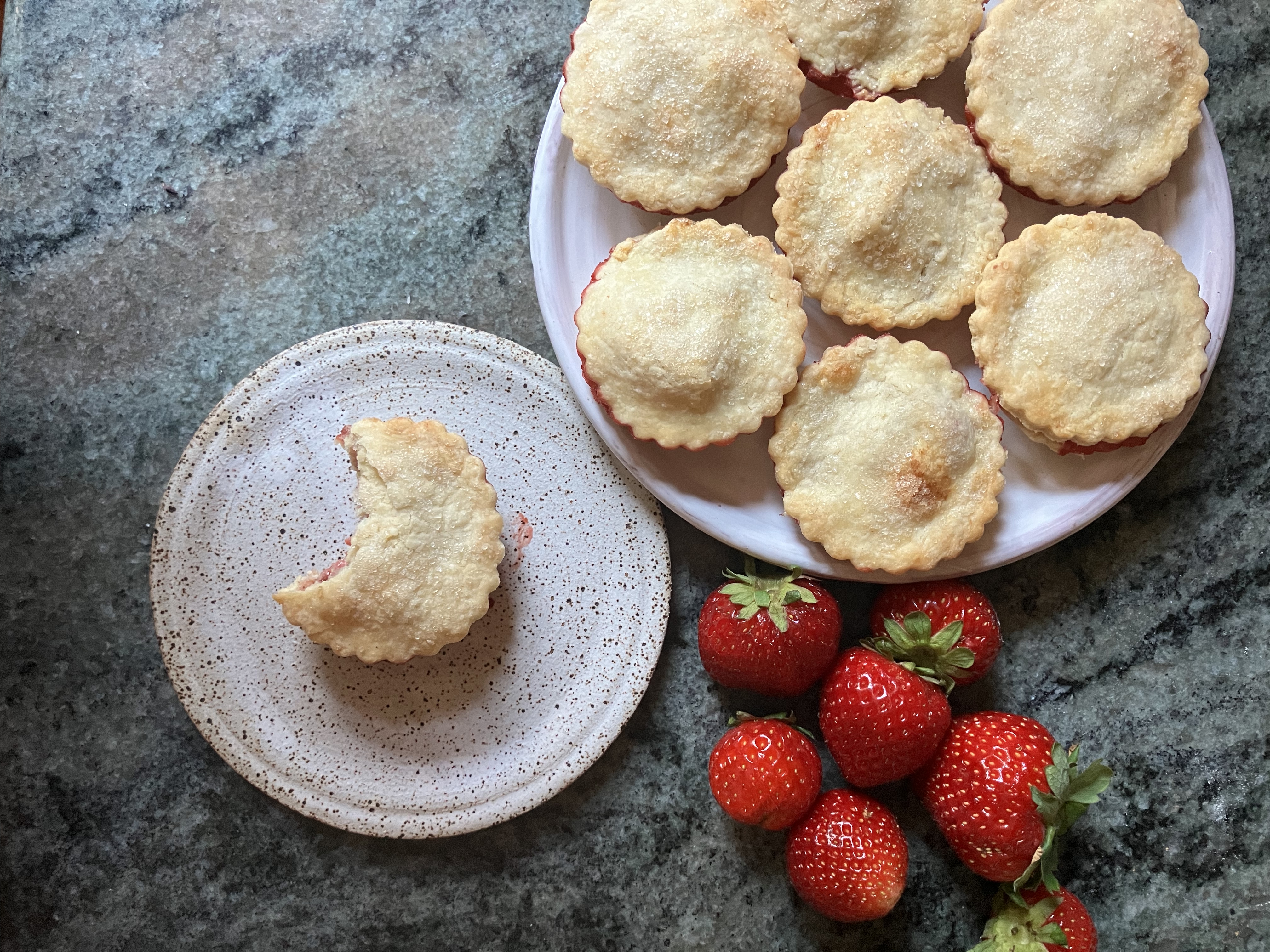
When I think of a strawberry tart, I usually think of an open-faced dessert, with an abundance of glistening strawberries and crisp, fluted pastry. (Or I think about how I love to add strawberries to these very rustic rhubarb tarts.) Instead, these strawberry tarts show how warming spices such as ginger and cinnamon — spices I’m more used to pairing with apples — compliment the bright sharpness of summer strawberries. The ginger especially shines in this recipe as it pairs with the rich pastry and the soft, tart strawberries. It’s a perfect recipe for strawberry season.

strawberry tart on plate with bite taken out, plate with tarts, strawberries on counter

**Extra Filling

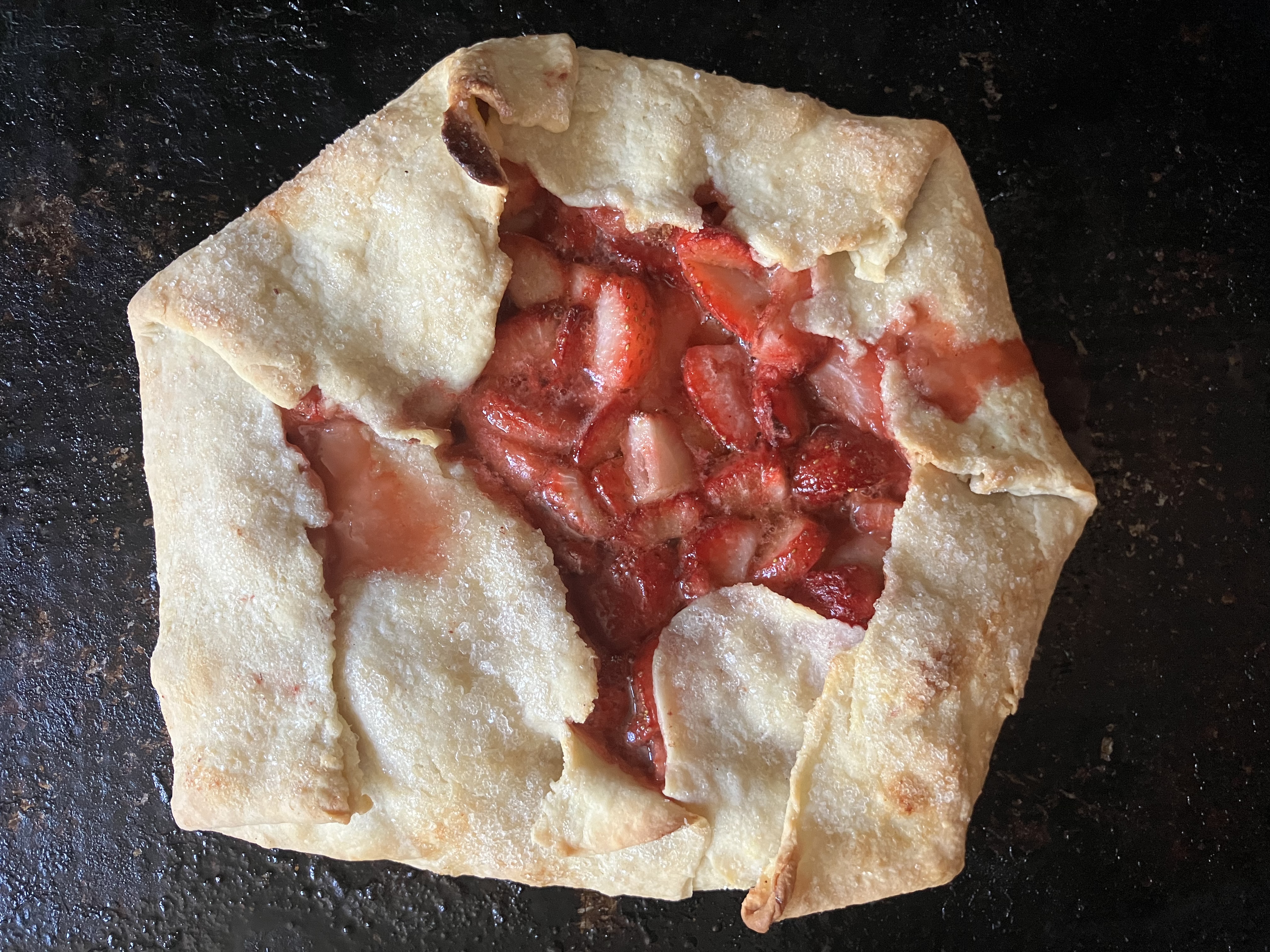
I made one tart pan full of 12 tarts. By the time these came out of the oven, my kitchen was getting incredibly hot and I quickly shaped the remaining pastry into a (delicious) rustic galette filled with the remaining seasoned strawberries. I believe I had enough of everything to make about 8 more lidded tarts. If you only want to make a dozen tarts, I believe half the seasoned strawberry fulling will suffice, but you will need more than half the dough and the recipe above is not easy to divide as it contains a whole egg.

strawberry galette

*** Rosewater butter topping update
When Lisa Smith tried this recipe the week it was posted, she found that the rosewater overpowered the spices in the tarts. This was not my experience, but rosewater strength varies across brands so do keep this in mind as you prepare these tarts! Thanks again for baking and sharing your experience, Lisa!!

To Make Jumballs of Chocholett


This recipe “To Make Jumballs of Chocholett” is from Elisabeth Hawar’s recipe book (now William Andrews Clark Memorial Library, fMS.1975.003). A favorite on the banqueting table or dessert spread, many recipes for “Jumballs” or jumbles are collected in early modern recipe books. These small cookies are made from flour and almonds in varying proportions, sweetened with sugar, and flavored with anise, caraway, and, in this recipe, lemon, rosewater, and chocolate.

I was thrilled to return to the Clark Library last week to speak about my recipe recreation work, take a look at Elisabeth Hawar’s recipe book again (and other manuscripts),  and to share this jumball recipe.

Original Recipe

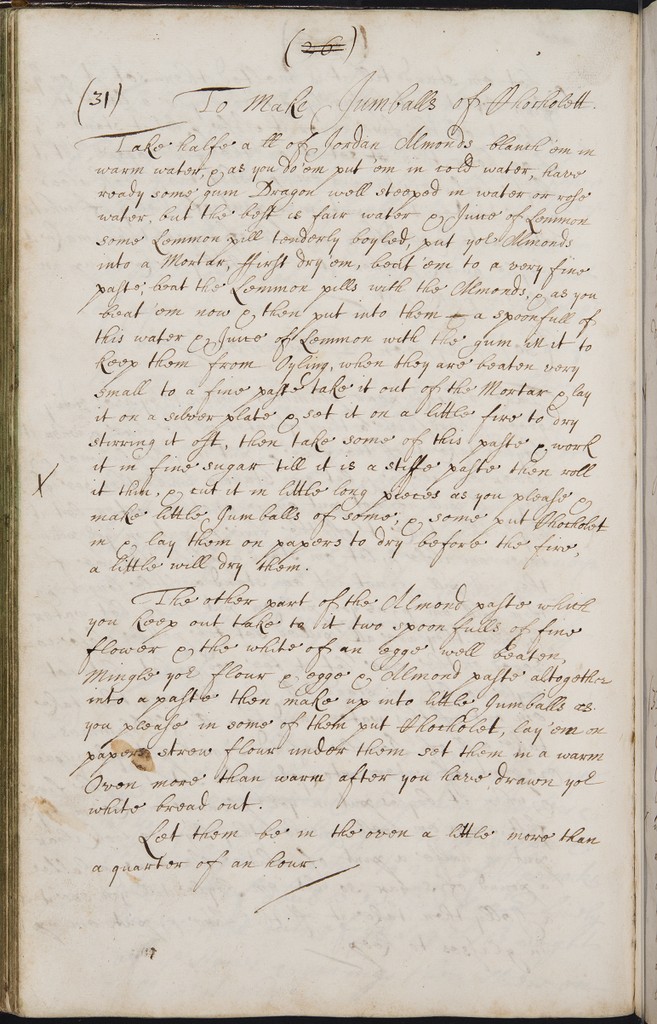
(31) To Make Jumballs of Chocholett
Take halfe a ll of Jordan Almonds blanch ‘em in
warm water, & as you do ‘em put ‘em in cold water; have
ready some gum Dragon well steeped in water or rose
water, but the best is fair water & Juice of Lemmon
some Lemmon pill tenderly boyled, put your Almonds
into a Mortar, ffirst dry ‘em, beat ‘em to a very fine
paste, beat the Lemon pills with the Almonds, & as you
beat ‘em now & then put into them & a spoonful of
this water & Juice of Lemmon with the gum in it to
keep them from Oyling, when they are beaten very
small to a fine paste take it out of the Mortar & lay
it on a silver plate & set it on a little fire to dry
stirring it oft, then take some of this paste & work
it in fine sugar till it is a stiffe paste then roll
it thin, & cut it in little long pieces as you please &
make little Jumballs of some, & some put Chocholet
in & lay them on papers to dry before the fire,
a little will dry them.
The other part of the Almond paste which
you keep out take to it two spoonfulls of fine
flower & the white of an egge well beaten,
Mingle your flour & egge & Almond paste altogether
into a paste then make it up into little Jumballs as
you please in some of them put Chocholet, lay ‘em on
papers strew flour under them set them in a warm
Oven more than warm after you have drawn you
white bread out.
Let them be in the oven a little more than
a quarter of an hour.

The original recipe for Hawar’s chocolate jumballs is a complex, two-part affair. The first part provides instructions for blanching and grinding almonds in a mortar and a pestle to make an almond paste . Lemon peel and juice, rosewater, sugar, and “gum dragon” — dried, water-soluble plant sap used as a binder — help the freshly cooked and pulverized almonds form a paste. The second part of the recipe provides instructions for shaping jumballs out of this mixture with the addition of an egg white and flour. The pliable dough can be formed into pleasing shapes and gently, carefully baked as the oven cools from an intense period of bread baking.

As always, I’m committed to using ingredients that my readers can buy at their local grocery store (and rosewater). So I started with ground almonds and I did not buy gum dragon (commonly known today as gum tragacanth) to prepare this recipe. Since I’ve made marzipan in the past, I had a sense of what proportions I could use working from the 1 egg white called for in the recipe and felt fairly confident that I could get the mixture to bind. That said, starting with whole almonds and including gum dragon would likely impact the texture of the final jumballs. (If you make them this way, let me know!)

This recipe also insists on the tantalizing possibility of flavoring the jumballs with chocolate, but it does not provide a lot of detail about what that chocolate would be like. Hawar also included a chocolate option, with minimal explanation, in her recipe for puffs (meringue). I’ve worked with seventeenth-century hot chocolate recipes before and they helpfully provided me with some clues. To my mind, cocoa nibs are the least processed form of chocolate that is widely available in supermarkets today. In the half of my jumball dough that I flavored with chocolate, I decided to include both cocoa powder and cocoa nibs for crunch deep, slightly bitter chocolate flavor. Cocoa powder is a modern ingredient and an all-cocoa nib version would be rather different. (If you make a cocoa-nib only batch, let me know how it turns out!)

Updated Recipe

This recipe makes about 30 jumballs – half almond and lemon, half almond and chocolate. If you plan to make a batch of entirely almond and lemon jumballs, simply skip the final steps that describe dividing the dough and adding cocoa powder and cocoa nibs. If you plan to make a batch of entirely chocolate jumballs, add a double amount of the chocolate flavorings to the mix from the start (¼ cup cocoa powder and 2 Tablespoons cocoa nibs).

1 lemon, peel and 1 tablespoon juice
2 ¾ cups ground almonds
1 cup sugar
2 Tablespoons flour
1 egg white
1 Tablespoon rosewater
2 Tablespoons cocoa powder
1 Tablespoon cocoa nibs

Peel a lemon using a vegetable peeler. Place the lemon peel and 1 cup water in a small sauce pan. Bring to a boil and cook for 5 minutes. Drain and set the peels aside to cool. Chop the cooked lemon peel as finely as you can.

Preheat your oven to 350F (180C). Line two baking sheets with parchment paper.

Measure the ground almonds, sugar, and flour into a large mixing bowl. Stir to combine. Then stir in the chopped lemon peel and ensure it is evenly distributed throughout the mix. Add the egg white, rosewater, and lemon juice. Stir with a spoon and then with your hands. The mixture should hold together when pressed.

Divide the jumball dough in two in the bowl or on a cutting board. Place one half on a cutting board and the other half in the mixing bowl. Add the cocoa powder and cocoa nibs to the jumball dough in the bowl. Mix with a spoon and your hands until the chocolate flavorings are evenly distributed throughout the dough.

Shape the almond lemon and the almond chocolate jumballs on a cutting board and place onto the lined baking sheets. Letters, knots, twists, and other shapes using 1-2 Tablespoons of dough all work well. 1 Tablespoon balls of dough rolled smooth work especially well.

Bake for approximately 10 minutes. The bottoms of the almond and lemon jumballs will be golden brown and the jumballs will be crispy on the outside and soft in the middle.

Set aside to cool on a baking sheet for at least 5 minutes before serving.

The Results

Honestly, these jumballs are just delicious. They reminded me of all sorts of almond-rich, marzipan-like, European-style cookies that I’ve had the pleasure to enjoy near home or while traveling. The lemon peel lifts both the almond and lemon and almond and chocolate jumballs. Friends and family really liked these and I anticipate baking them again sometime soon.

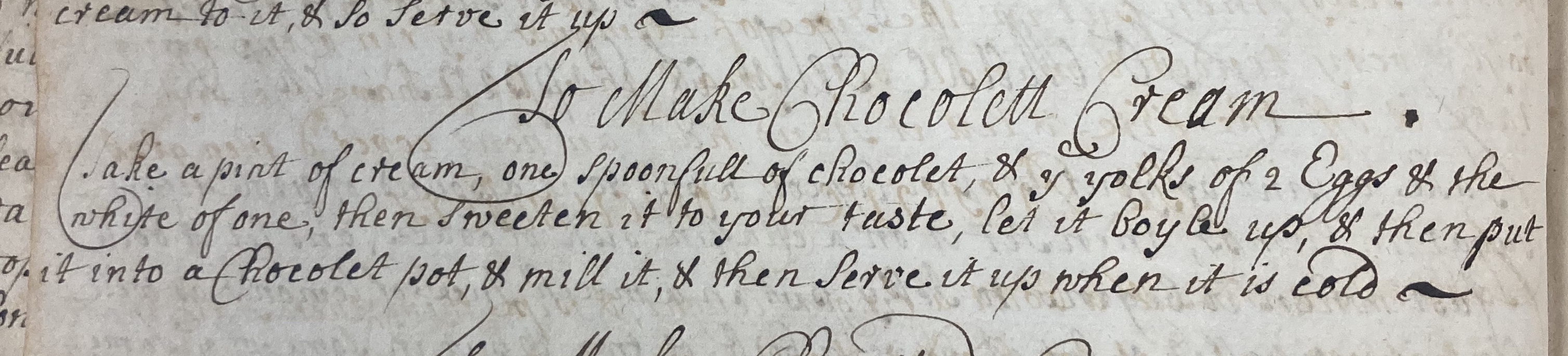
To Make Chocolett Cream (Lady Elizabeth Craven)

See the end of the post for information about the fourth annual Great Rare Books Bakeoff that is taking place this week (September 30-October 8, 2023)!


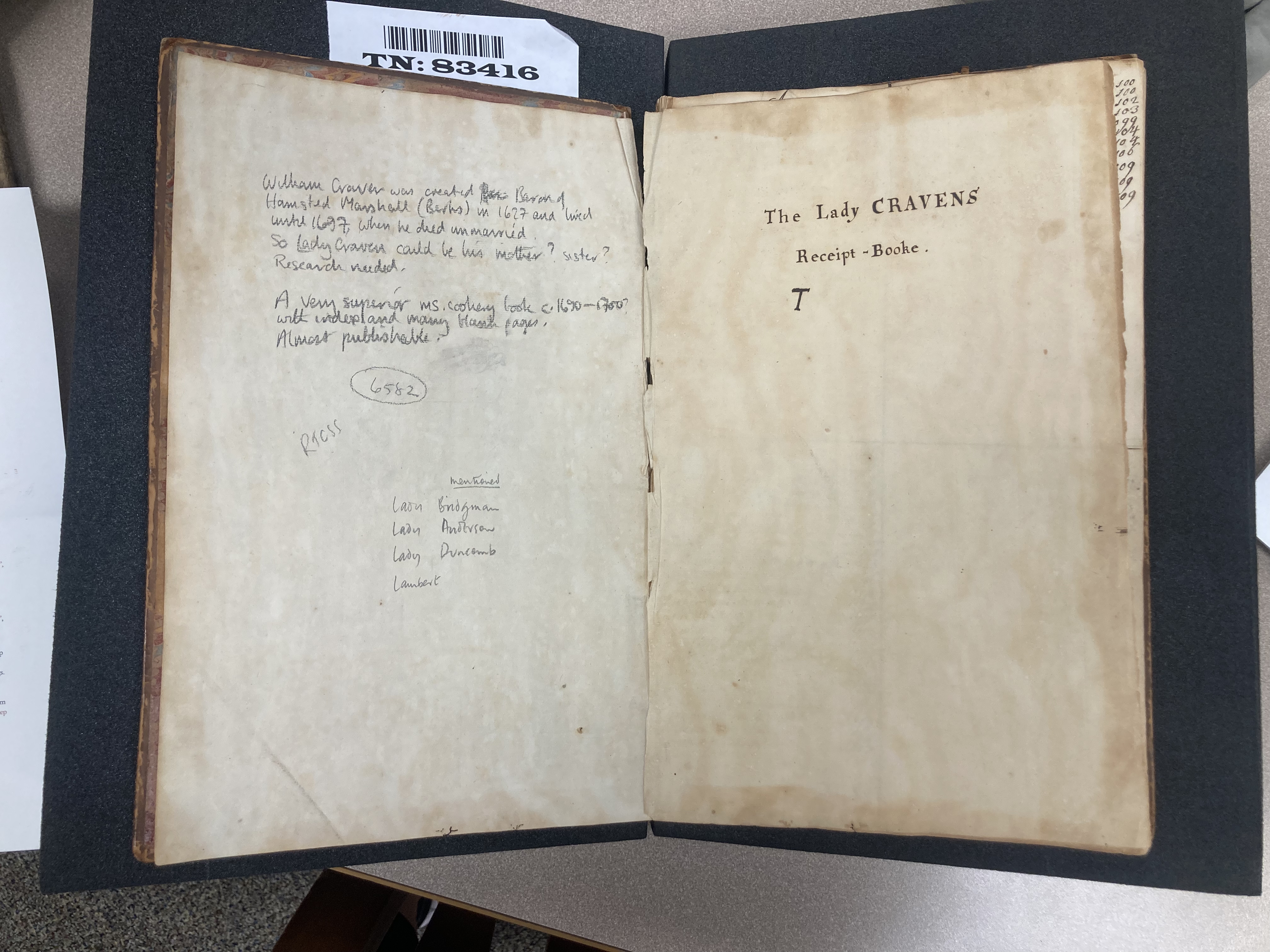
On a recent visit to State College, I was delighted to see a new addition to our recipe book collection. Lady Elizabeth Craven began to compile this recipe book in 1702 in the early years of her marriage and was still adding recipes to its pages at the time of her death in 1704, at age 25. There is much more to learn about Lady Craven and her manuscript and I was immediately interested in her fashionable recipe for “Chocolett Cream.”

As I’ve written in the past about hot chocolate and chocolate cream recipes, chocolate was a new and trendy ingredient in England that had recently arrived from the Americas in the late seventeenth and early eighteenth centuries. Recipes for chocolate drinks and creams from this period reveal how Indigenous American knowledge about chocolate and the culinary preferences of Spanish colonizers shaped early uses of chocolate in English cookery. Lady Craven’s recipe typifies this trend as it instructs a user to “mill” chocolate or whisk it using a specialized chocolate whisk.


Original Recipe

Image of chocolate cream recipe in original manuscript.

To Make Chocolett Cream
Take a pint of cream, one spoonful of chocolet, & the yolks of 2 Eggs & the
white of one, then sweeten it to your taste, let it boyle up, & then put
it into a Chocolet pot, & mill it, & then serve it up when it is cold

Updated Recipe

1 pint (473ml) heavy cream
1 oz. (25g) baking chocolate
2 eggs
¼ cup sugar (50g)

Chop your chocolate into small pieces that will easily dissolve in hot cream.

Separate one egg and set aside one egg white. Whisk one whole egg and one yolk together in a small bowl.

Pour the cream into a small saucepan. Add the sugar, chopped chocolate, and whisked eggs to the pot. Heat over a medium heat until just simmering – about five minutes. Pay close attention to the pot to avoid overcooking and stir to prevent the eggs from solidifying on the bottom of the pot.

Remove the pot from the stove  and pour the chocolate cream mixture into a sturdy bowl (or the bowl of a standing mixer). Beat with an electric mixer (or in a standing mixer, or by whisking vigorously) for about two minutes. (It will take substantially longer if you are doing this by hand.) The chocolate will fully integrate into the mix, small bubbles will form, and it will begin to look glossy.

Rinse out your saucepan and pour the chocolate cream mix back into the pot. Cook over a low heat for approximately ten minutes, whisking constantly. The cream will thicken and reduce in volume during this step.

Pour the hot chocolate cream mix into a storage container or heat-safe serving dish and allow to cool first at room temperature and then in the refrigerator for at least two hours.

Serve the chocolate cream cold.

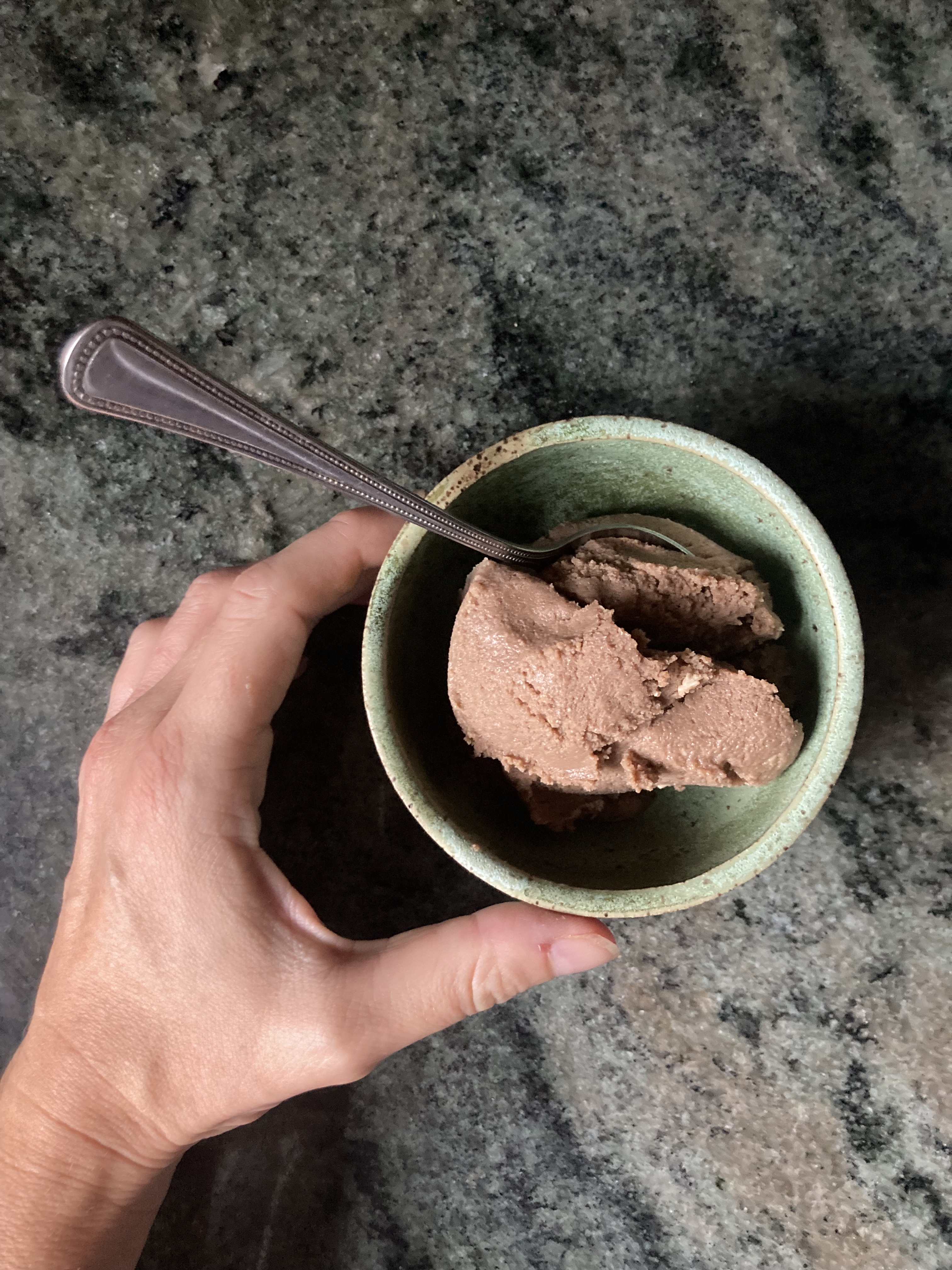
The chocolate is rich and luscious. I was surprised that this small amount of baking chocolate created such a deep chocolate flavor. As I eat the remaining chocolate cream in my fridge, I plan to pair it with fresh fruit, or maybe a warm fruit sauce, or simple sugar cookies or biscuits.

Christian Barclay’s Sugar Bisket

Bake this recipe between September 30 – October 8 to participate in the fourth annual Great Rare Books Bakeoff! (More information at the end of the post.)

Many thanks to my Barclay Project collaborators, (especially Jonah Carver and Christina Riehman-Murphy), Eberly Family Special Collections (especially Clara Drummond), and The Center for Virtual/Material Studies (especially Sarah Rich).

I first saw Christian Barclay Jaffary’s 1697 recipe book in February 2020 when librarians brought materials from Penn State Libraries’ Eberly Family Special Collections to the Abington College campus for a series of special classes. I was immediately intrigued to learn more about this small manuscript brimming with recipes written in a beautiful hand. I was especially curious because the manuscript was held in family papers and because the Barclay family were prominent Scottish Quakers with close ties to William Penn.

Since that day, Christian’s recipe book has received quite a lot of attention. First, the library’s conservation and digitization teams collaborated to safely create images and make the manuscript available online in 2021 so that more students and scholars could access Christian’s recipes for medicines, cookery, and fabric dying.  Over the past two years, I have worked with students and collaborators who have transcribed the manuscript in its entirety — using the digital images and original manuscript . (We will be publishing that transcription very soon and are excited to share it with you!)

Of course, I’ve also been cooking from this manuscript over the past few years. I always learn something when I take historical recipes into my rowhome kitchen — something about flavor, heat, texture, ingredients, method. Preparing “Sugar Bisket” revealed an interesting set of textures between the whipped eggs and sugar that form the base of the batter and the sugar crystals that coat the top after it has been smoothed — by a feather in the original or a spatula in my kitchen. (My quills are in my office on campus.)

This past summer I also had the pleasure of testing wool-dying recipes from this manuscript at a lively workshop with an eclectic and brilliant group of colleagues in preparation for Sad Purple and Mauve: A History of Dye-Making, a new exhibition that has just opened in Special Collections. Since I normally lead most recipe recreation workshops that I attend, it was a nice change to step back and learn from other experts, to see what experience and know-how they supplied to make Christian’s dyes come to life in the dye-pot. I was also pleased to share my first batch of recreated Sugar Bisket with the group. The verdict? Delicious.

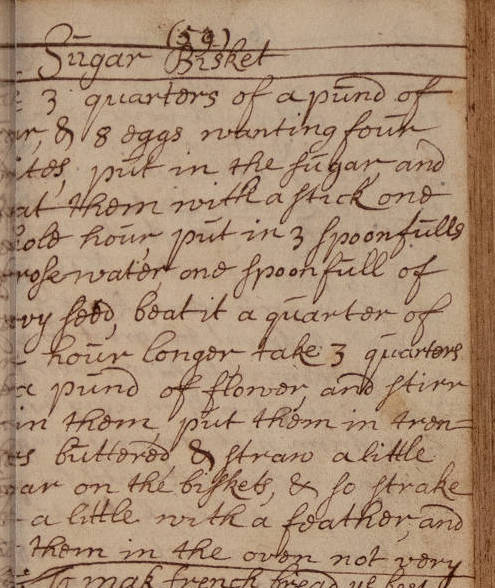
Original Recipe


Sugar Bisket
Take 3 quarters of a pund of
sugar, & 8 eggs wanting four
whites, put in the sugar and
Beat them with a stick one
whole hour, put in 3 spoonfulls
rosewater, one spoonfull of
Carvy seed, beat it a quarter of
ane hour longer, take 3 quarters
of a pund of flower, and stirr
it in them, put them in tren
chers buttered & straw a little
suggar on the biskets, & so strake
them a little with a feather, and
them in the oven not very  hot:

Updated Recipe
Makes approximately 20 cookies
¾ cup (150g) sugar, plus 1 teaspoon sugar to sprinkle on top
4 eggs, 2 whole eggs and 2 egg yolks
4 teaspoons rosewater
1 ½ teaspoons caraway seeds
1 1/3 cups (167g) flour
Butter to grease the baking sheets

Preheat your oven to 325F (162C). Butter two baking sheets.

Put the sugar, two whole eggs, and two egg yolks in a large bowl (or the bowl of a standing mixer). Using a hand mixer (or the whisk on a standing mixer), mix on a high speed for about 10 minutes. Use a spatula to ensure that the sugar is fully integrated. The mixture will turn glossy and slightly bubbly.

Add the rosewater and caraway seeds and mix for 1 minute to integrate both completely.

Gently stir in the flour with a spatula or a large spoon.

Dollop batter onto the baking sheet using a Tablespoon as a guide. Leave room between the cookies as they will spread. Smooth the tops with a spatula. Sprinkle 1 teaspoon of sugar over all the cookies.

Bake for approximately 20 minutes. The bottoms and the edges of the cookies will be lightly browned and the tops will be fully set and crispy with sugar.

Remove the cookies from the baking sheets and let cool.

These sugar biskets have a meringue-like texture and the caraway seeds and sugar topping give them a satisfying crunch. Stored in a container, they traveled well and remained fresh and delectable for days. Enjoy with a cup of tea or coffee.

Today I’m also inviting you to get into your kitchen, bake Sugar Bisket, and participate in a virtual baking competition: the fourth annual The Great Rare Books Bake Off, a friendly contest between the sister libraries of Penn State University and Monash University. There are so many intriguing recipes to try from our library collections and you can learn so much by baking a recipe instead of just reading it! An engraved pie pan trophy will be awarded to the library that receives the most social media posts featuring photos of your baked goods tagged with its hashtag: #BakePennState or #BakeMonash. The competition runs September 30 – October 8, 2023 so you have lots of time to read the recipes, shop for ingredients, and get baking. All the details are on the site linked above.

If these sugar bisket are not inspiring you to participate, there are a lot of other recipes to choose from. In past years I’ve also updated recipes for doughnuts and almond jumballs from Christian Barclay’s manuscript. Finally, I’ve also contributed an early eighteenth-century chocolate cream recipe, a desert that can be prepared on the stovetop, to this year’s recipe line-up. Stay tuned for a chocolate cream recipe coming to the site next week!

to make a codling tarte

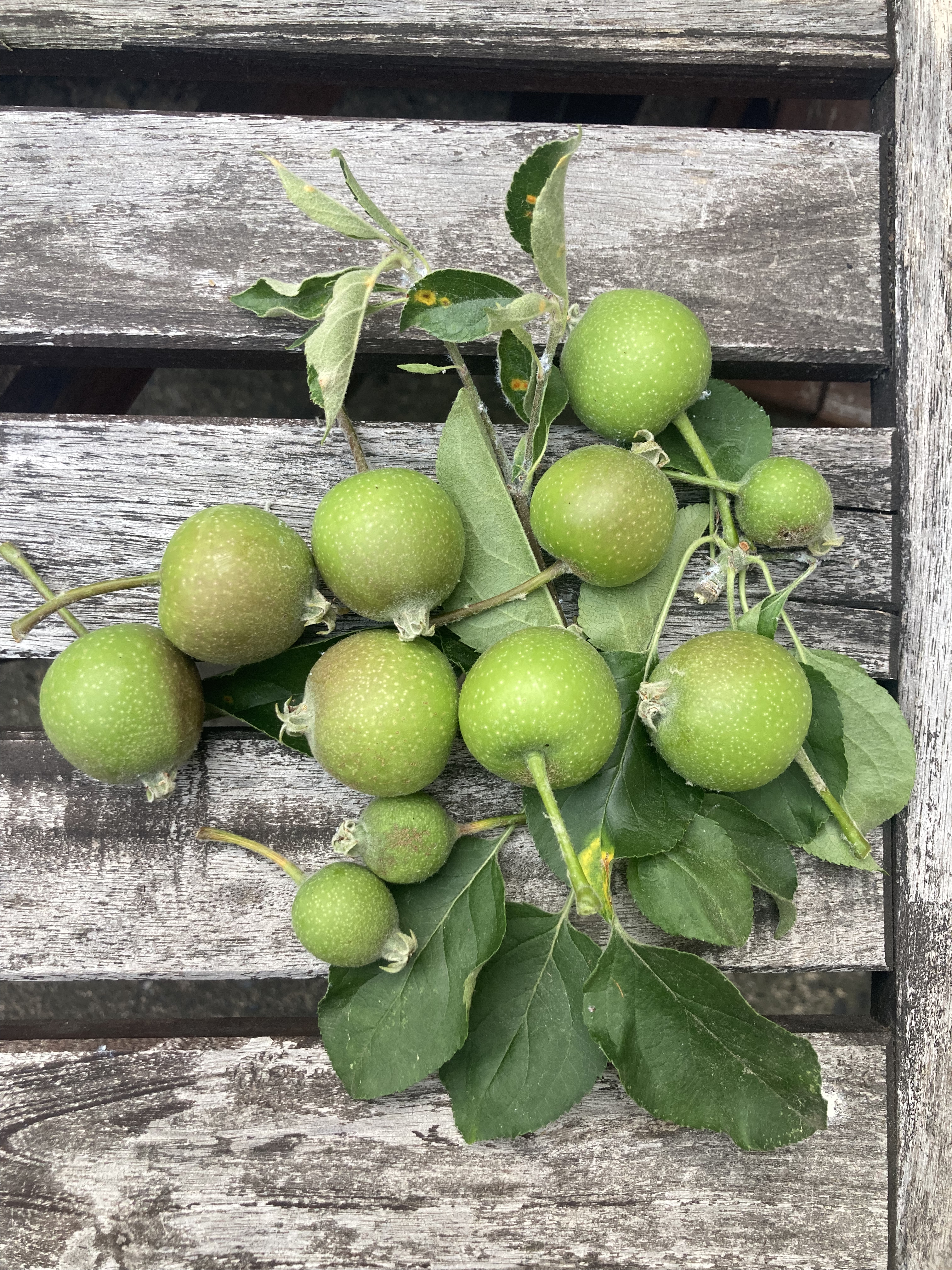
small, unripe apples on a table

I first learned that a “codling” was an unripe apple from the footnotes in a copy of William Shakespeare’s Twelfth Night. When Cesario arrives at Olivia’s gate and refuses to leave, Malvolio turns to ambiguous metaphors to describe the persistent youth to his mistress:

Not yet old enough for a man, nor young
 enough for a boy—as a squash is before ’tis a
 peascod, or a codling when ’tis almost an apple. (1.5.155-157)

A codling is almost an apple, like a boy is almost a man. The Oxford English Dictionary records both the literal and metaphorical definitions of “codling” — “Originally: an immature or unripe apple; a type of hard apple suitable only for cooking” in medieval and Renaissance usage, and, later,  in Shakespeare’s lifetime, “figurative. With implication of immaturity or inexperience: a young man, a youth. Obsolete.”

A few weeks ago, I had a bowl of freshly picked codlings in my kitchen. My spouse Joseph planted apple trees in our back garden back in 2021 and this year they have fruited for the first time. The codlings were in the kitchen because he had carefully thinned the fruit clusters to allow the largest fruits on each tree to grow larger.

Seventeenth-century recipes that call for codlings were likely crafted to turn this early harvest of unripe fruit into a delicacy. The codling tarts that I prepared from Jane Parker’s 1651 recipe book, now Wellcome, MS.3769, are a tasty product of preservation and thrift.

Original Recipe

to make a codling tarte
codle the appells, pill and cut the pape from the cores, and
put as much of that pape into some cream as
will make it thicke, put in a litell genger sinamon
and suger and rosewater, then bake it (18r)

After gently cooking the unripe apples, the recipe instructs you to peel and core them, to mash them to a pulp, and stir them into a tart filling fortified with cream and seasoned with ginger, cinnamon, sugar, and rosewater. The recipe implies that you already have pastry to hand to pair with the tart filling.

Parker’s recipe also reveals the confusing linguistic overlap between “codling,” an unripe apple, and the verb “to coddle,” a method of gentle cooking. The codlings must be coddled before they can be consumed.

Updated Recipe

A pint container of codlings yielded 1 cup of codling pulp after cooking, peeling, coring, and mashing.
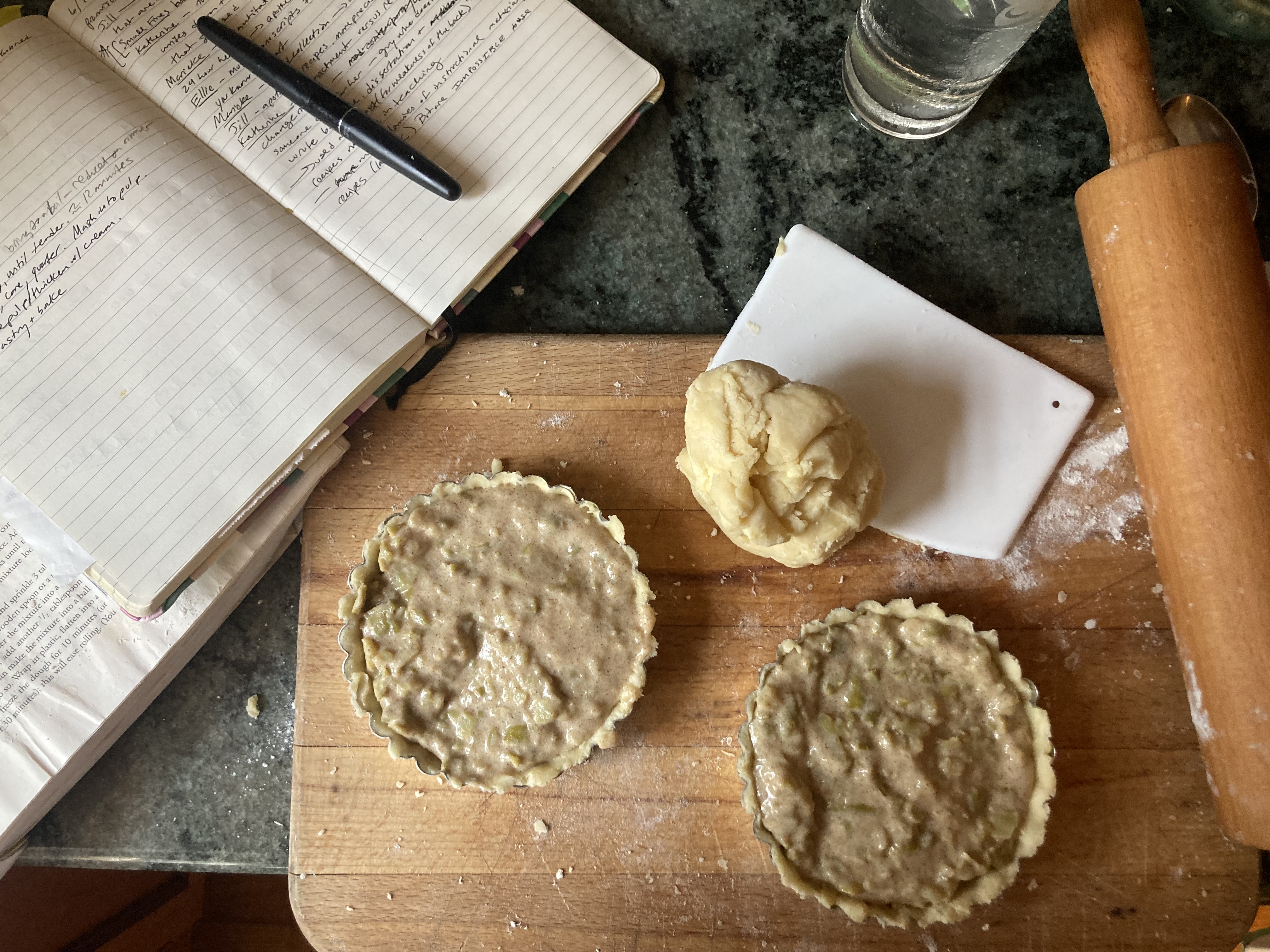
Use your preferred pastry. I used just shy of half of Mark Bittman’s classic pie crust recipe to make two small tarts baked in 5-inch tart pans. 

2 cups codlings
water for boiling
1 batch pastry
butter or cooking spray to grease your tart pans
2 Tablespoons heavy cream
1/4 teaspoon ground ginger
1/4 teaspoon ground cinnamon
1/4 cup sugar
1 Tablespoon rosewater

Put the codlings in a pot and cover them with water. Bring them to a boil and reduce to a simmer. Cook for about 12 minutes. The apples should be tender when poked with a fork.

Pour off the water. Set the cooked codlings aside and allow them to cool. Remove the skin off with a peeler and your fingers. Quarter the codlings and remove the cores. Put them into a bowl. Mash the codlings into a a rough pulp using a potato masher and a fork. (Some larger pieces remained in my mixture and I did not mind them.)

Prepare your pastry. Butter your tart pans and line them with pastry.

Preheat your oven to 350F.

Add the cream, ginger, cinnamon, sugar, and rosewater to the codling pulp. Stir until combined.

Fill the tart shells with the codling filling. Place them on a baking sheet.

Bake for 30 minutes. The filling should be caramelized and set, but still jiggle slightly in the middle.

Allow to cool for at least 10 minutes before serving.

The tarts were tart and well-spiced. Codlings are far more sour  than ripe apples. This recipe is designed so that the sweetness of the sugar, the seasoning from the spices and rosewater, and the fat from the cream and buttery pastry balance out the inherent sharpness of the codlings.

Although I liked the shape of these tarts, I wondered if the codling filling might also be used to fill free-form galettes or even baked without a pastry crust.

If you find yourself with codlings this season, this recipe is a great way to use them.

To Make Seed-Cake

This recreation of a Seed Cake recipe was both inspired and informed by my participation in conversations about Robert Forbes’s manuscript The Lyon in Mourning in Edinburgh in 2022 and beyond. Learn more about the project here: https://dhil.lib.sfu.ca/lyoninmourning/

slice of seed cake on plate in foreground, cake in background with flowers

Charles Edward Stuart eats oat porridge, bread and butter, and cake in various episodes documented in Robert Forbes’s encyclopedic and commemorative manuscript, The Lyon in Mourning. But Forbes did not only describe scenes of eating. He also collected and transcribed the documents relating to provisioning the household: “Copy (exact & faithful) of the Accompts of James Gib, who served the Prince in Station of Master-houshold & Provisor for the Prince’s own Table.”

Gib’s detailed accounts are valuable to food historians as they provide insight into eighteenth-century food culture as well as the practical constraints of maintaining an elite household on the move. Moreover, Forbes’s choice to include these quotidian accounts of household management in his manuscript alongside poems, songs, conversations, and letters speaks to the comprehensive nature of his project: Food, the stuff of everyday life, was just as important to document as any other detail of the final Jacobite rising.

Among payments for butter, eggs, poultry, wine, ale, brandy, lemons, spices, salt, oat bread, fruit, and fish, “seed cake” is listed twice in Gib’s accounts – December 22, 1745 and January 25, 1746. It is the only kind of cake listed in the accounts and it was likely purchased from local bakers. Seed cake was immediately familiar to me and I’ve enjoyed preparing seed cakes in the past. Prepared at  the harvest and flavored with locally grown caraway seeds, seed cake is a precursor to the modern British cakes that are typically served at teatime.

spices and seasonings on plate: caraway seeds, sliced almonds, candied citron and orange peel

Although we now associate caraway seeds with savory dishes, caraway was cultivated widely in northern Europe and caraway seeds were widely used in sweets in British cookery in the sixteenth, seventeenth, and eighteenth centuries. A simple seed cake recipe might call for flour, butter, eggs, and the crucial caraway seeds. The cake would be leavened with either vigorously whisked eggs or ale barm – fresh yeast scooped from the top of a vat of beer.

The recipe that I have recreated below is from an eighteenth-century cookery manuscript that, like the Lyon in Mourning, is held at the National Library of Scotland: MS24775 “Pastry Book Elgin 20th August 1734.” It is leavened with whipped eggs and is slightly fancier than the typical seed cake. This recipe calls for the addition of candied citrus peel – candied orange or candied citron – as well as sliced almonds. Whereas caraway seeds were grown locally, citrus and almonds were imported to the British isles from southern Europe. This cake has a chewy, meringue-like texture as a result of the fluffy eggs that give it its rise. The vegetal flavor of the caraway seeds is nicely balanced by the tangy sweetness of citrus from the candied peel and the rich nutty crunch of almond slivers.

seed cake batter in spring form pan

Original Recipe 

31.
To Make Seed-Cake
Take a pound of sugar being beat &
searched & nine Eggs keeping back Two of
the Yolks Cast them with Sugar till they
be white – Then Steer in a pound of flour
four Ounces of Citron  & Orange peel four
ounces of Cutt almonds & two ounces of seeds.
being mixed altogether put your Cake in
a frame & bake it – You may do a plumb
Cake after the same manner only
only adding Two pounds of Curranes
& to Each pound of sugar six ounce
Of beat Butter & four drop of Cloves

Updated Recipe

1 ¾ cups flour (225g)
¾ cup candied citrus peel – orange, citron, or a combination of the two (55g)
½ cup sliced almonds (55g)
2 Tablespoons and 2 teaspoons caraway seeds
5 eggs (3 whole, 2 whites)
1 cup sugar (225g)

Preheat your oven to 350°F. Grease a 9-inch springform pan and line with parchment.

Stir together flour, candied citrus peel, sliced almonds, and caraway seeds. The citrus pieces should be nicely coated with flour. Set aside.

Separate two eggs and put the two whites in a large bowl. Add the additional three whole eggs. Using a mixer, whisk the eggs for approximately 2 minutes until they become very fluffy. Add the sugar. Whisk on a high speed for approximately 5 minutes until the mixture is glossy and visible bubbles have formed.

Fold the flour mixture into the egg mixture using a spatula. Stir and fold gently until there are no visible clumps of flour.

Pour the batter into your prepared pan. Place it on a baking sheet in the middle of the oven.

Bake for 40 minutes until golden and set in the middle. A cake tester will come out clean when it is completely cooked.

Allow the seed cake to cool for at least 10 minutes before removing it from the springform pan.