To make minceed pyes

I fell in love with mince pies in London on a cold December day. British winters are shockingly raw, wet, and dark to an American visitor accustomed to sharp, east coast wind and bright winter light. These sweet, spiced pies warmed me to my core. Traditional British holiday festivity is full of warmth and spice to combat the cold, the dark, and the damp. The mince pie that converted me was made by my spouse, Joseph,  who also helped me prepare this recipe for “minceed pyes” from Ms. Codex 214, Catherine Cotton’s recipe book that also led us to three interesting gingerbread recipes.

Although most mince pies today start with a base of raisins, currants, and occasionally apples and quinces, mince pies traditionally began with meat. The meat was flavored by these additional fruits, not the other way around. This recipe begins with a “neats tongue,” a calf or beef tongue. Gervase Markham’s starts with a leg of mutton. A mince pie recipe that I considered preparing from MS Codex 252 uses ox cheek. This nineteenth-century cookbook published in Boston even has a mince pie recipe that starts with tongue. I swallowed my reservations, took the trolley to Reading Terminal Market in Philly, and ordered a beef tongue from a butcher.


The Recipe

mince pies

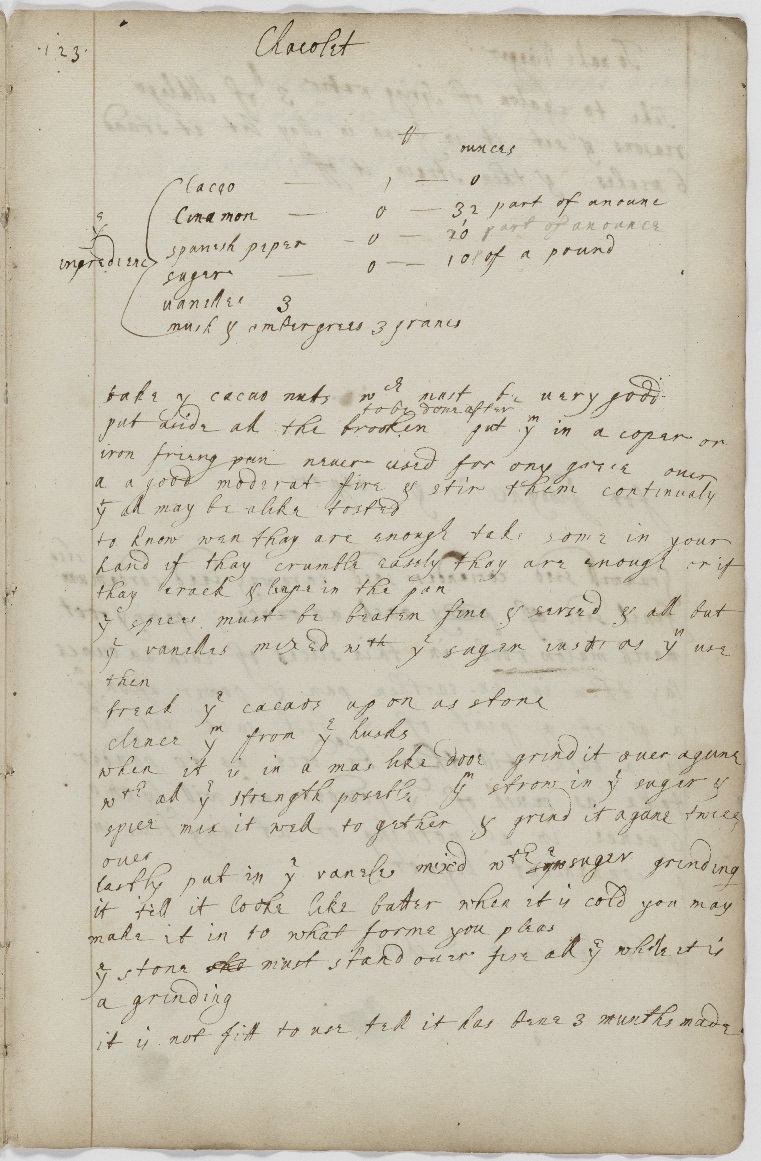
To make minceed pyes

Take a neats tounge parboyle it and mince it very small
put to it a pound of beefe suit and 2 pound of reasons
of the son stoned and minceed very small a quaarter of
a pound of sugar the peal 2 lemmons cut small a little
cloves & mace and nutmeg a quarter of clarret a little
salt mix all this together with 6 or 8 pipings smally shred
and two pouund of currants or as many as you see feet
for your past take a pound and quarter of flower a pound
and a half of butter and put it into water and seet it on
the fire & let it boyle make the past & put in half a pound
of lofe sugar finely beaten & mix it in the flower put in the
yolks of 4 eggs & the whites of 2 so worke it up and
as you fill them put in canded orange & green sittorn
finely cut such as you eate hot when they come out of the
oven put in sume butter & white wine

The recipe begins with instructions for preparing a rich mincemeat: parboiled tongue, grated beef suet (or beef fat), raisins, sugar, lemon peel, pipings (or apples), and currants seasoned with clarret (red French wine from Bordeaux), cloves, mace, nutmeg, and salt. In many ways, this ingredient list is similar to modern recipes for mince pies — fruit, suet/fat, booze, spices, sugar, and citrus. But then there’s that tongue. Tongue is, of course, a staple of many cuisines, but I’d never prepared one before. Luckily Joseph has never balked at an offal challenge and helped me by brining and parboiling the tongue following Fergus Henderson’s recipe from Nose to Tail Eating. This process adds at least three days of brining and three and a half hours of slow boiling to the overall cooking time. Another food blogger has reconstructed the recipe with great photos of the method here.

Once the mincemeat is ready, this recipe calls for an interesting method of pastry making and a final round of seasoning with candied orange and “sittorn” peels (lemon peel), butter, and white wine. Between the lengthy tongue preparations, ingredient sourcing, and making the candied peel, I decided to prepare my favorite pie crust from Orangette instead of trying out this pastry method as well. Although this was really born out of fatigue and convenience, there’s another more pressing reason, too: Early modern pie crusts weren’t always meant to be eaten. In many cases they simply served as a semi-edible container that would preserve meat and other ingredients during extended periods of storage. Ken Albala discusses this in a recent essay where he re-reads Hamlet’s famous statement that  the baked meats from his father’s funeral were served at his mother’s wedding. Sure, Gertrude may have remarried quickly, but baked meat pies were designed for long storage all the same. The instruction to add butter and wine at the very end also tipped us off that this pastry might fundamentally be utilitarian because sealing meat pies with hot fat and alcohol was part of the preserving method. I’ve included an updated version of the pastry recipe below and I plan to revisit it in the future (pastry off?), but we wanted you to have mince pies in time for Christmas!

Our Recipe

Ingredients

Mincemeat:

Our recipe is quartered from the original, but we’ve included the original amounts [in brackets] as they were given in the recipe.

1/2 lb beef or calves tongue, parboiled and chopped. (The tongue we purchased weighed  three pounds. We added 1/4 lb of tongue to half the mincemeat mix.) [1 neats tongue]
1/4 lb (4 oz.) suet (beef fat) [1 lb] substitute in butter or vegetable shortening for a vegetarian version)
1/2 lb (1 1/2 c) raisins [2 lbs]
1/2 lb (1 1/2 c) currants [2 lbs]
2 apples, peeled and chopped very small [6-8 apples]
1/4 c sugar [1/4 lb]
zest of half a lemon [zest of 2 lemons]
1 c claret (or other red wine) [1 quart claret]
1/2 t mace
1/2 t ground cloves
1/4 t nutmeg, ground or grated
1/4 t salt
1/2 c candied orange and lemon peel (We used this recipe from Smitten Kitchen to make ours from two clementines and one lemon.)
1/3 c white wine
2 T butter, cut into small pieces

Pastry:

This is the full recipe. As we discussed above, we made our favorite pie crust from Orangette because of tongue fatigue.

1 1/4 lb flour
1 1/2 lb butter
water
1/2 lb sugar
2 whole eggs
2 egg yolks

Method

Prepare the mincemeat:

Mix together tongue, suet, raisins, currants, apples, spices, lemon zest, sugar, and claret and set aside. Right before you make the pies, add the candied peel, white wine, and butter.

Prepare the pastry:

*We didn’t test this part of the recipe. Feel free to use your favorite pie crust like we did.*
Put your flour in a bowl. Heat the butter and water in a small saucepan until it comes to a boil. Pour into the flour and stir until a dough forms. Add the sugar and eggs. Mix until your have a workable pastry.

Make pies:

Preheat the oven to 425 F.

Roll out the pastry. Using a pastry cutter or drinking glass, cut circles. We used a 2 5/8 in (68 mm) pastry cutter to make nice little pies. Make sure you have an even number of circles so that you have bottoms and lids for all your pies.

Butter two-three baking sheets. Put 2 t mincemeat on each bottom. (Remember to add the candied peels, white wine, and butter to the mincemeat just before!)

Place a lid on each pie. Push down the edges of the pastry to seal. Poke a few air-holes in the lid with with a fork. We brushed the top with an egg wash for a golden crust, but this step is optional.

Bake mince pies for 10-15 minutes until golden brown. Sprinkle with powdered sugar to serve if you want these to look especially festive.

This recipe made 25 mince pies with enough leftover mince meat to make another full batch.

The Results

These mince pies are delicious: spicy, fatty, and subtly sweet. We divided our mincemeat into two batches, one with and one without the tongue. The pies with the tongue were deeply meaty, but the currants, raisins, and apples held their own to compliment the umami flavors. The pies without tongue were very fruity. They tasted really similar to mince pies I’ve made before from Nigella Lawson’s recipe, which includes quinces in the mix. (There’s a version of that recipe on this blog.)

Next time, I’ll add more mace, cloves, and nutmeg. I might add the candied peel and white wine to the mincemeat from the beginning.  On the other hand, I might leave out those last 2 T butter which felt extraneous. We also have a ton of leftover mincemeat in the fridge. I’m excited to see how the next batch tastes after the flavors marry for a bit longer. There’s a Christmas tree that needs trimming and there’s nothing like eating holiday baked goods and making the house merry.

Alyssa and I would like to thank Joseph Malcomson for rising to the tongue challenge and helping us devise and prepare this recipe.

To stew Pease the French way

When I’m not cooking archival recipes, I eat a lot of greens. Kale, spinach, chard, green beans, peas, escarole, cabbage, broccoli, or lettuce feature in most of my meals. But many of the vegetable recipes in the manuscripts we’ve consulted are for preserving vegetables for future use. We baked peas into a tart and pickled tomatoes, but we’ve featured fewer fresh vegetable dishes, like herb soup and this recipe “To stew Pease the French Way.” Alyssa and I were both excited to find this recipe for peas and cabbage in MS. Codex 644, a manuscript connected to the Frankland family that we’ve turned to for “Cheap Soupe” and “Oven Cakes.” We were also inspired by the note, “Excellent,” under the title.

If you’re looking for a new way to eat your greens, a recipe to use up that partial head of cabbage lingering in your fridge,  or even searching for a last-minute Thanksgiving side, read on!

The Recipe

pease the french way

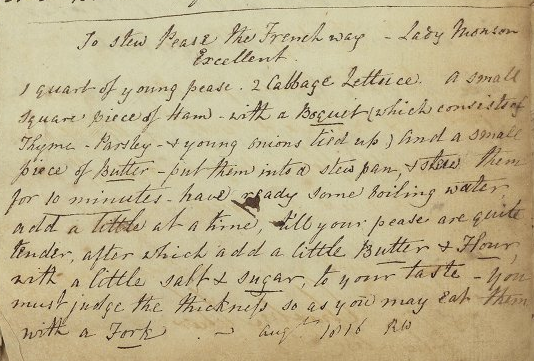
To stew Pease the French way – Lady Monson
Excellent.
1 quart of young pease. 2 Cabbage Lettuce. A small
square piece of Ham – with a Boquet (which consists of
Thyme – Parsley – & young onions tied up) and a small
piece of Butter – put them into a stew pan, & stew them
for 10 minutes – have ready some boiling water,
add a little at a time, till your pease are quite
tender, after which add a little ButterFlour,
with a little salt & sugar, to your taste – you
must judge the thickness so as you may Eat them
with a Fork. ~ Aug[u]st. 1816 RLS

The bundle of herbs and smoky meat pair beautifully with the sweet peas and the savory cabbage. The addition of a roux thickens the cooking liquid into a delicious sauce.

The source of the recipe, “Lady Monson” may be Lady Anne Monson (1726-1776). Monson traveled to India soon after marrying Colonel George Monson of Lincolnshire in 1757 and spent her last decades living in Calcutta and traveling South Asia collecting botanical specimens. It’s tempting to link the Monsons and the Franklands given their shared history in India and South Asia, but I have not been able to confirm the connection.

Our Recipe

1 quart (4 c.) peas, fresh or frozen
1 large green cabbage, sliced thinly
4 stalks thyme, 4 stalks parsley & 4 scallions, tied up with butcher’s twine
1 slice ham or 2 slices bacon, chopped into small pieces
3 T butter (1 first, 2 for roux)
1/2 c. boiling water
2 T flour
salt and pepper to taste

Brown ham or bacon in butter.
Add cabbage, peas, herb bouquet, water, salt, and pepper. Cook for 5 minutes.
Blend 2 T butter, softened and flour, add slowly to the vegetable mix. Cook for 5 more minutes until the vegetables are cooked, but haven’t lost all their crunch.

(You may need to adjust the cooking time if you are using frozen peas.)

The Results

This is a delicious way to eat your peas. We chopped up the scallion and parsley to garnish our servings and I liked the bites that included the herbs best. You could easily leave out the smoky meat to make a vegetarian version of this dish. Smoked salt or a sprinkle of paprika might add that savory note to a vegetarian version.

We also think this would taste delicious with roast turkey, potatoes, and stuffing, which is why we’re sharing this recipe with you today. Let us know how it turns out, whenever it happens to grace your table!

Rice Pudding Two Ways 

We wrote a version of this post over on The Recipes Project.

Rice pudding is simple. Neutral in color and mild in taste, rice pudding has a minimal list of ingredients and always pleases a crowd. It’s also familiar – most of us have  encountered rice pudding at one time or another. So, when we kept seeing lists of rice pudding recipes in manuscript recipe books from many centuries, we wondered: why rice pudding? And what, if any, differences were there between past and present versions? So, we decided to make not one but two distinct rice pudding recipes. A rice pudding face-off!

While in the twenty-first century the ingredients required to make rice pudding are pantry staples – rice and sugar are readily available, as is dairy – in seventeenth- and eighteenth-century English households, rice pudding was probably a more exotic affair. After all, England does not produce any of its own rice. We asked another question: where did this rice come from?

This sent us on a hunt for early modern England’s rice suppliers. Today, as in the past, the majority of the world’s rice is produced in Asia. Until the later decades of the seventeenth century, England’s rice came from Asia through overland routes or through overseas trade. (For more information, see Renee Marton’s Rice: A Global History and Rice: Global Networks and New Histories, ed. Francesca Bray et al.) The rice that made its way into England’s kitchens in the later seventeenth and eighteenth centuries would likely have come from British colonies in South Carolina. Carolina Gold Rice was developed from African seed stock and is distinct from Asian varieties.* It thrived in the Low Country, anchored South Carolina’s economy, and was largely cultivated by African slaves. Scholars of American history and food are currently debating the theory of “Black Rice,” first proposed by Judith Carney, which argues for the centrality of West African women’s agricultural knowledge to the successful cultivation of rice in the Carolinas. *[Correction: Naomi Duguid pointed out that Carolina Gold Rice is neither from Africa nor indigenous to the Americas. It most likely arrived on a ship from Madagascar or the East Indies. See her book, The Seductions of Rice, on this topic.]

Chefs and food writers often refer to this meeting of cultures, climates, and ingredients as the Carolina Rice Kitchen. Rice was the foundation of a local cuisine and an important export. Non-aromatic but nutty, Carolina Gold Rice was world-renowned. The PBS show Mind of a Chef included this animated history of Carolina Rice in an episode where Chef Sean Brock makes a passionate case for recovering lost food traditions. For more information about Carolina Gold Rice and southern heritage foods, take a look at these resources: Carolina Gold Rice Foundation, the Southern Foodways Alliance, Anson Mills, and food historian David Shields’ new book, Southern Provisions. The recipes we decided to cook for this rice pudding-off were both included in manuscripts from a particular historical moment: the moment when the rice supply-chain changed and Carolina Gold Rice arrived in England’s kitchens.

Our rice puddings come from LJS 165 and MS Codex 631. Each recipe is just one in a cluster of rice pudding recipes, demonstrating cooks’ variations on a base recipe that we’ve seen with other dishes like jumballs and syllabubs.  (Rice pudding could also be turned into other recipes: two rice pudding recipes in MS Codex 631 include instructions for adapting them to almond puddings instead.) For contrast, we chose to cook one recipe that started with whole rice and another that used rice flour as a base.

Indeed, we were intrigued, even surprised, to see rice flour in an eighteenth-century recipe. More and more modern cookbooks are exploring a wide range of flours, but what was the place of rice flour in early modern cooking? Rice flour (often “rice flower” or “flowre”) was used as a thickening agent in a range of early modern dishes. Seventeenth-century print cookbooks like The Compleat English and French Cook (1690) and Joseph Cooper’s The Art of Cookery (1654) both call for rice flour in “Cream with Snow” (sweetened cream thickened with rice flour and eggs, then topped with more cream). They also use rice flour in Almond Cream and Rice Cream, as does The Compleat Cook (1694), which also provides a recipe for “Custard without Eggs” using rice flour. The Gentlewomans Cabinet Unlocked (1675) tells how to make Rice Milk. Other rice flour puddings can be found; some add chopped dates and/or currants to the mixture, while others top the pudding with a pastry crust. The use of rice flour as a thickening agent continued well into the eighteenth century: print cookbooks like A Collection of above Three Hundred Receipts in Cookery, Physick and Surgery (1714), The Court and Country Confectioner (1770), and Amelia Chambers’ The Ladies Best Companion (1775?) often use rice flour in cheesecakes and in the filling for chocolate tarts.

IMG_4764

The Recipes

A whole grain rice pudding from LJS 165.

rice puding

Rice Puding
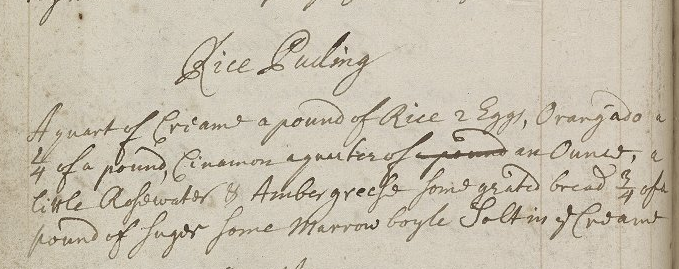
A quart of Creame a pound of Rice 2 Eggs, Orangado a
1/4 of a pound, Cinamon a quarter of a pound an Ounce, a
little Rosewater & Ambergreese some grated bread 3/4 of a
pound of suger some Marrow boyle Salt in the Creame

Apparently it is still trendy to flavor rice pudding with cinnamon and orange because a quick search turned up this Food Network recipe. I made two small changes to this recipe: I halved it (and it still made a huge amount) and I didn’t add aromatic ambergris and bone marrow to the mixture.  In retrospect, I also wonder if a combination of milk and cream might work better here than cream and the water I added to stop the rice from sticking. After all the talk about Carolina Gold Rice, I’m almost ashamed to admit that I tried this recipe with Jasmine Rice instead. It’s what I had to hand and it worked, although I’m sure Carolina Gold Rice would add a distinctly nutty flavor to the pudding.

2 cups heavy cream
2 cups water
3/4 cup sugar (3/8 lb. or 165 g.)
1/2 tsp. cinnamon
1/2 tsp. rosewater
1/4 tsp. salt
3-4 strips of orange peel
1 cup and 2 tbsp. rice (1/2 lb. or 225 g.), preferably Carolina Gold Rice
1 egg
1 small piece of bread, grated. Or 2 tbsp. bread crumbs.

Heat the cream, sugar, and seasonings: cinnamon, orange peel, and rosewater.
Add the rice and bring to a boil. Cover and cook for 45 min-1 hour until the rice is tender. Stir frequently (every 5-10 minutes) to keep the rice from sticking. Add additional water if the  liquid is very low and the rice is still hard.
When the rice is cooked, stir in the egg and bread. Cook for 5 more minutes.


Rice flour puddings from MS Codex 631.

rice flour pudding

To Make a Rice Pudding

Take six ounces of Rice flower a quart of milk set them over [th]e fire & stir them well
together while they are thick, then put in half a pound of Butter six eggs one nutmeg sweeten
it to y[ou]r tast, Buter y[ou]r Dish that you Bake it in /

I halved this and used ground nutmeg because that’s what I had; otherwise, I followed the original recipe closely.

3 oz. rice flour (~1/2 c.)
2 c. milk
1 stick butter, diced
3 eggs
1/2 tsp. nutmeg
1 tbsp. sugar

Preheat the oven to 350F and butter/spray a 9″ pie dish or similar baking dish. Combine the rice flour and milk in a saucepan; cook over low-med. heat, whisking frequently. The mixture will thicken quite suddenly, so be attentive! Off the heat, stir in the butter, eggs, nutmeg, and sugar. Bake for 40 mins., until top is puffed and golden brown. Let cool on a wire rack and serve warm or at room temp.


 The Results

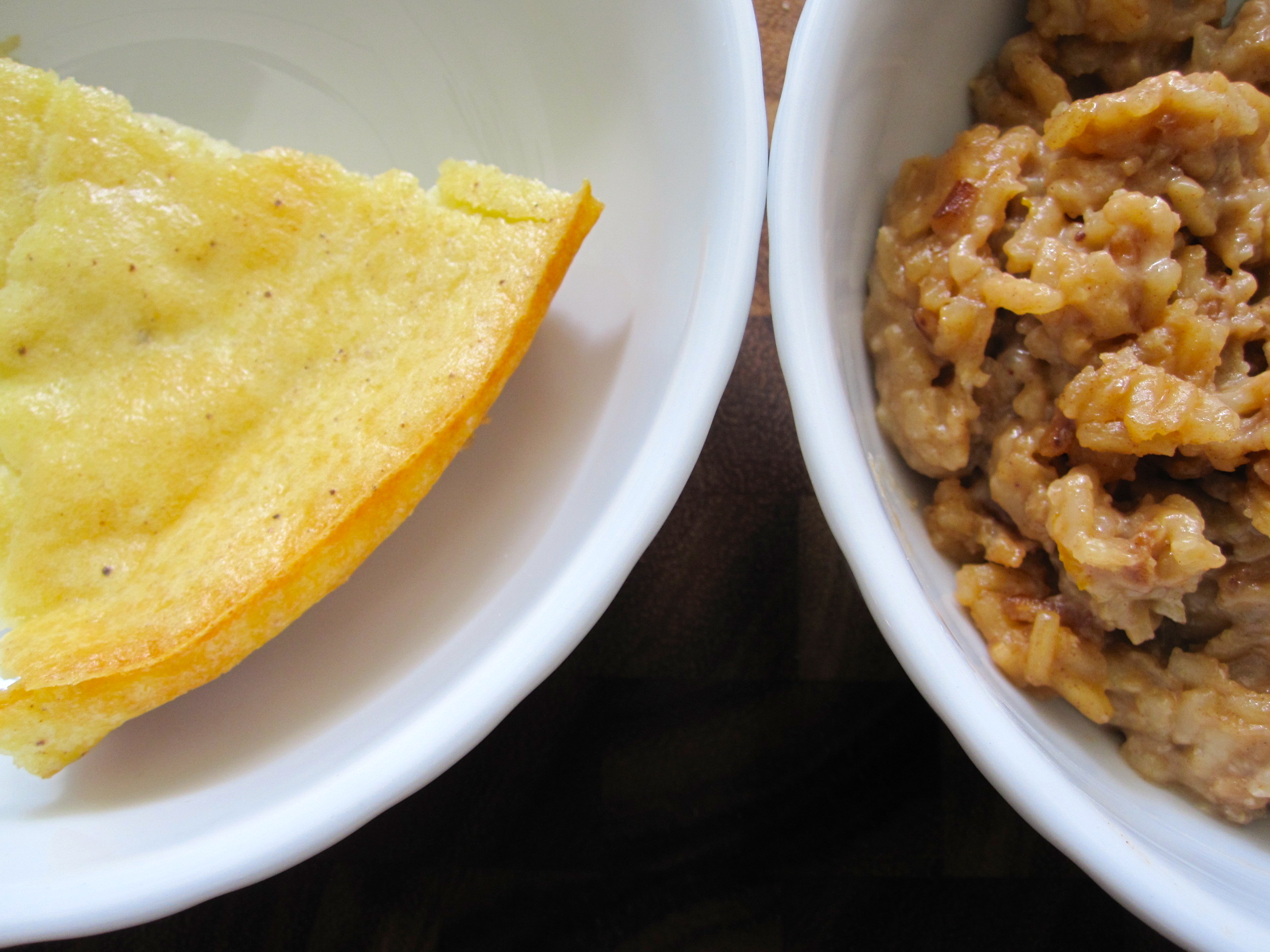
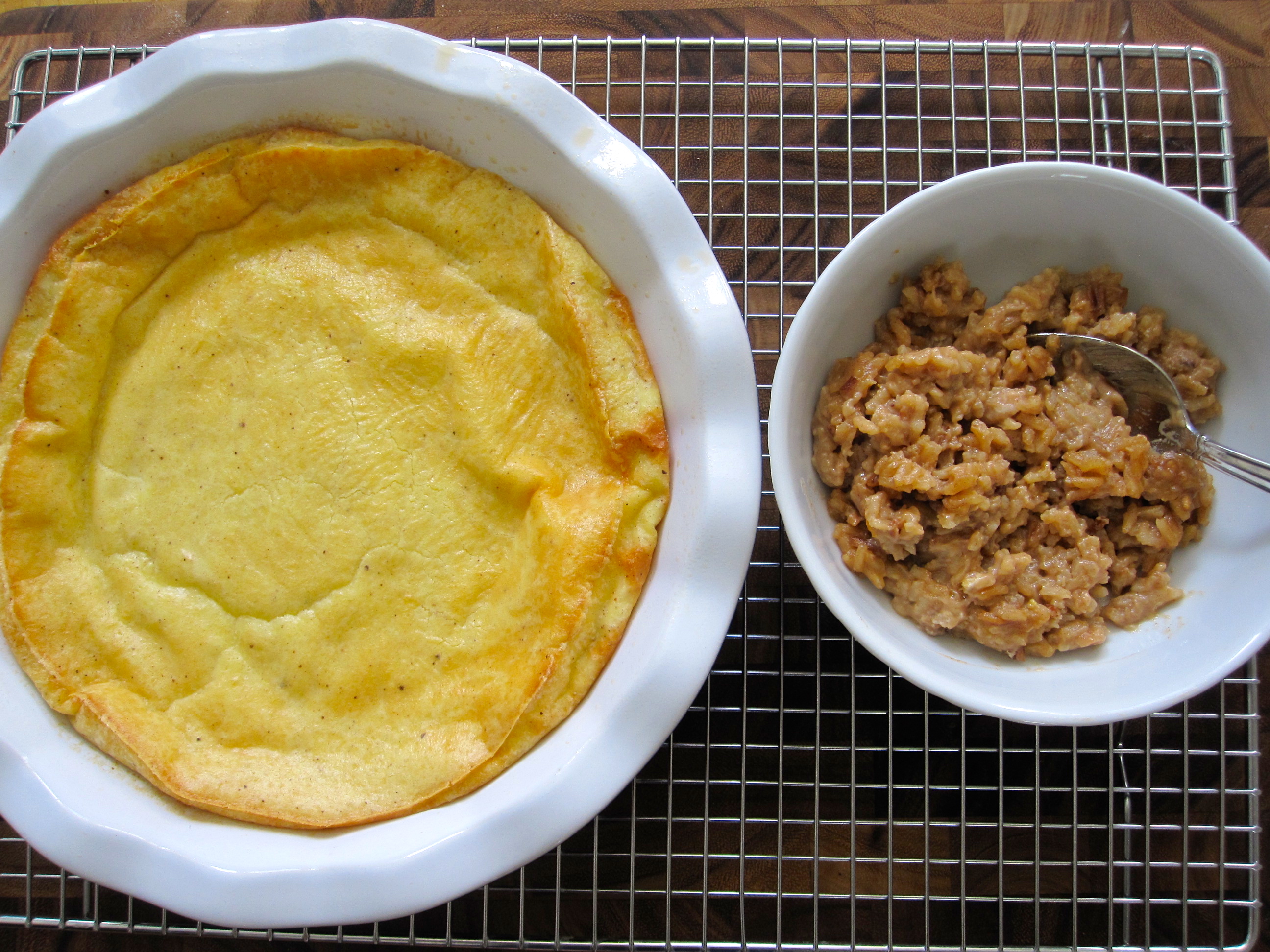
Our rice pudding-off was a success! These rice pudding couldn’t look or taste more different. The “whole grain” rice pudding  from LJS 165 is toothsome, with surprising depth of flavor from the caramelized  sugar and rosewater. The cinnamon adds a spicy note, but the orange flavor is harder to identify. We might switch out the rosewater for orange flower water next time. (If you are not a fan of rosewater, you can probably leave it out altogether.) This rice pudding is especially thick. Even before we added the egg and the grated bread the mixture was already dense. The eggs and bread may have been intended to add bulk to the dish, as rice was certainly more expensive than stale bread!

The rice flour pudding, on the other hand, is fairly bland. Nutmeg is the primary seasoning; even the strong notes of nutmeg don’t cut just how creamy this pudding tastes. (Note: some more sugar or some honey might be welcome. However, this doesn’t seem meant to be overly sweet, unlike the whole grain version.) It reminded us of buttermilk pie and South African milk tart, with an even firmer baked texture. It would form a good base for other tastes: served with fresh or stewed fruit, for instance, or with additional flavors added to the pudding.

In the eighteenth century, rice pudding represented the world in a bowl. Rice from West African seeds was cultivated in American soil by enslaved Africans in the Carolinas and shipped east across the Atlantic to England. The sugar probably came from the Caribbean. Nutmeg and cinnamon from places like the Moluccas made their way west through Asian and European ports. Oranges imported from Seville and other warmer climates scented the dish. The eggs, milk, cream, and bread are the only ingredients early modern cooks would have been able to source locally. These ingredients rely on both trade and labor – their production depended on plantation agriculture and their presence in England came from a highly developed global transport network. It’s not as if these structures don’t underpin many – if not all – of the recipes we’ve cooked so far. However, paying particular attention to this single ingredient, rice, has  challenged us to consider how ingredients entered early modern kitchens in the first place, even before they became the recipes in a household manuscript.

What surprised us most about making these dueling rice puddings was not the questions of culinary and  economic history they raised up, but the true difference in taste. In both, the taste of the rice remains – even through the single note of nutmeg in the rice flour pudding and the dense combination of flavors in the rice grain pudding. The taste difference, furthermore, is deliberate: the presence of multiple rice pudding recipes – similar but distinct – within the same manuscript recipe book indicates attempts to explore the versatility of this ingredient, to incorporate other flavors into a recipe that has one umbrella name but many flavorings and techniques. We’d be curious to taste these again using heritage rices, direct descendants of the Carolina Gold Rice these cooks and their contemporaries would most likely have used. In both cases, we were able to follow the ingredients and techniques fairly closely (minus ambergris and marrow), so what we tasted in our dueling rice puddings seems, to us, a likely descendant of these puddings as they were originally prepared.

IMG_4756

To presarue Aprecokes

I wanted to try this recipe as soon as I saw it. Although I often have this reaction to beautiful photos of food on blogs or Instagram, when I’m reading three hundred-year-old culinary manuscripts online it’s a different story. I’m curious, puzzled, intrigued, but rarely inspired to drop everything and prepare Fish Custard immediately. I was flipping through one of my favorite manuscripts in the collection, MS. Codex 252, and had an this uncharacteristic reaction: I needed to preserve some apricots right away. This recipe has a lot of elements that I like — stone fruit, very few ingredients, and a low-stakes preserving method. I also had a good reason to believe that it was a particularly reliable or tasty recipe.

preserve apricots, detail

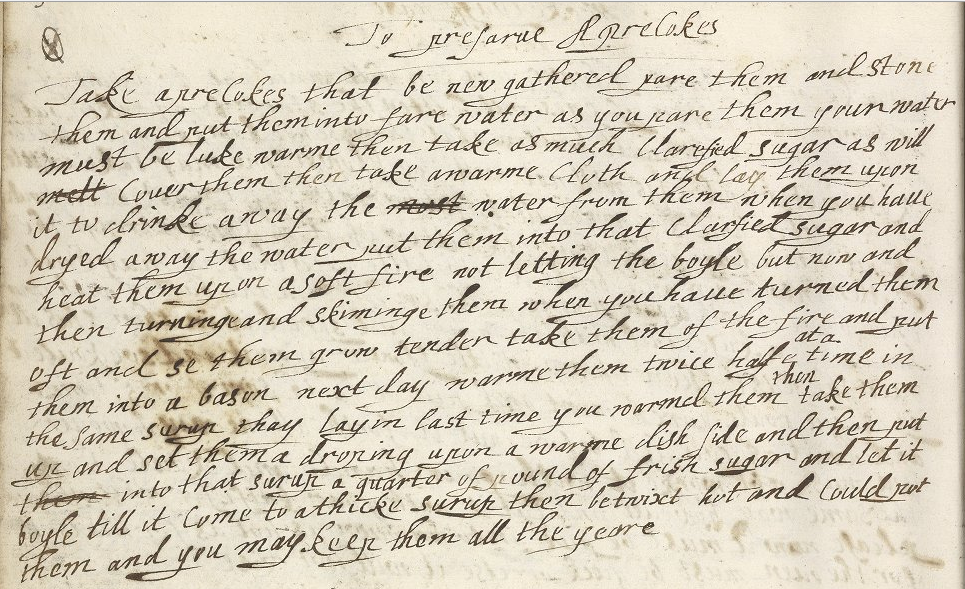
This circle and X marking next to the recipe title indicates that someone cooking from this book prepared preserved apricots and the recipe, most likely, worked. I first learned about these circles, checks, ticks, fleurons, and other marks in recipe books when I heard Wendy Wall deliver a lecture about Shakespeare and early modern women’s medicinal knowledge. (I’m excited to read her new book, Recipes for Thought, when it comes out this fall. ) Wall and other historians of food and medicine consider markings like these part of the progression of scientific knowledge in the kitchen. They are the handwritten remains from many otherwise undocumented experiments. Cooks tried recipes and made (a few) notes about how they turned out. In this same manuscript the recipe for Could Possett was also marked and we loved how that refreshing drink turned out!

Whoever marked this recipe for preserving apricots– the compiler, a household cook, a member of the family from a later generation — was completely correct. This recipe works beautifully and the preserved apricots are a versatile and delicious ingredient to put up as the cold months approach.

The Recipe

preserve apricots

X                             To presarue Aprecokes
Take aprecokes that be new gathered pare them and stone
them and put them into fare water as you pare them your water
must be luke warme then take as much clarefied sugar as will
melt cover them then take a warme cloth and lay them upon
it to drinke away the must water from them when you haue
dryed away the water put them into that clarfied sugar and
heat them upon a soft fire not letting the boyle but now and
then turning and skiminge them when you haue turned them
oft and se them grow tender take them of the fire and put
them into a bason next day warme them twice halfe at a time in
the same surup thay lay in last time you warmd them then take them
up and set them a droping upon a warme dish side and then put
them  into that surup a quarter of pound of frish sugar and let it
boyle till it come to a thicke surup then betwixt hot and could put
them and you may keep them all the yeare

Our Recipe

It’s simple: peel and pit the apricots, wash them, cook them in their own juices with a bit of sugar, cover them with sugar syrup.

Our recipe is for a small amount of fridge-stable, not shelf-stable, preserved fruit. When we acquire a proper canning set-up here at Rare Cooking, we’ll start preserving everything in sight in large quantities. In the mean time, we’re sticking to fridge pickles, freezer jam, and small batches. The apricots should last for a few weeks in the fridge (if you can stop yourself from devouring them all at once.) If you’re a canning whiz and decide to try your hand at this recipe, please share your method in the comments for other interested readers.

Ingredients:

Part 1: To cook the apricots
8 apricots
1T sugar

Part 2: To make the simple syrup
1/4 c sugar
1/4 c water

Method:

Part 1: To cook the apricots
Peel the apricots and remove the pits. Quarter or halve the apricots, depending on their size and your preference. Wash them and let them dry completely on a dish cloth. (I set them aside for about an hour and did other things, but I also think you could skip this step if you are in a hurry.)

Put the apricots in a small pot and sprinkle them with sugar. Cover with a lid and begin to cook on a low heat. After a minute, check and see if the apricots are releasing their own juice. If they’re sticking or the mix isn’t juicy, add 2T water. Cover and cook the apricots for about five more minutes. The apricots should be tender, but still hold their shape. Remove the apricots from the heat and leave in the pot to cool.

Part 2: To make the simple syrup
In the original recipe, the apricots  rest in their juice overnight before they are stored in syrup. Since I wanted to serve them as part of desert that same night, I let them sit for about three hours.

Sterilize a mason jar. Here are a few ways to do this: fill the jar with boiling water, heat the jar in an oven, or wash the jar in a dishwasher.

Return the pot to the stove and heat the apricots in their juices on a low heat.

In a separate pot, make a simple syrup. Mix water and sugar and bring to a boil until all the sugar crystals are dissolved.

Pour the apricot mix into your prepared mason jar. Cover with the hot simple syrup. Label your jar. Allow the apricots to cool before you dig in.

The Results

These apricots taste like summer in a jar. They’re sweet, but not cloying. Alyssa came over for dinner and we ate these spooned onto Dolcezza brown butter gelato. They’re delicious with plain yogurt. When I’ve used all the fruit, I’m going to stir the remaining syrup into sparkling water and sparkling wine.

With minor variations, this recipe would work for most summer stone fruits. Peaches and plums come to mind immediately. Unlike apricots, they’re still available at the farmer’s market in Philly and I know that their season is almost over. The simple syrup component is also ripe for innovation. By infusing the liquid with fresh herbs and dried spices and then straining, these apricots could be seasoned with cinnamon, rosemary, or even coriander.

Now that I’ve fulfilled my apricot craving, I might preserve some peaches with a thyme-infused simple syrup this week before the peaches disappear and my thyme plant goes into hibernation.

Portland Cakes, Cooking in the Scripps Archives Part 4

This is the fourth and final post featuring a recipe from the Earl of Roden Commonplace Book held at the Scripps College, Denison Library. Read the first post here for information about this manuscript.

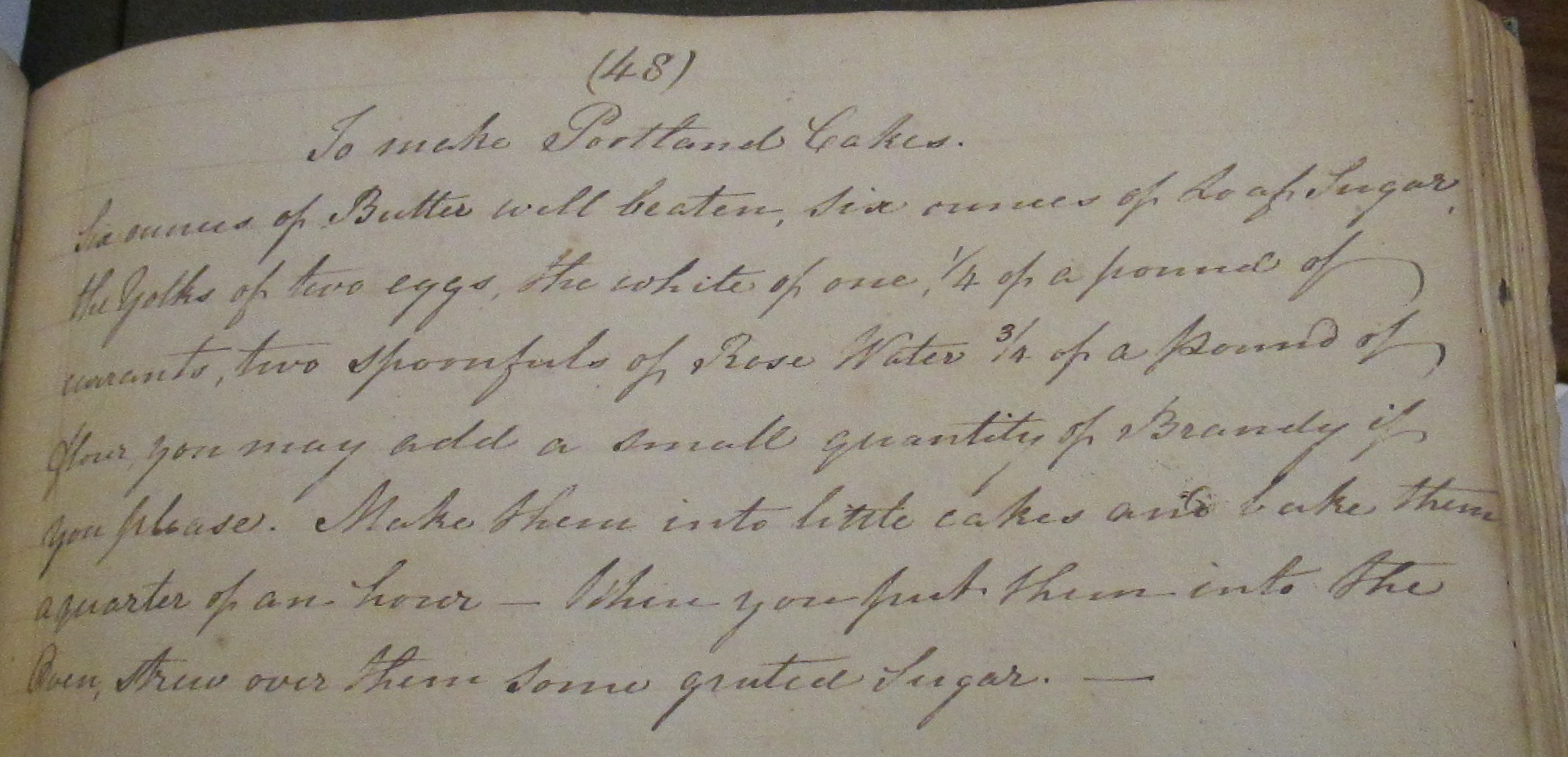
Flipping through the Earl of Roden Commonplace Book in the Denison Library at Scripps a few months ago, I paused when I saw a recipe for “Portland Cakes.” They looked so familiar! These buttery, sweet cakes are flavored with rosewater and brandy and dotted with currants, just like the “Potingall/Portugal Cakes” Alyssa wrote about a few months ago. The “Portland Cakes” in the Earl of Roden  fall into the broad category of “Portugal” cakes seasoned with fortified wines like brandy and sack that were imported to the British Isles from the Iberian peninsula.

The Recipe

portland cakes

To make Portland Cakes.

Six ounces of Butter well beaten, six ounces of Loaf Sugar,
the Yolks of two eggs, the white of one, 1/4 of a pound of
currants, two spoonfuls of Rose Water 3/4 of a Pound of
flour, you may add a small quantity of Brandy if
you please. Make them into little cakes and bake them
a quarter of an hour __ When you put them into the
Oven, strew over them some grated Sugar. ___

Our Recipe is basically the same.

6 oz butter, softened
6 oz sugar (additional sugar for sprinkling)
2 egg yolks
1 egg white
1/4 lb currants
2 t rosewater
3/4 lb flour
2 t brandy

Preheat oven to 350F.

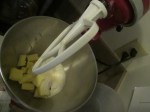
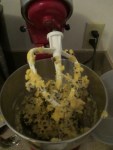
Cream together butter and sugar. I used my stand mixer for this recipe, but it could work with a hand mixer or a large bowl and a sturdy spoon.  When the mixture is pale and fluffy, add rosewater and brandy. Separate and beat the eggs before adding them to the mix. Add the flour. When the flour is completely incorporated, add the currants.

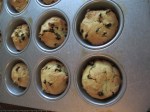
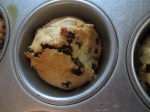
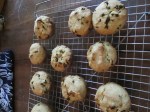
Divide the mixture into 12 cakes and bake in a greased muffin tin for 40 minutes. If you’d like to make smaller cakes (I plan to next time) divide the mixture into 18 or 24 parts and bake in two greased muffin tins for approximately 25 minutes, until golden brown.

As you can see from the photos, I completely forgot to dust these with sugar before I put them in the oven, but they were toothsome all the same.

The Results

Portland Cakes are sweet, dense, and fragrant. I enjoyed one hot from the oven with a cup of tea. I brought the rest to a picnic and they were a big hit with adults and kids alike.

Next time I’ll make smaller cakes in a muffin  pan (or even try a Madeline pan like Alyssa) because the crunchy exterior was my favorite part. I might also add a pinch of salt and cut the sugar a bit.

But mostly I think a Potingall/Portugal/Portland Cake bake-off is in order. Alyssa and I are going to arrange a taste-test and let you know which recipe we like best!

To Pickle Tomatas, Cooking in the Scripps Archives Part 3

This is the third post featuring a recipe from the Earl of Roden Commonplace Book held at the Scripps College, Denison Library. Read the first post here for information about this manuscript.

It’s tomato season, dear readers. The farmer’s market stalls and supermarket shelves are laden with sweet, tangy, luscious tomatoes that I can’t resist eating out of the container on my walk home. Other bloggers are also fueling my tomato-craziness with tasty recipes like this one. Our recipe for pickled tomatas captures tomatoes in their prime. It doesn’t require any special canning equipment beyond a clean jar so have no fear! Read on!

We haven’t always celebrated the tomato or even considered it edible. The tomato is a new world fruit. At first, Europeans and American colonists didn’t eat them at all for fear of a poisonous, painful death. Later, English gardeners would grow especially garish varieties to display as beautiful objects, gorgeous examples of horticultural prowess and cosmopolitanism. These two books document our slow conversion from a tomato-fearing to a tomato-loving food culture : Andrew F. Smith’s The Tomato in America and David Gentilcore’s Pomodoro! A History of the Tomato in Italy. This Modern Farmer article offers a more condensed history.

This recipe for pickled tomatoes is from the late eighteenth or early nineteenth century based on the history of the manuscript . The compiler notes Count Puzzi as a source, but I haven’t been able to track down a count by this name. (I did find Giovanni Puzzi, a celebrated horn player who resided in London in the nineteenth century, but, alas, I see no way to connect him to our tomato recipe.)

Not only was I excited to see a tomato recipe from relatively early in this history of European consumption of nightshade vegetables, but it also reminded me of an appetizer I’ve ordered many times at a favorite restaurant. Union on Yale serves a mason jar overflowing with vinegary heirloom cherry tomatoes, burrata, and basil-infused olive oil with lovely pita bread toasts on the side. I’ve never said no to burrata and I’ve come to love the way the sharp tomatoes compliment the luscious cheese.

The Recipe

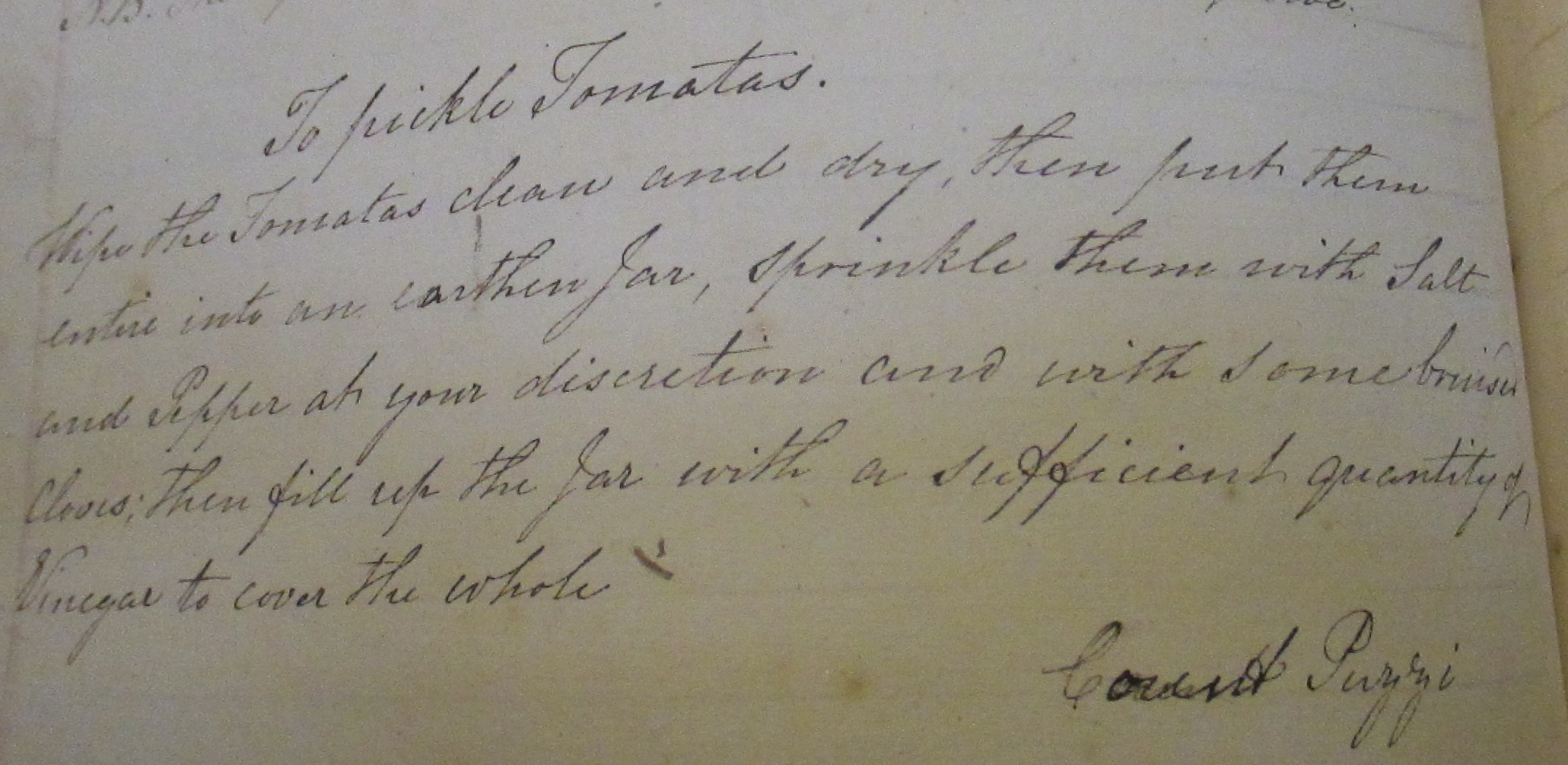
To pickle Tomatas

Wipe the Tomatas clean and dry, the put them
entire into an earthen Jar, sprinkle them with Salt
and Pepper at your discretion and with some bruised
Cloves; then fill up the Jar with a sufficient quantity of
Vinegar to cover the whole x
Count Puzzi

This recipe is perhaps equal parts pickled and fermented tomatoes. Like any lover of kimchi, sauerkraut, kombucha, or even sourdough bread knows, when you put a lot of tasty veggies in an earthenware crock you’re inviting natural yeasts and microbes to transform your food into something new. For our recipe, I turned to what I know about making fridge pickles as a compromise between proper canning and crock fermenting. I frequently make batches of string-bean, cauliflower, fennel, and beet fridge pickles to add to salads or compliment a cheese platter so this method is what felt natural to me. If you try this in an earthenware jar or properly can a batch and like what you taste, please let us know!

Our Recipe
1half lb tomatoes (whole, small tomatoes like cherry, grape, or sugar plum will work best)
3 twists black pepper
1 t cloves
1/2 t salt
1 c apple cider vinegar
a 2 cup mason jar, thoroughly washed

Put about a half pound of tomatoes in the mason jar. Fill to the top, but leave some space at the neck of the jar. Add seasonings. Fill with vinegar until the tomatoes are completely covered. Firmly affix the lid and label the jar. Leave in refrigerator for 1-2 weeks. I tried this batch after 10 days.
Consume pickled tomatoes within a month of opening the jar.

The Results

Pickled tomatoes are tart, juicy, and remarkably fresh. As I’d hoped, they tasted wonderful with cheese. The clove and vinegar seasoning combination reminded me of fancy homemade or artisanal ketchup. Next time,  I might consider flavoring them with coriander, fennel, or caraway seeds instead. I like cider vinegar, but I think red or white wine vinegar or even sherry vinegar would also work as a base.

Soda Cake, Cooking in the Scripps Archives Part 2

This is the second post featuring a recipe from the Earl of Roden Commonplace Book held at the Scripps College, Denison Library. Read the first post here for information about this manuscript.

Reader, do you cook with baking soda or baking powder? I bet you do. Twenty-first-century recipes for cake, cookies, breakfast breads, and pancakes (I could go on) are predominantly leavened with sodium bicarbonate. Joy the Baker explains how, why, and when to use baking soda or baking powder in this excellent Baking 101 post.

That squat cylinder or cardboard box full of white powder in your kitchen cabinet is the product of a culinary revolution. In the last decades of the eighteenth century chemists produced the sodium bicarbonate compound for the first time. By the early nineteenth century, “soda” begins to appear with some frequency in culinary recipes. The breakfast chapter in Abigail Carroll’s Three Squares suggests that baking soda transformed American breakfast traditions in the nineteenth century. (Hear her talk about baking soda and more on this episode of the wonderful podcast Gastropod.)

Before the discovery and popularity of baking soda, vigorously whisking eggs or leaving a yeast-laden mix to rise were the primary methods for producing leavened baked goods. All this took a lot more effort than spooning something else into your dry ingredients mix. We’ve been working with pre-baking soda leavening methods from the very start of this project. For example, in the recipe for Potingall/Portugal Cakes whisked eggs add the fluff factor. The recipe for Oven Cakes calls for yeast and rising time. “Soda Cake” is the second recipe I prepared from the Earl of Roden Commonplace book and it’s the first recipe calling for baking soda, or “Soda (Carbonate),” I’ve come across during the course of this project. Many of the recipes in this manuscript were copied in the early nineteenth century and our compiler was decidedly on trend with this spicy, soda-leavened breakfast bread.

The Recipe

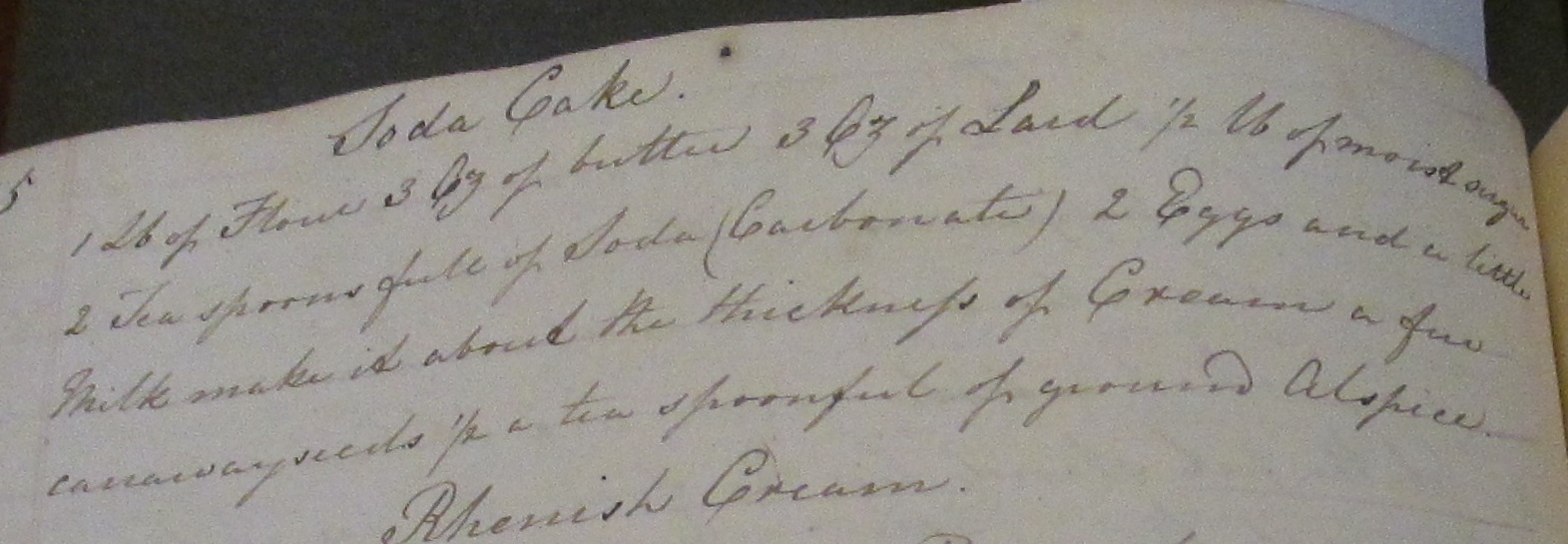
Soda Cake

1 Lb of Flour 3 Oz of butter 3 Oz of Lard 1/2 lb of moist sugar
2 Tea spoons full of Soda (Carbonate) 2 Eggs and a little
Milk make it about the thickness of Cream a few
carraway seeds 1/2 a teaspoonful of ground Alspice.

Our Recipe

The ingredients in the original recipe are relatively straightforward (at least now that we’ve discussed the origins and significance of baking soda), but the recipe does not provide any instructions for preparation. To develop a method, I took a look at my mother and grandmother’s Irish Soda Bread recipe in my own handwritten recipe notebook. Following the basic method from my family’s recipe, I began by combining the butter/lard with the dry ingredients and then added the eggs and milk to form a dough.

1 lb flour
1/2 lb sugar (or brown sugar)
2 t baking soda
1/2 t salt (I didn’t use any, but I think it needs some.)
1/2 t caraway seeds
1/2 t allspice
3 oz butter
3 oz lard (or substitute butter)
2 eggs
6 T milk

Preheat your oven to 325 F.

Mix flour, sugar, baking soda, salt, and spices in a large bowl. Add the butter and lard to this dry mix. Cut the butter into small cubes and work into the dry ingredients by hand or using a pastry cutter. The mix should resemble a coarse meal. Add the eggs and milk. Stir until a sticky dough forms. Shape into a round loaf and place on a baking sheet. Cut across the top with a sharp knife.

Bake at 325 F for about 40 min.

The Results

Soda Cake is dense, sweet, and spicy. The baking soda certainly did its job and the texture is like a substantial muffin. The spices give this cake a unique flavor. Next time, I might put some seeds on the top for crunch and add some salt to the mix to deepen the flavors.

To make Little Cakes, Cooking in the Scripps Archives Part 1

I may have written about Southern California citrus and orange pudding few months ago, but so far all of the recipes Alyssa and I have posted here are from manuscripts held at the University of Pennsylvania’s Kislak Center for Special Collections, Rare Books, and Manuscripts. There are a few good reasons for this! When we launched Cooking in the Archives last June, we were both PhD candidates and our start-up funding came from an interdisciplinary innovation grant at Penn. The Penn Libraries also have a wonderful collection of manuscript recipe books, comprehensive digital collections, and a number of open-access projects, like the recently launched OPenn site.

This academic year I’ve been teaching and conducting research at Scripps College in Claremont, CA amidst bountiful culinary and archival resources. This post is the first of a series on recipes I’ve prepared from the Earl of Roden Commonplace Book held at Scripps’s exquisite Ella Strong Denison Library. In one of my upper-level literature and book history courses called “What is a book?” my students and I used this commonplace book for paleography practice. (More on that course here.) As we were reading poems and recipes from the manuscript, I found a lot of things I wanted to cook.

The Earl of Roden Commonplace Book is one of two manuscript commonplace books in the Perkins Collection at Denison. John I. Perkins, a Los Angeles bookseller, donated this collection to Scripps in 1941 with the intention that the books would establish a teaching collection and be primarily used by students. The manuscript’s provenance is relatively easy to trace as a bookplate with the Earl of Roden‘s arms is pasted inside the front cover. The earldom was created in 1771 for Robert Jocelyn, 2nd Viscount Jocelyn (1731-1779) and was part of the Peerage of Ireland, or the English aristocracy in Ireland. The earls of Roden likely lived on estates in County Tipperary. Perkins may have acquired this manuscript because of its provenance, its mix of poems and recipes, or its distinctive green binding, built-in vellum-lined pockets, and partial clasps.

I think it’s most likely that this book began its life as a bound and ruled blank book, was initially used as a commonplace book for poetry, and was eventually repurposed as a household recipe book. The manuscript includes about eighty pages (40 folios) of poems followed by about ninety pages (45 folios) of recipes. Like many other commonplace books, the poems are listed for in an alphabetical index laid out at the beginning of the book. Although I haven’t checked to see if all the poems are accounted for, the compiler was very precise about noting the date and source of poems and songs. These dates helped Perkins date the manuscript’s compilation to the eighteenth and early nineteenth centuries. Some poems from the early eighteenth century establish the start date (perhaps even before the Earl of Roden’s earldom was created) and a wine-making recipe that refers to wine produced in 1824 dates later use to the nineteenth century.

I’ve prepared a few recipes from this book so far. Today I’d like to talk about “little cakes,” or tasty shortbread cookies similar to “Jumballs.”

 The Recipe

little cakes

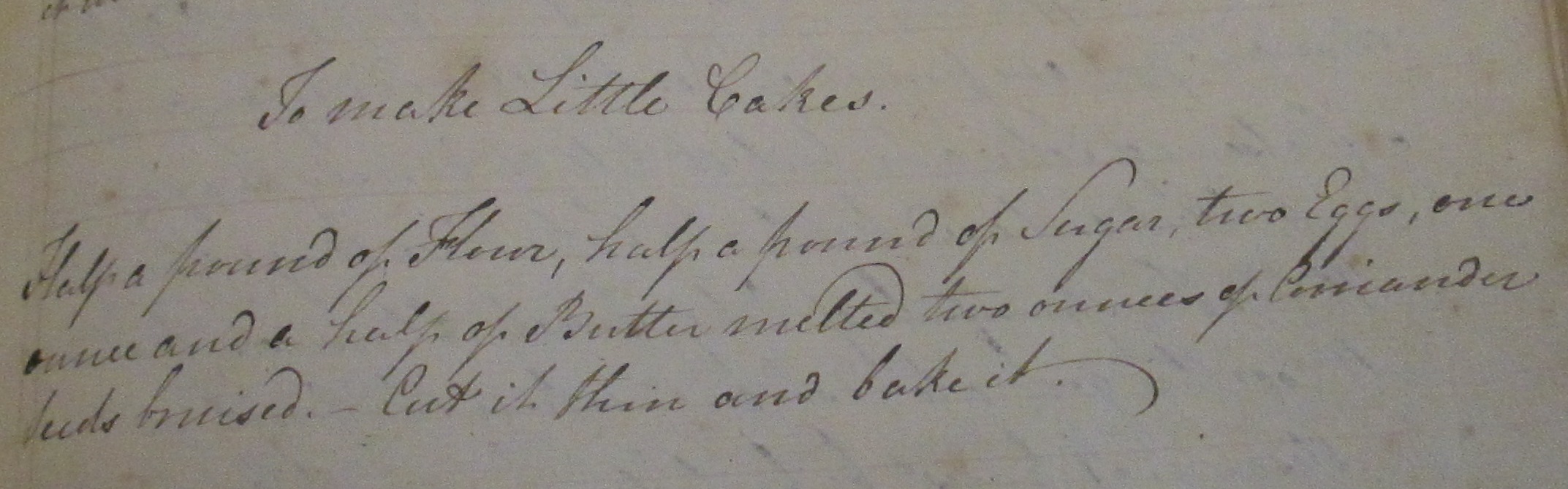
To make Little Cakes.

Half a pound of Flour, half a pound of Sugar, two Eggs, one
ounce and a half of Butter melted two ounces of Coriander
Seeds bruised. Cut it thin and bake it.

Since these instructions and measurements are relatively straightforward, our recipe is basically the same.

1/2 pound flour
1/2 pound sugar
Two eggs
1 1/2 oz. butter, melted
2 oz. coriander seeds

Preheat oven to 350 F. Prepare a baking sheet with butter, spray, or baking parchment.

Bruise the coriander seeds by gently crushing them in a mortar and pestle. To release more of their flavor, you can also lightly toast the seeds in a dry, hot pan beforehand.

Mix all ingredients in a large bowl and stir until a thick dough forms. Form it into a ball and transfer it onto a clean surface or cutting board. Shape the dough into a log. (I didn’t need to add flour in the rolling process, but you may find that you need some.) Slice thin cookies off the log. Mine ranged from 1/3-1/2 inch thick.

Bake 15-18 min until the edges brown.  Attempt to let cool before eating.

I halved this recipe because I was running low on coriander seeds and made 13 cookies, a full batch would yield around 24.

The Results

The little cakes are really shortbread cookies. The coriander sings through the sweet and buttery base. Hot from the oven, the herbal flavor dominated. When I ate another with my coffee the next day the flavor had pleasantly mellowed. If coriander isn’t your favorite spice or you don’t have any on hand, substitute caraway or fennel seeds.

I think this base recipe would work with a range of spices like cinnamon or nutmeg, chopped fresh thyme or rosemary, dried lavender, or even citrus zest. I also think a whole-grain flour like whole wheat, spelt, or buckwheat in some combination would add nuttiness and depth.

“Little Cakes” are a quick and easy dessert that require only five ingredients and minimal prep time. Stay tuned for more recipes from the Scripps archives.

Oven Cakes

Alyssa once called me a “yeast whisperer.” I love baking with yeast — no-knead bread and flatbreads make regular appearances in my kitchen and challah, herb-speckled dinner rolls, baguettes, and babka emerge from the oven on special occasions. A few weeks ago I was looking over the recipes I’ve made over the course of this project and I realized I hadn’t pulled out my yeast once. It was high time to correct this oversight.

This recipe for “Oven Cakes,” fluffy leavened rolls, comes from Ms Codex 644. I wrote about this manuscript a few weeks ago about in our “Cheape Soupe” post and these rolls would certainly pair with that soup.

The Recipe

oven cakes

Oven Cakes                            Mrs: Metcalfe

2 pound flour, dissolve a 1/4 pound of Butter
in as much warm milk as will wet the
flour. Beat 2 eggs, yolks, & whites very
light, in a spoonful of good yeast mix all
together. let it stand to rise when risen
make it into flat cakes, the size of a Muffin

Our Recipe

This recipe makes a delicious and versatile roll that could accompany soup, add to a dinner spread, provide a foundation for a fierce sandwich, or make a mean midnight snack. As a yeast baking aficionado, I need to do additional research on the status of yeast in the eighteenth century, before Pasteur identified it as a living organism. My normal sources had very little information on how one would add a “spoonful of good yeast” to this recipe in the 1700s. I assume wild yeast and something like a sourdough starter may have been involved. The dried yeast I rely on certainly would not have been available. In addition, what we now call “English muffins” are (still) simply called “muffins” in the UK. I flattened the cakes into round disks based on what I know about muffins and the recipe’s clear instructions.

The only thing I added to this recipe was salt. (And, honestly, I’ll likely add some more salt the next time I make them.) I halved the original here and it made eight rolls.

1lb flour (3 2/3 c)
1/8 lb unsalted butter (4 T)
1 egg
1 c milk
1 t yeast
1/2 t salt (I plan to try 1 t next time.)

Measure all ingredients. Melt the butter, heat the milk, and lightly beat the egg. In a large bowl, mix together flour, butter, and milk until combined. Add the egg, then the yeast. The mixture will be sticky, moist, and somewhat unmanageable. I didn’t knead this dough, but I did stir it vigorously. When everything is well-combined and the dough is smooth, if unwieldy, cover with a towel and leave to rise in a warm place for an hour and a half.

When the dough has risen and springs back to the touch, preheat oven to 400 F. My dough didn’t quite double in size, but it did plump up nicely. Divide the dough into eight rolls and pat into round disks. Butter two baking sheets. Leave ample room between rolls.

Bake for 10-15 min, until golden on the top and firm on the bottom. Try to let the rolls cool down before eating them. Serve warm.

The Results

I devoured these. I ate the first one hot out of the oven. It smelled vaguely yeasty, but it was buttery and delightful. After the first few bites, I brought out my current favorite spreads: Lydia Pyne‘s strawberry jam and “Three Citrus Marmalade” made by the local Fallen Fruit from Rising Women project. I ate some rolls with almond butter for breakfast: I ate some more with leftover chilli for dinner. This is a recipe that will make a return appearance in my kitchen. I look forward to making a batch with chopped fresh herbs, nuts and dried fruit, sprinkled with seeds, and/or brushed with an egg glaze.